

Ian Linden: Advent and the baby-moving business
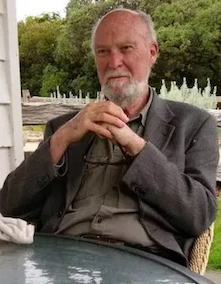
Dr Ian Linden
Britain's markets need the Christian 'big reveal' that began this week with Advent. Without the coming of the Christ-child, most town-centres would be boarded up. The emotional push and pull of Christmas sustains a prodigious expenditure on gifts and food that buffers shops and stores from the consequences of low 'footfall' during the rest of the year. As a prompt to start the buying, the Americans invented Black Friday, the first Friday after Thanksgiving. It is not only the herald angels who sing.
Christmas as we know it is not the result St. Francis of Assisi sought when, at Christmas 1223, he staged a live re-enactment of the Nativity story in a cave north of Rome. His fellow Franciscan Brother, Thomas of Celano, explained that he wanted to "represent the birth of that Child in Bethlehem in such a way that with our bodily eyes we may see what he suffered for lack of the necessities of a newborn babe and how he lay in manger between the ox and ass." Thousands of school Nativity plays remain on message. Not the message of Greggs' advertisement in 2017, a sausage roll adored in a manger.
The artists of the 13th to the 17th century, employed a limited number of ways to portray the worship of the Christ-child: Mary at the centre sometimes holds the baby, sometimes doesn't, and there are the walk-on parts for Joseph, the Magi, the shepherds and animal residents of the stable, with fly-on parts for the heavenly host. Popular art sometimes provides touching add-ons. One desolate Serbian church in Bosnia comes to mind with a mural showing a couple of women, outside the stable, cooking dinner for the Holy Family.
The next episode of the Christmas story painted by the great artists is the Holy Family on the move in flight to Egypt. Joseph is leading, holding the donkey, Mary, sitting side-saddle usually uses both hands to hold the baby - though Titian has her using a sling. Such portrayals, though dignified and meant to reflect reverence, raise the question why not hands-free with baby bound safely to the mother? Do we know if babies were carried then, as they commonly are now in Africa, tightly bound with a cloth on the mother's back? And we have watched television pictures of the Palestinian territories where mothers cradle life amidst death, families flee for safety, their donkeys pulling carts with all their belongings.
Some paintings do portray the fleeing family taking a rest, Caravaggio with a half-naked angel providing some musical entertainment - he would wouldn't he - and a decrepit Joseph holding the score. Rembrandt and Bruegel give her a blanket. I think on balance Mary in the Gospels probably did wear a simple cloth baby-wrap in the Flight to Egypt.
Fast forward to the UK where flight with babies from danger is relatively rare; though women's shelters meet a real need. In comparison with our own children the poverty of the Christ-child is stark. Now, we require equipment to move babies around and a great variety of equipment. The baby market has grown and segmented, with products created for people sharing particular needs or interests or spending power. So, you can choose from amongst a large range of buggies, strollers and prams And, just as expensive cars can highlight their owners status, so do these vehicles for babies.
.
For the status conscious, the Automobil Lamborghini Reef Al Arancio Stroller Bundle, a result of collaboration with the prestigious car manufacture, sells at Harrods for £4000. Arancio (orange), an intense version of Trump's fake complexion, is a reference to Lamborghini's brand colour, supposedly evoking excitement and energy. Purchasers become part of the 'Silver Cross Story' getting tips on pregnancy and parenting - get a nanny? - while the baby gets to lie on 'high performance automotive fabrics' (sic). The Silver Cross brand of pram is apparently the choice of the Royal Family; status does not go much higher than that.
To read on see: www.ianlinden.com/latest-blogs/
Professor Ian Linden is Visiting Professor at St Mary's University, Strawberry Hill, London. A past director of the Catholic Institute for International Relations, he was awarded a CMG for his work for human rights in 2000. He has also been an adviser on Europe and Justice and Peace issues to the Department of International Affairs of the Catholic Bishops Conference of England and Wales. Ian chairs a new charity for After-school schooling in Beirut for Syrian refugees and Lebanese kids in danger of dropping out partnering with CARITAS Lebanon and work on board of Las Casas Institute in Oxford with Richard Finn OP. His latest book was Global Catholicism published by Hurst in 2009.
 Facebook
 Twitter
 LinkedIn
 Print
Print Email
Email










 Facebook
 Twitter
 YouTube
 LinkedIn
 Pinterest