

Concerns raised over future of BBC religious broadcasting
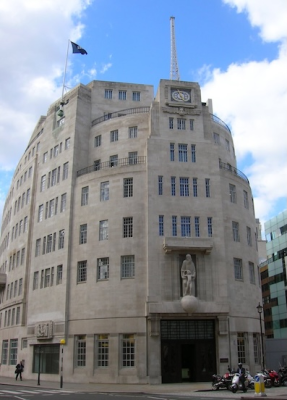
Broadcasting House - Wiki Image
Serious concerns about the future of religious broadcasting at the BBC were raised at an online briefing attended by stakeholders yesterday.
The broadcaster Roger Bolton lamented the BBC's failure to champion religious, and indeed public service, broadcasting and explain why it was so crucial. He described a 'catastrophe' that had taken place over the past 15 years. He acknowledged a cut in the licence fee of some 30 per cent but noted that between 2011 and 2022 religious broadcasting had plummeted 85 per cent in peak hours and 65 per cent overall. The institution had reached a 'crisis point' with the imminent arrival of digital, he said.
He described a reactive BBC which had no leading advocate of public service broadcasting at its helm and no overall strategist for religion. 'Religious illiteracy' beset most of the corporation's journalists. 'There are four million Muslims in this country. Do they see themselves represented?' Mr Bolton asked rhetorically.
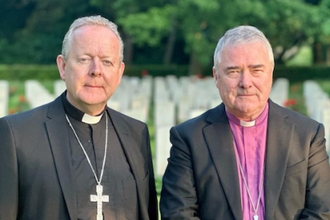
John Arnold, Catholic Bishop of Salford, agreed that the BBC's religious broadcasting was 'absolutely necessary'. He believed that it played an important role in building collaboration and mutual understanding in a diverse, multi-cultural and multi-faith society. He noted a perceived increase in interest in religion, especially among the young and concluded that there were 'great opportunities' for religious broadcasting ' which should be embraced for the good of all.'
Stephen Cottrell, Anglican Archbishop of York, noted 'with sadness and distress an appalling lack of religious literacy at the BBC.' He added, 'I am flabbergasted that it should take something so precious and important for granted.'
He noted that he had argued at the last Charter Renewal that religion had such an important part to play in deepening people's understanding of the society they lived in. As opposed to the 'distressing echo chambers' of superficial social media, religious broadcasting should serve as a 'precious bulwark against intolerance, prejudice, ignorance and chaos.' Millions of people in Britain derived their identity and values from their faiths and institutions - religious and otherwise - which bound the nation together. He was troubled that there no longer the political vision to strengthen these institutions. Rather, religious broadcasting was underfunded.
Anna McNamee, Executive Director of Sandford St Martin's Trust, said that the BBC's historic role in religious broadcasting could not be underestimated. She concurred that its current downward trajectory was undeniable and that it was crucial to address the future proactively.
Roger Bolton concurred. He emphasised the crucial need for a debate and encouraged church leaders to engage with this. He noted that there was no longer a strategic head of religion at the BBC which, given the current events both at home and across the world, was 'more important than ever'.
Archbishop Cottrell said that the BBC was no longer upholding public service broadcasting and that religion touched the whole of life. Bishop Arnold noted that 85 per cent of the World's population identified with the major faiths which had 'so much in common' and it was essential to better understand these in order to better live in unity and diversity. If there were no educating through public service broadcasting people would be prey to the 'opinions' peddled on social media.
Roger Bolton warned of the 'absence of space for thought' in the short-form models of social media. There was a real appetite for such programmes catering to people of belief and non-belief alike, not least due to the mess the World was in. Once more, he encouraged people in the public realm and faith leaders to galvanise advocacy for religious broadcasting. Archbishop Cottrell urged government and BBC executives to have the 'vision' in order to support this.
Roger Bolton noted too that the current crisis in religious broadcasting had allowed pro-Israel advocacy groups to put pressure on the BBC. Such groups were quick to use the accusation of 'anti-semitism' to stifle criticism of the state of Israel.
The meeting did accept that there was still some very fine religious programming on the BBC such as the radio programmes Sunday, Beyond Belief and Heart and Soul.
The BBC Charter Review is open for public consultation until 10 March and seeks answers on how the BBC can adapt and be secured for the future at a time of technological and societal change. The readers of this article are encouraged to participate not least concerning religious broadcasting - and to spread the word.
LINK
The Review of the BBC's Royal Charter
 Facebook
 Twitter
 LinkedIn
 Print
Print Email
Email






 Facebook
 Twitter
 YouTube
 LinkedIn
 Pinterest