


Gospel in Art: The Parable of the Unjust Judge
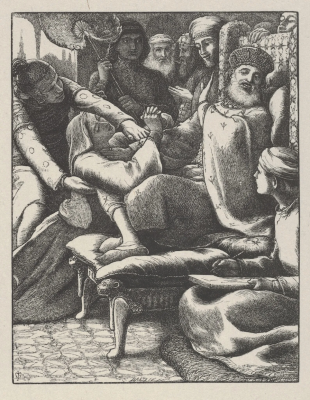
The Unjust Judge and the Importunate Widow, after painting by Sir John Everett Millais. Engraved and printed by Dalziel Brothers, 1864
Source: Christian Art
Gospel of 14 November 2026
Luke 18:1-8
At that time: Jesus told his disciples a parable to the effect that they ought always to pray and not lose heart. He said, 'In a certain city there was a judge who neither feared God nor respected man. And there was a widow in that city who kept coming to him and saying, "Give me justice against my adversary." For a while he refused, but afterwards he said to himself, "Though I neither fear God nor respect man, yet because this widow keeps bothering me, I will give her justice, so that she will not beat me down by her continual coming." '
And the Lord said, 'Hear what the unrighteous judge says. And will not God give justice to his elect, who cry to him day and night? Will he delay long over them? I tell you, he will give justice to them speedily. Nevertheless, when the Son of Man comes, will he find faith on earth?'
Reflection on the wood engraving
There are few things more exhausting than having to keep asking for help when nobody seems to listen. We explain our situation, write another letter, make another call, and begin to wonder whether there is any point. The widow in today's Gospel knows that feeling. She faces a judge who has the power to defend her rights but cannot be bothered to do so. Yet she keeps coming back. She has little influence, but she refuses to let his indifference have the final word. Eventually, he gives in. Jesus offers her determination as an encouragement to pray continually and never lose heart.
We should be careful here: God is not the reluctant judge whom we must wear down. Jesus' argument is that if even this unjust man eventually listens, how much more can we trust the God who loves us? That does not make waiting easy, nor does it promise that every prayer will be answered in the way we expect. But it invites us to keep bringing our lives before God, including our disappointment and our questions. The widow also reminds us that prayer and action belong together. If we want things to change in our life, we should actively do something about it: pray and take initiative.
Jesus ends with a searching question: when the Son of Man comes, will he find faith on earth? For those of us who have watched familiar pews become empty in our churches, that question can feel painfully close. Some people have indeed stopped believing. An empty seat can feel sad. The question therefore also turns towards those of us still sitting in church: are we nurturing a faith that inspires other and attracts others to church?
John Everett Millais depicts our parable of The Unjust Judge. His painting of 1864 was turned into a wood engraving made by the Dalziel Brothers. The judge sits comfortably in an elaborate chair, while the widow leans towards him from below, urgently pleading her case. He makes a gestures conveying he is ignoring her. An attendant stands ready with a fan; another figure attempts to restrain her. A scribe in the foreground is taking notes (thsi could be the artist placing himself into the scene). The contrast is striking: everything around the judge serves his comfort, while the woman struggles in isolation simply to be heard. Her determined posture makes her the driving force of the scene though!
Millais spent seven years developing twenty designs for this series of Christ's parables, repeatedly reworking his compositions before they were engraved. Looking at this woman, we might recognise someone we know who keeps praying, keeps caring, keeps speaking up, despite repeated discouragement. A kind word to them today might make a big difference... someone who is finally heard.
LINKS
Christian Art: www.christian.art
Today's reading: https://christian.art/daily-gospel-reading/luke-18-1-8-2026/
 Facebook
 Twitter
 LinkedIn
 Print
 Email















 Facebook
 Twitter
 YouTube
 LinkedIn
 Pinterest