

Gospel in Art: Where the corpse is, there the vultures will gather
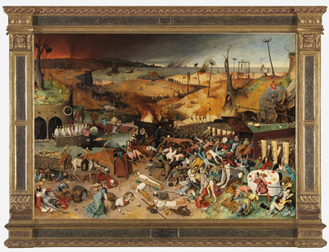
The Triumph of Death, by Pieter Brueghel the Elder, 1562 © Prado Museum, Madrid
Source: Christian Art
Gospel of 13 November 2026
Luke 17:26-37
At that time: Jesus said to his disciples, 'Just as it was in the days of Noah, so will it be in the days of the Son of Man. They were eating and drinking and marrying and being given in marriage, until the day when Noah entered the ark, and the flood came and destroyed them all. Likewise, just as it was in the days of Lot - they were eating and drinking, buying and selling, planting and building, but on the day when Lot went out from Sodom, fire and sulphur rained from heaven and destroyed them all - so will it be on the day when the Son of Man is revealed. On that day, let the one who is on the housetop, with his goods in the house, not come down to take them away; and likewise let the one who is in the field not turn back.
Remember Lot's wife. Whoever seeks to preserve his life will lose it, but whoever loses his life will keep it. I tell you, in that night there will be two in one bed; one will be taken and the other left. There will be two women grinding together; one will be taken and the other left.' And they said to him, 'Where, Lord?' He said to them, 'Where the corpse is, there the vultures will gather.'
Reflection on the painting
"Where the corpse is, there the vultures will gather." It is hardly the comforting image we might hope to take away from today's Gospel! Yet Jesus sometimes uses unsettling pictures to make us stop and think. He is drawing on something his listeners would readily recognise: if you see vultures gathering in the distance, you know that a dead animal lies somewhere beneath them. You may not see the body, but the birds make its presence unmistakable. The disciples have asked 'where' the events He describes will happen. He basically says that he is not telling the place, but you will clearly know when it happens, buy the signs/vultures hovering above.
Earlier in the reading, Jesus recalls the days of Noah and Lot. People were eating, drinking, marrying, buying, selling, planting and building. These are ordinary activities, much like the things filling our own diaries. The danger is becoming so absorbed in them that we imagine life will always continue as it is. We can postpone an apology, put off helping someone, or assume that there will be time for God once everything else is sorted. Jesus' disturbing final image breaks through that comfortable assumption. Don't wait to change your ways till you are dead and the vultures come. Make changes today!
A powerful painting to accompany our reading is Pieter Bruegel the Elder's The Triumph of Death (1562-63). Across a devastated landscape, an army of skeletons overwhelms people of every social rank. Wealth, power and pleasure offer no protection. In the foreground, a king's riches cannot save him; elsewhere, a meal is interrupted by the arrival of death. The crowded composition gives us little space to rest our eyes, making us feel how completely the familiar world has been overturned. It is an unsettling painting depicting how daily life suddenly gets interrupted by death.
Bruegel's title gives death the victory, but our Christian faith looks beyond that terrible scene to Christ's resurrection. We can face our mortality with hope, while allowing it to teach us how to live.
LINKS
Christian Art: www.christian.art
Today's reading: https://christian.art/daily-gospel-reading/luke-17-26-37-2026/
 Facebook
 Twitter
 LinkedIn
 Print
 Email













 Facebook
 Twitter
 YouTube
 LinkedIn
 Pinterest