

Diwali, an opportunity to live the spirit of fraternity
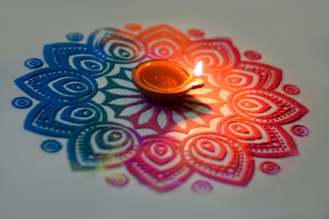
Photo by Jyoti Singh on Unsplash
Tomorrow, 8 November, we will celebrate Diwali, which comes from the Sanskrit 'Deepavali,' meaning 'row of lights'. This festival is celebrated across Hinduism, Jainism, Sikhism, and among some Buddhist communities.
Diwali symbolises the triumph of light over darkness, good over evil, and knowledge over ignorance. As a Catholic, I grew up respecting other religions. My father, Balgobin Ramdeen, was a devout Hindu. Ma was a fervent Catholic - as we say in Patois, she was a true Poto léglise (a pillar of the Church).
Interfaith relations are a foundational and enduring commitment for the Catholic Church, viewed not merely as a diplomatic or academic exercise, but as an essential way of living out the Gospel and promoting global peace. The Church affirms that it "rejects nothing of what is true and holy in these religions," recognizing that elements in other faiths often reflect a "ray of that truth which enlightens all men and women".
Both Pope Francis and Pope Leo XIV describe interreligious engagement as a permanent "way of life" built on personal conviction, mutual respect, and listening rather than compromise or syncretism. Pope Leo has consistently emphasised that:
- interfaith dialogue is a transformative, daily way of life rather than mere compromise;
- coexistence and mutual respect between religious communities remain essential in a world marked by war and division;
- shared values of compassion and solidarity can help bridge differences and promote peaceful coexistence;
- unity among faiths is a powerful response to violence and suffering worldwide.
Interfaith collaboration is considered a necessary condition for world peace, countering violence, dismantling discrimination, and uniting communities to address human suffering and social injustice. Rather than diluting Catholic belief, engaging respectfully with others often deepens a believer's own faith, confidence, and understanding of God's universal activity.
The Vatican's official message from the Catholic Church (via the Dicastery for Interreligious Dialogue) to Hindus for Diwali focuses on shared values, peace, and interreligious solidarity. The Dicastery urges us all to live the spirit of fraternity in our daily lives.
The cultural and religious stories surrounding Diwali are diverse. According to the Ramayana, one of the two major ancient Sanskrit epics of India (alongside the Mahabharata), traditionally attributed to the sage Valmiki, Diwali tells of the life of Ram, the prince of Ayodhya and the seventh avatar of the Hindu god Vishnu, who is born to restore cosmic order. Ram was born to King Dasharatha and his first wife Kausalya in Ayodhya, the capital of Kosala kingdom. On the request of Ram's stepmother Kaikeyi, who "called in" a promise made by King Dasharatha, the King exiles Ram to the forest for 14 years. Ram's wife, Sita, and his younger half-brother, Lakshman, accompany him.
King Dasharatha dies. Ram's half-brother, Bharat, is deeply hurt by his mother's political plot and refuses to sit on the throne or become king. He goes to the forest, begging Ram to return. Ram refuses-out of duty to keep his father's word. Bharat asks for Ram's sandals, places them on the throne, and governs the kingdom as a regent in Ram's name.
The festival celebrates Ram's return to his kingdom of Ayodhya after 14 years of exile and his victory over the 10-headed demon King Ravana. Citizens lit rows of deyas to welcome him. He returns with his wife, Sita, whom he had rescued from Ravana. Lakshman, who is the embodiment of loyalty, strength and sacrifice, also returns with him. Bharat gives the shoes back to Ram and Ram is crowned King.
Ramleela tradition would have been brought to TT by indentured immigrants since 1845. Historical records indicate the first major public Ramleela celebration in TT took place in Dow Village in 1881. It is a free open-air "drama" that re-enacts Chapters from the Hindu epic, the Ramayana - over a 10-day period during Navratri - with acting, music, and dance. This year, there were 15 official Ramleela celebrations highlighted on the national schedule in open savannahs and recreation grounds, including Pierre Road in Charlieville, Sangre Grande, Fyzabad, and Palmiste Park.
The re-enactment covers the marriage of Ram and Sita, Ram's exile and the reason for the exile, Sita's abduction by Ravana, who ruled Lanka, Hanuman's journey to rescue Sita from Lanka, and the battle with Ravana. Hanuman, an incarnation or aspect of Lord Shiva, is the ultimate symbol of bhakti (devotion), shakti (strength), and selfless service.
The burning of a towering bamboo-and-paper effigy of Ravana closes the final/10th night. My pundit friend reminded me: "The fire represents the destruction of negative traits such as egoism, greed, anger, and material illusion, encouraging a righteous (dharmic) way of life."
As you light deyas in your homes and in the streets tomorrow evening, remember, as my father used to tell us, his children, the flame of a deya represents divine wisdom, clarity, and the removal of inner darkness or ignorance. Deyas are also lit to invite the Hindu Goddess Lakshmi (the deity of wealth, fortune, and prosperity) into homes.
Interfaith relations improve when people practice active listening, mutual respect, and a commitment to the common good. May the celebration of Diwali lead us to foster a deeper sense of togetherness, peace, and prosperity in our communities. May the tenets of our various faiths inspire us to pray for spiritual growth and transformation as we strive to create conditions in which individuals, families, and organisations can flourish.
Leela M Ramdeen is a Consultant with Trinidad and Tobago Catholic Commission for Social Justice
 Facebook
 Twitter
 LinkedIn
 Print
 Email











 Facebook
 Twitter
 YouTube
 LinkedIn
 Pinterest