

Season of Creation marked with prayers around the world
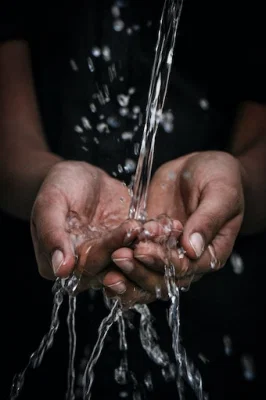
Photo by mrjn Photography on Unsplash
Source: WCC
Rivers that carry plastic to the sea. Wells turning salt as the ocean rises. Taps that run dry where children walk far for water. These were prayed for on 1 September, at the service opening the 2026 Season of Creation at the Sacred Heart Cathedral in Suva, Fiji, under the theme "Living Water" from Ezekiel 47. "We are surrounded by water," said Rev James Bhagwan, general secretary of the Pacific Conference of Churches, "but something within humanity has become dry."
The date carried something new. In April 2026 the Consultation on Common Texts added the Feast of Creation in Christ to the Revised Common Lectionary, the shared calendar of readings many churches follow. The first feast added since 1983, it may be kept on 1 September. Dr Louk Andrianos, World Council of Churches (WCC) consultant for Care for Creation, Sustainability, and Climate Justice, opened the service from Crete. He welcomed the fellowship to celebrate it "as a feast of creation in Christ for the first time."
Bhagwan preached on John 7, where Jesus stands in a crowded festival and speaks about thirst. He carried that thirst home. The Pacific, he said, is "a sea of islands that connect by the great ocean" - its rivers carry plastic, its communities face saltwater intrusion, drought, and unsafe water. The ocean that sustains Pacific life "is being treated as a dumping ground, a highway for militarization and a resource to be exploited."
What he offered was not a programme. "Jesus does not offer bottled water. He offers relationship." The ecological crisis, he argued, is not only a crisis around us but a spiritual crisis within us, and the season begins "not with our activity, but with Christ's invitation." He will spend part of it on a paddleboard, circling Viti Levu, collecting plastic.
Abigayle Bolado, WCC programme executive for Young People in the Ecumenical Movement, led the intercessions with a representative of the Laudato Si' Movement, and the invitation turned specific. They prayed for reefs bleached by warming seas, for whales navigating nylon, for rivers dammed without the consent of those who live beside them, for sacred waters engineered away to supply distant cities and data centres. Others prayed from Nairobi, Beirut, Sami country in northern Finland, and southern Africa.
His All-Holiness Ecumenical Patriarch Bartholomew I issued his own message that same day, for the Day of Prayer for the Protection of the Natural Environment, an observance his patriarchate began in 1989, from which the season grew. He called ecological responsibility "a categorical imperative."
The Copernicus Climate Change Service recorded July 2026 as the second warmest measured, 1.47 degrees Celsius above the 1850-1900 average. Writing on 26 August, WCC general secretary Rev Prof Dr Jerry Pillay said churches are "called to become part of the river's healing, not to stand at the bank and watch." The season runs to 4 October, when a closing event will mark its end. It is one leg of the Ecumenical Decade of Climate Justice Action (2025-2034), launched in Johannesburg in 2025.
"Each stroke can become a prayer," Bhagwan said.
LINK
Patriarch Bartholomew calls for global ecological solidarity: www.oikoumene.org/news/patriarch-bartholomew-calls-for-global-ecological-solidarity
 Facebook
 Twitter
 LinkedIn
 Print
Print Email
Email









 Facebook
 Twitter
 YouTube
 LinkedIn
 Pinterest