


Nigeria: Bishop condemns lynchings in northern Nigeria
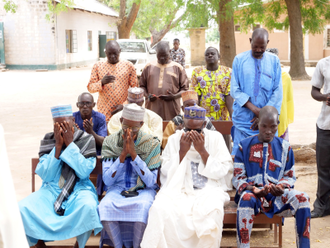
Nigerian community leaders come together to discuss issues. Image: © ACN
Following a series of brutal mob killings, a bishop in Nigeria has hit out at the growing scourge of rough justice in the country.
Speaking to Aid to the Church in Need (ACN), Bishop Gerald Musa of Katsina condemned mob violence, saying: "Human life is sacred - there can be no lynching in a civilised society".
Bishop Musa highlighted cases where those accused of offences have been killed without trial, stressing that anyone accused of a crime deserved due process.
He said: "Nobody can be condemned without having the opportunity to defend themselves. If somebody commits a crime, it is up to the courts to judge them."
Last Friday (21st August) Niger State Police confirmed they had arrested four individuals suspected of killing 30-year-old Sunday Pada after he was accused of robbery.
The incident follows other high-profile cases of mob slayings, including the murder of Ummulkhairi Aliyu, a mother of four, who was falsely accused of stealing a child in Kaduna State. She was in police custody at the time the mob seized her and killed her.
Calling for greater respect for the rule of law, Bishop Musa said religion is not the root cause of violence, stressing deeper social problems that affect both Christians and Muslims, including corruption and a lack of justice.
He told ACN: "As long as attention was focused on religion, we were not tackling issues such as corruption, impunity or injustice. Both religions condemn stealing, murder and adultery. These common principles should help us to build a country in which we are all equal under the law."
The bishop's comments come as northern Nigeria continues to grapple with growing insecurity including kidnappings, cattle rustling and attacks on rural communities.
Bishop Musa said "kidnappings have become a big business and a serious problem", attributing the violence to a combination of economic interests, competition over resources, political manipulation and the long-term neglect of rural areas.
He added that a lack of educational and job opportunities for young people have also contributed to the rise in abductions.
Despite these challenges, Bishop Musa said that in Katsina State, which is around 98 percent Muslim, relations between Christians and Muslims are largely harmonious.
He said: "There are many mixed families. They live in peace because family ties are stronger than religious differences."
Bishop Musa said education remains one of the most effective tools for promoting peace and rebuilding communities affected by violence.
According to the bishop, Catholic schools in the diocese educate large numbers of Muslim students.
Catholic schools are open to displaced children, most of whom are Muslim.
Figures from the International Organisation for Migration state there are nearly 181,000 IDPs in Katsina State, displaced by natural disasters or bandit attacks.
Bishop Musa said: "When we educate the youth and accompany those who have lost everything, we are sowing hope for the future".
With thanks to Daniel Castilla
LINK
Aid to the Church in Need: https://acnuk.org
 Facebook
 Twitter
 LinkedIn
 Print
Print Email
Email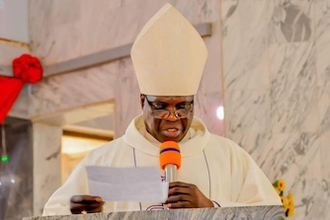











 Facebook
 Twitter
 YouTube
 LinkedIn
 Pinterest