

Poland: Thousands of pilgrims visit Marian Shrine
Thousands of people in Poland walked hundreds of kilometres to the Marian Shrine of Jasna Góra this weekend, for the Feast of the Assumption of Our Lady. The Jasna Góra Monastery in Częstochowa, is a shrine dedicated to the Virgin Mary and one of the country's main places of pilgrimage.
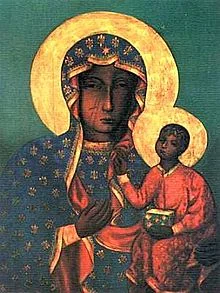
The image of the Black Madonna of Częstochowa, also known as Our Lady of Częstochowa, to which miraculous powers are attributed, is one of Jasna Góra's most precious treasures. The icon is traditionally believed to have been painted by Saint Luke in the 6th century, although some scholars suggest it may date to the 12th-14th century. The icon is renowned for its miraculous history and is a national symbol of Poland.
Grzegorz from Augustów, who has walked to Jasna Góra 14 times said: said: "Pilgrims are like family."
For him, pilgrimage is above all an experience of community: people help one another, lift one another, and when fatigue sets in, they keep going together. That feeling of community extends far beyond the group of pilgrims itself. In towns and villages along the route, residents prepare meals, water, and places to stay.
"You keep walking, and then there is someone waiting for you - giving a place to rest, a kind word and a smile," Grzegorz says.
Some pilgrims have been meeting the same hosts this way for decades.
Teresa from Lipnica Wielka in the Orawa region went on pilgrimage before she was married. After 23 years, she returned to the route, this time with her 15-year-old daughter. They have now been walking together for three years. As Teresa says, pilgrimage gives her a chance to slow down, look at her life from a different perspective, and rediscover things that can easily be lost in the rush of everyday life.
Krzysztof from Granowo near Poznań first set out as a teenager. Today he is 50, has completed 19 pilgrimages and now walks with his family. His daughter started when she was seven and has already made the pilgrimage 12 times. "We look forward to it all year," he says.
There are thousands of similar stories. Julia from Pelplin admits that pilgrimage means pain, sweat, exhaustion and bad weather. And yet she keeps coming back. "There is no better place to experience human kindness and generosity," she says.
The tradition of pilgrimage in Poland dates back to the Middle Ages. Organized groups were already making their way to Jasna Góra in the 15th century. Some pilgrimages can still trace their history back for centuries.
This year, pilgrims from Kalisz made the journey for the 389th time. The Warsaw Walking Pilgrimage has set out every year without interruption since 1711 and is now included on Poland's National List of Intangible Cultural Heritage. The Pabianice pilgrimage has the highest count of all: this year it will set out for the 558th time.
The pilgrimage season reaches its peak in mid-August. On August 13 alone, around 21,000 people arrived at Jasna Góra in 11 large walking pilgrimages and one international group. The pilgrims from Pustków had the longest route to cover - 405 miles.
In a world where traveling is expected to become ever faster, they choose a journey that takes many days. On August 15, they reach their destination. And many of them already know that next year, they will once again set out on foot for Jasna Góra.
LINK
Read more about Jasna Gora: https://en.jasnagora.pl/
 Facebook
 Twitter
 LinkedIn
 Print
Print Email
Email














 Facebook
 Twitter
 YouTube
 LinkedIn
 Pinterest