


Cardinal Pizzabella: Christians in the Holy Land are tired, they want peace
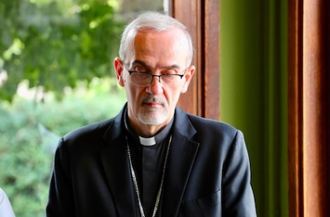
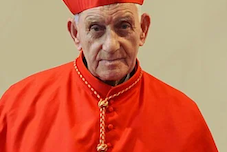
Cardinal Pierbattista Pizzaballa
Source: Vatican Media
The Latin Patriarch of Jerusalem, Cardinal Pierbattista Pizzaballa, was in Assisi this week, for the inauguration of the Global House of Friendship and Hope, a new international project promoted by the Elijah Interfaith Institute. During his visit he spoke with journalists about his concerns over the situation in the Holy Land..
Asked about the upcoming Israeli elections on 27 October, he said: "Everyone is looking to the elections as though they will solve all the problems. In reality, however, the problems of the Middle East are the kind that will require a great deal of time. We need new faces, new leaders. The voters will decide that."
The Cardinal described the situation in Jerusalem as one of "great tension." He noted that, although "we are not in a state of war with indiscriminate bombardments, violence has become the general lens through which relationships are experienced in Gaza, the West Bank, Israel, and Palestine."
Asked how Christians are experiencing the constant cycle of hopes for agreements and negotiations being repeatedly disappointed, he said: "Like everyone else, Christians are deeply weary of this endless back-and-forth-of announcements that are then contradicted by events. It has become part of daily life. Unfortunately, this has created an ever-growing sense of distrust among the population, to the point that people no longer believe anything, even when it turns out to be true. And when something genuinely positive does happen, people struggle to believe it because they are no longer accustomed to seeing good news. It is, in short, a very heavy situation."
After he was asked: "Do you see any signs of hope?", the Cardinal responded: "Yes, hope remains, because there are so many people who continue to put themselves on the line in Gaza, the West Bank, and Israel. I constantly meet young people, but also older men and women - professors and others who have something to lose in terms of their relationships - yet they still choose to get involved, to build encounters, to defend others. There are still antibodies within that society that prevent the whole body from being overcome by this virus of violence.
"A few months ago, we all watched with concern when the Holy Family Parish was struck by an Israeli rocket. The parish shelters many elderly people and persons with disabilities. How is that small community today?
"There are 541 people. We know every single one by name. They are trying, in whatever way they can, to return to normal life. We are working to reopen the school. We have opened a medical centre. There are priests, but above all very active religious sisters who run activities for children - not only Christian children. In the midst of such a devastaed reality, we are trying above all to recreate an environment that is as healthy and peaceful as possible."
Cardinal Pizzabella said his main worry was, "that we may remain trapped in this condition of neither war nor peace, in this ambiguous situation where people keep talking about solutions without actually creating real ones. That concerns me because it fosters an increasingly cynical attitude of distrust in people's hearts, and that is the greatest danger I see within the population today.
"Certainly, the elderly are our memory, but young people are our hope. We therefore need to look to the future with confidence. They will be the protagonists of the generations to come. We must invest in them, learning from our own mistakes, so that they may build and offer something different from what we have handed on to them."
The Cardinal said: "The Pope is very close to us and is very well informed about everything that is happening, and that is extremely important. He is present. As for a papal visit to the Holy Land, sooner or later it will certainly happen, but it must take place in a context of serenity.
When asked about how the 40th anniversary of St John Paul II's World Day of Prayer For Peace, when he brought together representatives of all the world's religions for a great moment of prayer in Assisi, should be commemorated, the Cardinal said: "It is important that it should not become an exercise in nostalgia. We should not look back instead of looking forward. Much has been accomplished over these past forty years. Yet, because of the conflicts that continue to affect the world - especially in the Middle East - we are now at a turning point.
"This anniversary can become the beginning of a new journey, one that takes into account both all the good that has been achieved and the challenges we are facing today, so that it may be a path that is genuine, sincere, and fruitful."
 Facebook
 Twitter
 LinkedIn
 Print
Print Email
Email








 Facebook
 Twitter
 YouTube
 LinkedIn
 Pinterest