

Viewpoint: Why Catholic Schools must start building the national leaders we are crying out for!
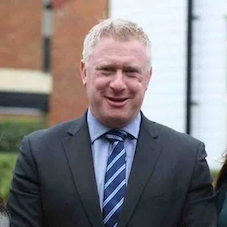
Declan Linnane
A reflection on leadership, truth and the young people we are failing.
Turn on the news. Open any newspaper. The evidence is everywhere. Our national political leadership is in trouble. Seven Prime Ministers in eleven years. A revolving door that has become a source of quiet embarrassment at home and open disbelief abroad. Our neighbours in Europe and our partners across the globe watch a country that once exported the very idea of stable government now struggle to keep a leader in post for more than a couple of years.
Ask yourself a simple question. What if this was one of our schools?
We know exactly what that would look like, because we would never allow it.
Imagine It in a school.
Picture a secondary school that changed its headteacher seven times in eleven years. Staff would be exhausted. Every new leader would arrive with a fresh vision, dismantle the last one, and leave before it took root. Improvement plans would stall. Trust would collapse. Parents would lose confidence. Standards would slide.
No governing body would tolerate it. No inspector would pass it. We would rightly call it a failing institution.
Yet this is what we ask our country to live with. And here is the uncomfortable truth for those of us in Catholic education. We are part of the answer. The leaders of tomorrow are sitting in our classrooms today.
They will inherit a country we are already failing. And the clearest evidence of that failure is sitting just outside our school gates.
The Disgrace We Have Normalised
Over one million young people in this country are not in education, employment or training. The official count stands at 1,012,000, the first time it has passed one million since 2013. That is 13.5 per cent of everyone aged 16 to 24. A generation the size of a major city, standing outside the door of national life. And the number is rising. Up 89,000 in a single year.
We should be ashamed. Not quietly. Loudly.
Behind that number are a million individual stories. A million young people with gifts we are wasting. A million reminders that our national leadership has failed the most basic test any society faces. Are we passing on something worth inheriting to those who come next?
This is not a statistic. It is a moral emergency.
There is a test for every society, and Pope Leo XIV names it in Magnifica Humanitas. Jesus places himself among the lowly, the sick, the imprisoned and the stranger. Find the least, and you find him. Which means the way we treat our most forgotten young people is the way we treat Christ himself. One million of them stand outside the door. That is our answer, and it shames us.
Every NEET is a dignity denied. Work is not only income. It is purpose, contribution and self-respect. To leave a million young people without it is to tell them they are not needed.
Every NEET is a talent buried. These are not people without ability. They are people without opportunity. The waste is ours, not theirs.
Every NEET is a failure of solidarity. We rise together or not at all. A society that abandons its young at the starting line has forgotten what it owes them.
How does a government preside over a million abandoned young people and carry on as normal? Because the people making the decisions never meet them. The distance between power and reality has never been wider. So let us close it.
What if Every Politician Had an Apprentice?
Imagine every political leader in this country shadowed by a young apprentice. Not a researcher. Not an aide. Not a party loyalist. A young person whose job is simply to tell them the truth.
What life is really like. What it means to grow up in a town with no work. What a food bank queue feels like from the inside. What happens when the buses stop, the youth club closes, and the door to a future quietly shuts.
Not the government interpretation of these things. The reality of them.
Because here is the danger at the top of any organisation. You stop hearing the truth. I know it as a headteacher. The higher you rise, the more people manage what reaches you. Bad news gets softened. Hard facts get reframed. For a Prime Minister this is magnified a hundredfold. They govern an interpretation, not a country.
An apprentice would break that. A young person with nothing to protect and no career to guard, saying plainly, "That is not how it is where I live."
We would never let someone lead a hospital ward untrained. We would never hand a construction site to someone who had never held the tools. Yet we let people govern a nation without ever standing close enough to feel its pain.
The apprentice closes that gap. But only if we choose the right apprentices.
The Apprentice Must Come From Everywhere
An apprentice only keeps a leader honest if they come from the real world. Not a hand-picked high achiever. Not the confident head girl who already knows how to work a room. If we select only the polished and the comfortable, we simply build another layer of insulation. Another voice telling the leader what they already believe.
The apprentices have to come from a complete cross section of society.
The young person who has lived in temporary housing. The one who cares for a disabled parent. The one excluded from three schools before someone finally believed in them. The one whose first language was not English. The one who has queued at the food bank, not read about it. These are the voices a leader never hears, precisely because our systems are built to filter them out.
Truth does not live only in the top set. It lives everywhere. If we want leaders anchored to reality, the reality has to walk into the room in all its forms.
Which raises the deeper question. Who forms these young people? Who gives them the conviction to speak truth to power and the character to carry it well? This is where the Catholic school steps forward.
The Formation Only Faith Provides
A Catholic school is uniquely placed to form exactly this kind of young person.
Not junior politicians. Not careerists learning to climb. Gospel activists. Young people who take the message of Christ off the page and onto the streets. Who see the wounded stranger and stop. Who refuse to walk by on the other side.
This is the heart of it. Jesus was not a commentator on poverty. He was in it. On the margins. With the outcast. Naming injustice to the faces of the powerful. That is the model. Not a safe faith kept behind stained glass, but a living faith with dirt on its hands.
For the Christian community, Pope Leo XIV writes in Magnifica Humanitas, social justice is a concrete way of following Jesus and remaining faithful to the Gospel. Not an optional extra. A concrete way of following him.
An apprentice formed this way changes the room they enter. They do not ask permission to speak for the forgotten. They already know the forgotten by name.
I know what some readers are thinking. Should a headteacher be writing any of this? Let me answer that directly.
The Political Vocation, Rightly Understood
The Church has always understood leadership as a moral calling, not a party game.
This is not party political. We do not tell children how to vote. But political with a small 'p'? Yes. To care about the hungry is political. To defend the dignity of the poor is political. To ask why a million young people have no future is political. Jesus was political in exactly this sense, and it cost him his life.
Pope Francis called politics a lofty vocation and one of the highest forms of charity, inasmuch as it seeks the common good. He gave us the standard too. The decision to include or exclude those lying wounded along the roadside can serve as a criterion for judging every economic, political, social and religious project.
That is the Good Samaritan turned into a test for a whole society. It is the test we want our children to carry into every room they ever enter.
And the place they learn to carry it is not Westminster. It is here, in the daily life of a school.
Where Catholic Schools Come In
Catholic schools are the first apprenticeship in public life, whether we name it or not. Every house captain learning to carry others. Every sixth former mentoring a struggling child. Every young person given real responsibility and supported when they get it wrong.
We are already forming the witnesses our leaders need. The honest voices. The ones who will refuse to accept a million wasted young people as the cost of doing business.
Pope Leo XIV calls us not to be passive spectators or mere commentators on what is crumbling, but to build the future by educating young people, standing with the poor and the lonely, and being a voice for justice. That is a job description for a Catholic school. It is also a job description for a nation's leaders.
So let us be deliberate about it. Let us tell our young people plainly. You are not spectators of the national story. You are the ones who will hold it to account.
I have a dream. That one day, one of my students will be Prime Minister. Dr King taught us that a dream spoken aloud, rooted in faith, moves nations. So I say mine plainly. On that day, I will know the country is in the right hands. Hands formed in this school. Hands shaped by faith, by service, by the dignity of every person and the call of the common good.
Value driven. Mission driven. Rooted in the Gospel.
The revolving door is a warning. Our schools are one of the few places left with the power to answer it.
We choose to answer it. Starting now. Starting here. Starting with these children.
Sources: Office for National Statistics, Young people not in education, employment or training (NEET), UK: May 2026 (covering January to March 2026). Pope Leo XIV, Magnifica Humanitas (2026), para. 77. Pope Francis, Fratelli Tutti (2020), paras. 69 and 180.
Declan Linnane is a Catholic school leader with over twelve years of headship experience in Catholic secondary education. He previously served as Headteacher of Nicholas Breakspear Catholic School, leading a decade of sustained improvement that resulted in outstanding judgements from both Ofsted and the Catholic School Inspectorate.
He is now Headteacher of Trinity Catholic High School in Woodford, London, where he is leading a mission led renewal focused on culture, ethos, structure, safeguarding, long term sustainability, and a strong culture of inclusion and belonging.
Declan also chairs EducareM, a cross diocesan initiative promoting leadership formation, Catholic Social Teaching, and student voice. His work reflects a firm commitment to faith led education and the formation of confident, purposeful young people.
 Facebook
 Twitter
 LinkedIn
 Print
Print Email
Email









 Facebook
 Twitter
 YouTube
 LinkedIn
 Pinterest