

Gospel in Art: New wine is put into fresh wineskins
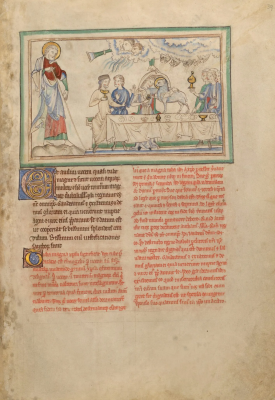
The Marriage of the Lamb, Unknown artist (English) © The J Paul Getty Museum, Los Angeles, Ms. Ludwig III 1, fol. 39
Source: Christian Art
Gospel of 4 July 2026
Matthew 9:14-17
At that time: The disciples of John came to Jesus, saying, 'Why do we and the Pharisees fast, but your disciples do not fast?' And Jesus said to them, 'Can the wedding guests mourn as long as the bridegroom is with them? The days will come when the bridegroom is taken away from them, and then they will fast. No one puts a piece of unshrunken cloth on an old garment, for the patch tears away from the garment, and a worse tear is made. Neither is new wine put into old wineskins. If it is, the skins burst and the wine is spilled and the skins are destroyed. But new wine is put into fresh wineskins, and so both are preserved.'
Reflection on the Medieval Illuminated Manuscript Page
The question posed by the disciples of John the Baptist in today's Gospel reveals that they noticed a striking difference between John the Baptist's ministry and that of Jesus. John's mission was marked by fasting, self-denial and a strong call to repentance. Jesus, by contrast, seemed to bring something different. His ministry was often associated with meals, fellowship and celebration. In response to their question, Jesus compares His presence among the people to that of a bridegroom at a wedding feast. In the villages of Galilee, weddings were among the most joyful events in community life, occasions of abundance, laughter and festivity. No one would think of fasting while the bridegroom was present.
This image tells us something profound about who Jesus is and what He came to reveal. Through His words and actions, Jesus unveiled the heart of God: a joyful heart. That is why Jesus so often shared meals with tax collectors, sinners and others whom society looked down upon. His presence among them was a sign that God's love and joy extends to everyone. The image of new wine and new wineskins Jesus uses, therefore points to the freshness and joy of the Gospel itself. Ultimately, every celebration in the Gospel points forward to the great promise found at the end of Scripture in the Book of Revelation: the invitation to the eternal banquet, the wedding feast of the Lamb, where all are called to share in the joy of God's kingdom.
Our delightful medieval illumination depicts the Marriage Feast of the Lamb described in the Book of Revelation, the moment when Christ the Lamb is united forever with His Bride, the Church. Rather than presenting the scene as an abstract heavenly vision, the artist imagines it as a medieval wedding ceremony. The Church is shown as a beautiful young woman clothed in dazzling white garments, echoing Revelation's description of the Bride dressed in "fine linen, bright and pure." The illuminator enriches the biblical text with details familiar to medieval viewers: a large wedding ring placed on the Bride's finger and a white cloth held over the couple's heads, symbolising the sacred bond of marriage. Angels float above in celebration, while the hands of God descend from heaven to bless the union. God Himself looks on from the side, witnessing the fulfilment of His plan of salvation. The Book of Revelation ends not with destruction, but with a wedding feast. The artist beautifully conveys the Christian hope that history culminates in a loving and eternal union between Christ and His people.
LINKS
Christian Art: https://christian.art/
Today's reading: https://christian.art/daily-gospel-reading/matthew-9-14-17-2026/
 Facebook
 Twitter
 LinkedIn
 Print
Print Email
Email








 Facebook
 Twitter
 YouTube
 LinkedIn
 Pinterest