


COMECE reflects on 'outer space as a new frontier of the common good'
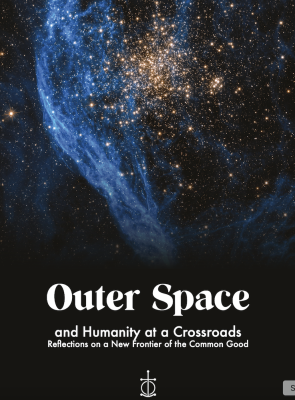
On 9 June 2026, the Commission of the Bishops' Conferences of the European Union (COMECE), in cooperation with the Caritas in Veritate Foundation hosted a High-level Conference on the theme: "Outer space: A New Frontier of the Common Good". Bringing together representatives of the Catholic Church and EU institutions, diplomats, academics and experts, the event provided an opportunity to reflect on the ethical, political and strategic implications of outer space governance and sustainability in an increasingly interconnected world. Read the Publication by the Caritas in Veritate Foundation
The Conference took place in the context of a rapidly evolving global space sector. In recent years, outer space has become an increasingly prominent area of strategic, economic and scientific interest. Alongside the growing ambitions of established space powers, an increasing number of countries are seeking to develop or expand their presence in space. At the same time, the sector has also witnessed a significant rise in private actors, whose expanding role in satellites deployment, space exploration and commercial activities is reshaping the governance landscape.
These developments underscore the urgency of fostering international dialogue and cooperation to ensure that outer space continues to serve the common good and its exploration and use remain the "common province of humankind", accessible for peaceful and sustainable purposes for the benefit and in the interest of all countries, in accordance with the 1967 Outer Space Treaty.
The event opened with remarks by HE Archbishop Ettore Balestrero, Permanent Observer of the Holy See to the UN and other International Organisations in Geneva in his capacity as President of the Caritas in Veritate Foundation, and by Fr Manuel Barrios Prieto, General Secretary of COMECE. In their welcoming remarks, they both stressed how deeply moral these issues are, as they concern peace, justice, and the dignity of present and future generations.
HE Archbishop Balestrero affirmed that "we must not turn space into a jungle. Space is not terra nullius; it is not a lawless frontier governed by the principle of "first come, first served." It offers humanity a kind of second chance - an invitation to avoid repeating many of the mistakes made on Earth. Space therefore must be explored with responsibility, solidarity, and respect for subsidiarity, for the benefit of present and future generations".
Echoing these comments, Fr Barrios Prieto noted how, in an increasingly polarised world, "the European Union and its institutions have a significant role to play in guiding humanity in navigating such questions wisely. Initiatives such as the proposed EU Space Act, the development of a European Space Shield and investments in flagship programmes like Galileo, Copernicus and IRIS, reflect the EU's growing responsibility in shaping the governance of space activities."
The Conference then featured the presentation of the Caritas in Veritate Foundation's publication "Outer Space and Humanity at a Crossroads: Reflections on a New Frontier of the Common Good", by one of its authors, Prof. Dominique Lambert, from the University of Namur and Member of the Royal Academy of Belgium. The publication offers interdisciplinary ethical reflections and recommendations on the opportunities and responsibilities associated with humanity's expanding presence in outer space. It also contains a collection of major Papal pronouncements on outer space since Pope Pius XII.
The presentation was followed by a high-level roundtable discussion moderated by HE Mr Thomas Antoine, Honorary Ambassador of Belgium. It featured notable contributions from Mr. Giancarlo Granero, Head of Unit "Space Economy" at the Directorate-General for Defence Industry and Space (DEFIS) of the European Commission, Mr Jean-Pol Poncelet, former Belgian Minister of Defence, Prof Annick Castiaux Rector of the University of Namur and Ms Maria-Gabriella Sarah, expert at the Joint Research Centre of the European Union, seconded by the European Space Agency.
Participants of the event explored the growing importance of outer space for communication, security, environmental monitoring and technological development, while addressing emerging challenges such as space debris, the congestion of low-Earth orbit and the risk of the militarisation of space.
Attention was given to the ethical dimensions of space activities and to the need for governance frameworks capable of balancing technological innovation, security considerations and the responsibility to safeguard the common good for present and future generations.
The Conference reaffirmed the importance of promoting a human-centred approach to scientific and technological progress, guided by ethical responsibility, international cooperation and a commitment to peace. As humanity's presence beyond Earth continues to expand, participants emphasised the need to ensure that outer space remains a shared heritage whose exploration and use should contribute to the flourishing of the entire human family.
The event forms part of COMECE's ongoing efforts to foster dialogue between the Catholic Church, the EU institutions and civil society on emerging policy challenges affecting the future of humanity and the common good.
Download
Publication on 'Outer space' by the Caritas in Veritate Foundation [EN]
 Facebook
 Twitter
 LinkedIn
 Print
Print Email
Email














 Facebook
 Twitter
 YouTube
 LinkedIn
 Pinterest