


Philippines: Mining companies exploiting Indigenous peoples
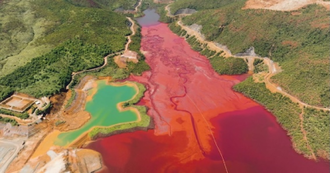
Image: globalwitness.org
The Philippines is blessed with great mineral wealth. It has an abundance of nickel, copper, gold, cobalt, chromite, iron ore, manganese, zinc, lead, mercury, and even rare earth elements. It also has vast resources of renewable energy - wind, solar, hydro, geothermal and biomass - yet it depends on burning coal, the most hazardous fuel in the world.
It has a highly educated, culturally diverse, talented and intelligent population, and yet there is wealth disparity.
Out of the country's population of 117 million gifted, kind and generous Filipinos, approximately 14 million families (51 percent) considered themselves poor in 2025. Of this figure, approximately 5.5 to 6 million families said they experienced involuntary hunger - that is, near starvation - at least once in the previous three months. Within that group, 1.2 million families (about 4.5 percent) said they experienced severe hunger, which means they go hungry often or always.
This great nation has one of the highest levels of wealth inequality because out of 117 million Filipinos, there are 12 to 15 dollar billionaires and over 12,000 dollar millionaires, according to 2025-2026 reports. Less than 1 percent of the population owns and controls roughly 45 to 50 percent of the nation's wealth.
There are historical, political and educational reasons for this. For one, families control the political system. Transparency International's recently released Corruption Perceptions Index (CPI), which measures the level of corruption, sadly shows that the Philippines dropped to 120th place out of 182 countries. Rich families perpetuate their dynastic rule through patronage, promoting a false perception of giving security, vote buying, media manipulation, false narratives of their generosity, popularism, and blatant propaganda. Monopolizing power at all levels, they can manipulate the electoral system in their favor, since accountability is weak. Most investigations of corruption end without anyone punished. These dynastic politicians make laws to protect themselves, increase their wealth, and negate opposition.
Poverty and corruption spread downward to all sectors of society. Poverty grows due to the serious lack of industrialization and dependency on remittances from 2.7 million overseas Filipino workers (OFWs), mostly in Asia, including the Middle East. In 2024, OFWs sent home P262.20 billion in remittances. But our economy still struggles with rising prices of oil - the highest in all of Asia - which were hiked by oil companies and compliant officials. Poverty persists because of low-paying jobs and a weak manufacturing sector.
This is where the heart of the problem lies: lack of well-paying jobs creates poverty and hunger, and many in the middle class are living in debt. The ruling elite justify poverty, saying "life is as good as it's going to get," so there are low expectations and low political awareness, and little or no activism to change the situation. This gives people low self-esteem and a "bahala na" attitude to life to tolerate corruption and endure poverty.
This is also reflected in the Philippines' educational standards. In the latest Program for International Student Assessment (PISA) survey, Filipino students were ranked near the bottom globally and behind their Southeast Asian counterparts in student proficiency. For instance, in reading scores, the Philippines ranked seventh out of eight participating Southeast Asian countries, outperforming only Cambodia. The Philippines, while good in English, ranks lowest in core subjects like math, science and reading, compared to its neighbors. There is what is called the "proficiency collapse." There is a sharp decline in proficiency as students move from primary school to high school. Approximately 30.5 percent of learners in the third grade are considered proficient. When they reach 10th grade, proficiency drops drastically to just 1.36 percent. By the end of senior high school, proficiency rates fall to near zero (0.4 percent).
Some say this is due to the poor training of teachers and a lack of encouragement given to their students to meet high standards. This is having a disastrous effect on the quality of education, resulting in few quality jobs and a lower standard of living. The apparent tolerance of the government and society for the proliferation of images of violence and child sexual abuse on social media is damaging the personality of students. These abusive materials create a culture of tolerated immorality, emotional disturbance, and scores of teenage pregnancies, all of which distract from serious studies. The United Nations Children's Fund reported that 3,343 girls aged 10 to 14 gave birth in 2023. It is estimated that over 500 Filipino girls aged 15 to 19 become mothers every day. It is highly likely that they and their children will live in poverty.
The export of semiconductors is 50 percent of the total export revenue of the Philippines. However, the mining industries exporting unprocessed minerals to China contribute less than 1 percent to the country's economy. In 2024, such exports were worth roughly $7.37 billion.
Little or none of this revenue benefits the Filipinos from whose ancestral lands the minerals were extracted. This is the injustice and shame of the nation that few know or care about. Serious conflicts have broken out between the Lumads, Indigenous peoples of Mindanao, including the B'laan, Subanen, and Manobo, because of the Tampakan Project operated by Sagittarius Mines in South Cotabato, Sultan Kudarat and Davao del Sur provinces. These conflicts have lasted for decades, with as many as 5,000 people displaced and anti-mining advocates murdered.
In the Caraga region, specifically Surigao del Sur and Agusan del Norte provinces, mining companies such as Marcventures Mining and Development Corp., Taganito Mining Corp. and Platinum Group Metals Corp. reportedly operate with impunity. These corporations have allegedly moved into ancestral lands and damaged the environment, where nearly 84 percent of nickel tenements overlap with ancestral domains and biodiversity hotspots. These environmental issues have resulted in violence and the highest recorded number of killings of Indigenous and anti-mining activists. As many as 298 land defenders have been killed; a third were Indigenous. They make up 15 percent (17 million) of the Philippine population and live with nature.
Philippine mining corporations are presenting themselves in the media as heroes and environmental protectors while covering up their detrimental impact on the environment. They are using the military to force Indigenous peoples to sign consent papers for more mining operations and to evacuate their ancestral lands. We should stand with these Filipinos suffering so many injustices.
Fr Shay is a Columban Missionary, who founded the Preda Foundation in 1974, which campaigns for children's rights; rescuing abused, neglected and trafficked children; and protecting, healing and empowering them in three residential facilities. Read more about his work here: www.preda.org
 Facebook
 Twitter
 LinkedIn
 Print
Print Email
Email














 Facebook
 Twitter
 YouTube
 LinkedIn
 Pinterest