

COLUMBAN SCHOOLS COMPETITION - 3rd Place Article
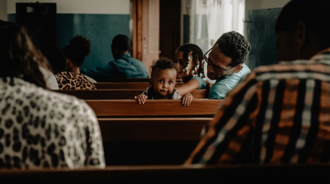
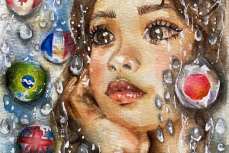
Photo by Danique Godwin on Unsplash
A Light in the Dark
by J. (15) Holy Trinity Academy, Telford, Shropshire
One crisp autumn morning, the people of St George's Church faced a challenge unlike any they'd encountered before. A group of refugees had arrived in town. They'd fled war, violence, and persecution, crossing seas, deserts, and dangerous borders in search of a safe place to call home. Many were traumatised, their lives torn apart by conflict, and they arrived in Britain with only the clothes on their backs and stories of heartache that no one should have to bear.
At first, the locals were unsure how to respond. The world outside had become increasingly divided, and fear and uncertainty surrounded the influx of refugees. People in the town whispered among themselves, asking how they could help and wondering if
they'd enough resources to provide for these strangers.
But one Sunday, Father Michael stood before his congregation, feeling compelled to speak about the call they had as a community of faith, to respond to the needs of the most vulnerable with love, generosity, and dignity.
"Brothers and sisters," he began, his voice steady but filled with emotion: "We are a people of faith. We follow Christ, who called us to love our neighbour as ourselves. And when we see someone in need, we are called to reach out, to offer not just charity, but our friendship, our solidarity, and our hearts."
He paused, as his words settled. The congregation looked back at him, unsure of how they could live up to such a call. But Father Michael knew that love wasn't just a feeling it was an action.
Father Michael read from Matthew's Gospel, where Jesus says, "I was a stranger and you welcomed me." (Matthew 25:35). "We're called not just to welcome the stranger," he said, "but to see the face of Christ in each person we meet. These refugees are not ' them'-they are our brothers and sisters in need. And our response will show the world what it means to be a community of faith."
Inspired by these words, the people of St. George's Church knew they couldn't sit idly by. They had to act. They also knew that their faith was the foundation of their response, and it was through their shared values of love, solidarity, and hospitality that they could begin to make a difference.
The church became a beacon of hope in the town. The parishioners gathered after Mass to discuss what they could do to help. "We may be a small group," said Rachel, a schoolteacher who had been volunteering at the local food bank, "but we have hands, hearts, and a faith that calls us to act. Let's start by opening our doors."
The idea resonated with everyone. The church hall, usually used for community events and tea gatherings, would now become a place of refuge and sanctuary. They began collecting food, clothing, and donations for the refugees, but more than that, they committed to offering their time and companionship. The church became not just a place for material help, but a place where stories could be shared, where pain could be expressed, and where hope could be reborn.
Over the next few weeks, the town began to change. Refugees from across the town and nearby areas started to visit the church, finding more than just charity - they found a community that was willing to listen, to help them navigate their new lives in Britain, and to let them know they were not alone.
In the church, an unexpected bond began to form between the long-time residents and the newcomers. Though the refugees spoke different languages and came from distant places, they shared something fundamental with the people of the town-a desire for safety, dignity, and belonging.
Among the newcomers was Amina, a mother of three who had fled Syria with her children after her husband was killed in the war. She had arrived in Britain with little more than a small suitcase, but she found comfort in the warm embrace of the parishioners, who welcomed her into their midst. The first time Amina walked into the church, she was overwhelmed by the kindness of the people.
Amina wasn't the only one who found solace in the church. The community rallied around her and others like her. They helped Amina's children enrol in school, and the women of the village taught her how to cook traditional British dishes. As she learned the language and adjusted to her new life, Amina also began to share her own culture with the others, inviting the parishioners into her home for dinner, telling stories of her homeland, and offering a window into the world she had left behind.
Over time, the refugees who'd arrived as strangers became part of the fabric of the town. They found work, built friendships, and most importantly, began to heal. The town transformed, not just through the material help it offered, but through the powerful, transformative act of seeing each other as equals, as human beings worthy of dignity and respect.
One cold winter evening, Father Michael stood before his congregation once again. The church was filled with people, both locals and refugees, who'd come together to celebrate Mass. As the congregation knelt in prayer, Father Michael looked around at the faces before him-people of every background, every story, and every journey. And in that moment, he realised that the true gift they had given one another wasn't just safety or comfort. It was the gift of belonging.
"When we welcome the stranger," Father's homily started, "we're not just opening our doors. We're opening our hearts, our communities, and our very souls to God's love."
In that quiet town in Britain, the people had not only welcomed refugees - they had shown the world what it truly meant to love, to live out the Gospel, and to respond with compassion. And in doing so, they had created a light that shone in the dark, a beacon of hope that would continue to guide those who sought refuge for generations to come.
J. says: "My article is not a true story but inspired by what is happening around the world.. I am deeply grateful to my school and especially my RE teachers and the headteacher for believing in me and encouraging my writing. Their support has helped me grow not only as a writer but also in my understanding of faith and values."
 Facebook
 Twitter
 LinkedIn
 Print
Print Email
Email








 Facebook
 Twitter
 YouTube
 LinkedIn
 Pinterest