


Intense attacks on Ukraine shatter hopes for peace talks
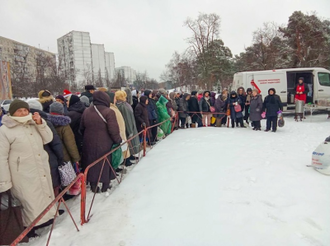
Freezing cold queues for basic food supplies
Source: CAFOD
"I wrap my baby in a blanket... and when it gets extremely cold,
I try to carry her in my arms more often, so she can warm up from my body heat."
- Mariana, Ukrainian mother
Postponed talks between US, Ukraine and Russian envoys are due to get underway in Abu Dhabi on Wednesday 4 February.
Meanwhile, life for Ukrainians, in sub-zero temperatures, is made harder by unrelenting attacks. The one-week reprieve by Russia, announced by President Trump in Washington, came to almost nothing. A day ahead of the rescheduled talks, Russia launched its biggest drone and missile attack so far this year.
Already 2026 has been brutal. Over 3,000 drones attacked Ukraine in the first three weeks of January. More than in the whole of 2023.
Hundreds of thousands of people are without heat or light, in temperatures below -20C. Power cuts are a matter of life and death. In a recent attack, Russian ballistic missiles and drones targeted vital power supplies again, just as utility services had begun rebuilding after the previous strike 10 days earlier.
Josie O'Reilly, CAFOD's Ukraine Country Representative, said: "We must not forget that millions of Ukrainians have been forced to survive for months in temporary accommodation, sheltering in basements and stairwells, and living in constant fear of bombardment.
"People in Ukraine are showing incredible resilience and strength, but the impact of this conflict has reached inside families too. Indiscriminate attacks have brought uncertainty and widespread personal loss and caused psychological distress in thousands of homes, and in the millions who have been displaced.
"Ukraine needs answers, now, as well as long-term commitment from reliable allies, to rebuild lives and communities that have been systematically destroyed."
Twice a week, Caritas-Spes Ukraine, supplies hot meals to 200 people in Kyiv. The aid agency is providing mobile kitchens and working in cooperation with the State Emergency Service, connecting with volunteers to strengthen the response on the ground.
In Kharkiv, a social kitchen and 'warm hub' provide places for people to receive humanitarian assistance, clothing, and footwear. Caritas vehicles are helping those with limited mobility to relocate to areas with easier living conditions.
When the power is on Ukrainians do what they can: charging devices, running heaters, and warming up water to wash with.
But the logistics required just to stay alive are exhausting.
Mariana shared her experience of surviving in Kyiv with her three-month old baby: "I am constantly afraid of her catching a cold: I wrap her in a warm blanket, with two or three layers of warm clothing underneath. When it gets extremely cold, I try to carry my baby in my arms more often, holding her close so she can also warm up from my body heat."
Emergency food kits are being distributed, to provide fast nutrition without the need to set up a field kitchen. In some locations new 'eco-flow' systems provide spaces where people can gather, get warm and charge essential household gadgets.
Tetiana Stawnychy, head of Caritas Ukraine, says the country is on the brink of a humanitarian catastrophe, and creating the conditions for a peace that will last, is fundamental to any future:
"At Caritas Ukraine we focus on humanitarian aid, and on strengthening social cohesion. Because, as we know, peace is not just a moment in time; peace comes as a process.
"It is a state of being, and it's one of the things that we work on: to make sure that we are building a society that will be ready for peace, and ready to handle the challenges that will come, even after a ceasefire."
Josie O'Reilly continues: Our local partners in Ukraine are continuing to support people's basic needs: warmth, shelter, food, or just someone to speak to. CAFOD will continue to stand alongside our partners and friends on the ground as they recover and heal, and we call on all world leaders, including those meeting in Abu Dhabi, to do the same."
Contributions to CAFOD's Ukraine Humanitarian Crisis Appeal so far have helped over 185,000 vulnerable women, men and children access vital aid including food, water, shelter and psychological counselling.
To find out more, or to donate, go to: www.cafod.org.uk/Ukraine.
 Facebook
 Twitter
 LinkedIn
 Print
Print Email
Email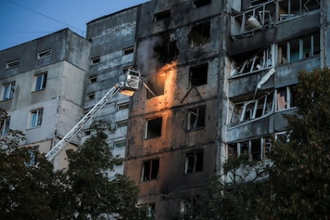















 Facebook
 Twitter
 YouTube
 LinkedIn
 Pinterest