


Gospel in Art: No one puts new wine into old wineskins
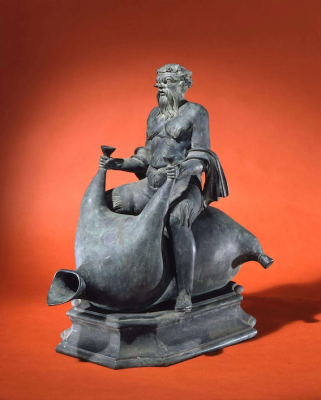
Silenus riding a wineskin, fountain figure, Replica of 1st century BC statue from the Villa dei Papiri, Herculaneum © The Penn Museum, Pennsylvania, USA
Source: Christian Art
Gospel of 19 January 2026
Mark 2:18-22
At that time: John's disciples and the Pharisees were fasting. And people came and said to Jesus, 'Why do John's disciples and the disciples of the Pharisees fast, but your disciples do not fast?' And Jesus said to them, 'Can the wedding guests fast while the bridegroom is with them? As long as they have the bridegroom with them, they cannot fast. The days will come when the bridegroom is taken away from them, and then they will fast in that day. No one sews a piece of unshrunken cloth on an old garment. If he does, the patch tears away from it, the new from the old, and a worse tear is made. And no one puts new wine into old wineskins. If he does, the wine will burst the skins - and the wine is destroyed, and so are the skins. But new wine is for fresh wineskins.'
Reflection on the Ancient Roman Sculpture
In today's Gospel, Jesus refers to himself as the 'bridegroom', a title that may sound a little unusual to our ears, yet it echoes a deep biblical tradition. The prophets of the Old Testament often described God as the bridegroom who lovingly binds himself to his people, Israel, forming a covenant that is both intimate and faithful. By using this image for himself, Jesus reveals that God's promised bridegroom has now arrived in human form. His love is no longer directed only to one nation but offered to all who welcome the Good News; it is a true wedding invitation extended to the entire world. Saint Paul later builds on this by calling the Church the Bride of Christ: a community united to the Lord not by duty but by love.
This marital imagery speaks to the kind of relationship Jesus desires with each of us: committed, faithful, loving, wholehearted. Even when our love falters, his does not. As Paul reminds us, "He remains faithful", the steadfast spouse who never gives up on us. This unfailing love isn't meant to make us careless so we can 'just do what we want, as God will forgive us anyway'. Rather, it should strengthen our trust when we fall. And when we do fall, like in any relationship, we should truly repent, and ask for forgiveness. Christ's love is like new wine we read in today's Gospel: always fresh, always active, always seeking space to grow within us. The task for us is to become new leather wineskins, able to expand and expand our souls, as more and more graces flow in.
Our sculpture was discovered at the Villa dei Papiri in Herculaneum. It is named after its unique library of papyri scrolls, discovered in 1750. The Villa was considered to be one of the most luxurious houses in all of Herculaneum and in the Roman world. Its luxury is shown by its exquisite architecture and by the large number of outstanding works of art discovered, including our sculpture. It depicts Silenus riding a wineskin. Silenus, in Greek mythology, is the jovial old companion and tutor of Dionysus, the god of wine and festivity. Often depicted as rotund, bearded, and delightfully unsteady on his feet, Silenus embodies the comic wisdom (and foolishness) that comes with too much wine. One popular artistic interpretation shows him riding not a horse but a wineskin, clinging on with tipsy delight as if wine itself were his horse. In our sculpture we can see how large these ancient wineskins could be. Legends further portray him as both drunken and profoundly wise: when captured by King Midas, Silenus was said to reveal deep secrets about the nature of life: that endless pleasure leads only to sorrow, and that true happiness is beyond worldly desires. Silenus reminds us that joy and insight sometimes come wrapped in laughter, vulnerability, and the odd stumble along the way.
LINKS
Gospel in Art: https://christian.art/
Today's Reflection: https://christian.art/daily-gospel-reading/mark-2-18-22-2026/
 Facebook
 Twitter
 LinkedIn
 Print
Print Email
Email















 Facebook
 Twitter
 YouTube
 LinkedIn
 Pinterest