
A way forward for RE after double warnings issued to Irish Church
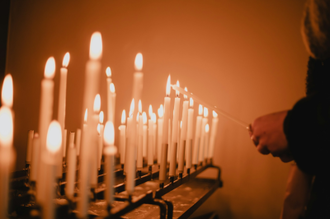
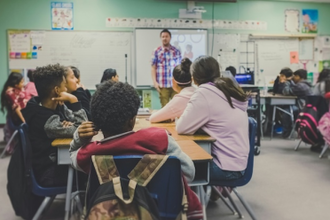
Photo by Sinitta Leunen on Unsplash
Priest and author, Fr Sean Smith who ministers at Knock Shrine, writes:
Recent statements by the Ministries of Education, on both sides of the Irish border, have left a solemn warning that the end of religious education in Catholic schools could be around the corner. This calls for a serious, positive, and radical response. I dare to propose a national plan of action in this article:
Restore parents' birthright
'You are the first teachers of your child in the ways of faith, and may you be the best teachers' is what we tell the parents at the baptism of their child. This is the theory, but not the practice. For centuries, bishops, priests, teaching Brothers, Sisters, and lay teachers have been and still are the first teachers. We presented faith, and continue to speak about it, as an accumulation of religious knowledge, and so we use the language 'teachers', 'religious education', and 'knowledge of the faith'. In this way, parents have been stripped of their birthright. This would be an opportune time to return it and to be serious about what we tell them at their children's baptism.
In this regard, we could learn something from the staff of St. Anne's nursing home. They addressed this kind of superior attitude towards their residents with a large, beautiful statement in decorative calligraphy, which hangs in the lobby: You do not live in our workplace. We work in your home.
What the way of faith is
Faith is not a head trip. Biblical faith is a relationship. Abraham, a pagan, is our model of faith because he walked with God. To believe and put one's faith in God in the Gospel of John is to become a disciple and friend of Jesus, and in Mark, to be his companion. Paul teaches that 'man believes with his heart and so is justified, and he confesses with his lips, and so is saved' (Rom 10:8). For the Hebrew culture, the heart was the seat of thought. If we don't understand Paul, it's because we function out of a Greek philosophical and Scholastic mindset, which is primarily cerebral and non-relational. We need to speak the language of our roots, which is primarily relational, is people-friendly, and easy for parents and children to understand.
Relationship with Jesus
Where do we begin to empower parents to be the first to form (not 'educate') their children in a relationship with Jesus? 'If you don't hear the name of Jesus spoken,' warns St. Athanasius, 'close your ears.' The ordained must be infected with Jesus, live Jesus, preach, and teach Jesus if they are to infect parents to infect their children. Jesus is caught, not taught! Formation begins in the encounter with Jesus in the Paschal Mystery (Pesh = Pasch, Mystery = Sacrament), the Passover Sacrament, where we celebrate the death, resurrection and ascension of Jesus - and ours because we died and rose in and with him (Rom 6:8). This quality and personal encounter is impossible in a classroom or parish hall setting.
We are Christians
We are baptised Christians. A Christian is firstly a disciple, a follower of Jesus. Therefore, Jesus is the sole object of formation, and we should speak this relationship language, not 'receiving the sacraments'. We have replaced discipleship, a relationship with Jesus, with 'getting' three sacraments without any affiliation to him, and his body, the Church. They are reduced to 'somethings' to get instead of a loving relationship with 'Someone.' There is only one sacrament: Jesus. He is the sacrament of God. The other sacraments are interconnected extensions of himself. Yet they are treated as separate entities. (The stark reality is that the three sacraments of initiation are regarded as merely graduation sacraments for about ninety per cent.)
You will not find a better, more powerful definition of a Christian than that of Pope Benedict: Being a Christian is not the result of an ethical choice or a lofty idea, but the encounter with an event, a person, which gives life a new horizon and a decisive direction (Deus Caritas Est, Introduction). He is totally relationship and Jesus-centered. 'I never tire of repeating those words of Benedict XVI,' wrote Pope Francis, 'which takes us to the very heart of the Gospel' (EG 7).
A new challenge
That religious education will likely be removed from schools, is not a crisis, nor some academic problem to solve. It's an exciting new challenge to move from head to heart formation, both for parents and for children. Who will be Jesus the Good Shepherd? Naturally, the shepherd of every diocese in Ireland. What a powerful witness it would be for a national thrust led by the bishops of Ireland! Delegate the priests to minister Confirmations. Go to the deaneries for as long as is needed, and meet personally with the lost sheep. 'Know the smell of the lost sheep,' as Pope Francis put it. Begin with primary schools contacting the parents through the school to arrange the meetings.
This relationship model will happen in the encounter with Jesus in the liturgy, who has already initiated the encounter. He repeats to each of us today the same words of longing he spoke to his apostles at the Last Supper: 'I earnestly desire to eat this Passover with you before I suffer' (Lk 22:15). Long before we receive him in Holy Communion, he has already received us into his love.
The ministries of education have provided a krisis, in the Greek meaning of decision or choice, thus offering a golden opportunity to empower parents. See it as a grace-filled moment to relinquish the good and aim for the best. They are making it easier for the bishops because the latter now have a compelling reason to engage with the parents. And the parents will be open to dialogue as never before. Carpe Diem! - seize the day, and make this a new beginning. Bishops could rejoice with Isaiah, 'See, I am doing something new' (43:19). A once-in-a-lifetime opportunity to catechise and evangelise the parents.
The goal
Jesus is the goal. Evangelisation, conversion, and metanoia will turn the parents around, facing him, which is the essence of conversion. The parents, not the children, should be the focus. It would be a disastrous failure if the parish replaced the school, and continued to 'teach religious education' and 'religious knowledge.' It would be a continuation of discrimination against the parents and withholding their birthright. It would be like farming out the children to strangers for adoption who would give them information but no formation.
Formation happens best within the worshipping community. The bishops must encourage and exhort the parents to join the believing community weekly for the celebration of the Paschal Mystery - the death, resurrection and ascension of Jesus. It is irreplaceable. They will need to make it crystal clear to the parents that the reason for the weekly celebration is not sacramental preparation per se. It would be best not to use that language. It is about discipleship, costly grace, being a follower and companion of Jesus, in which sacramental preparation is incorporated. (See Bonhoeffer's excellent pastoral application of 'costly and cheap grace').
Assure the parents that the parish will support them in their rightful role as the best formators (not educators) of their children. Promise them that they will not be expected to acquire a lot of religious knowledge to carry out this privilege of guiding their children to a relationship with Jesus. All that will be required of them is to do the bare minimum expected of every Christian: Bring them every Saturday evening or Sunday, to experience Jesus's love for them and their parents; to worship God with their neighbours and friends; to give him praise and thanks because everything we have comes from him.
Process of discernment
What is the Spirit saying? A quick fix is not the answer to the magnitude of the present challenge. Nor are meetings and committees. We must engage in a process of discernment to get this right. Our homework would be to familiarise ourselves with solid and sound teaching on the Paschal Mystery and its potential for infinite formation. We could begin with the Encyclicals on the liturgy.
The Eucharist is the source and summit of the Christian life (Lumen Gentium 11). 'The other sacraments are bound up with and orientated towards it' (CCC 1324). 'The liturgy is the privileged place for catechising the People of God' (CCC 1074). 'In brief, the Eucharist is the sum and summary of our faith: 'Our way of thinking is attuned to the Eucharist, and the Eucharist, in turn, confirms our way of thinking (CCC 1327). Stressing the primacy of the liturgy in forming the People of God, Pope Paul VI wrote: 'In the restoration and promotion of the sacred liturgy, this full and active participation by all the people is the aim to be considered before all else; for it is the primary and indispensable source from which the faithful are to derive the true Christian spirit' (Sacrosanctum Concilium 14). With clear and utter conviction, he points us in the right direction: 'Let us learn from Nazareth that the formation received at home is gentle and irreplaceable' (Feast of the Holy Family).
A timely Letter
Pope Francis's Apostolic Letter on the Liturgical Formation of the People of God: Desiderio Desideravi, is the perfect source for discernment. I fully believe he provides the answer to the questions about the future of faith formation for parents and children. A few quotations will whet our appetites:
'Before our response to his invitation - well before! - there is his desire for us. Every time we go to Mass, the first reason is that we are drawn there by his desire for us' (DD 6). 'The liturgy is the first source of divine communion in which God shares his own life with us. It is also the first school of the spiritual life. The liturgy is the first gift we must make to the Christian people' (DD 30). 'The liturgy is about praise, about rendering thanks for the Passover of the Son whose power reaches our lives. The full extent of our formation is our conformation to Christ. I repeat: it does not have to do with an abstract mental process, but with becoming him' (DD 41). 'It is a being plunged into his passion, death, resurrection, and ascension, a being plunged into his paschal deed' (DD 12). Addressing the ars celebrandi, he says that 'it requires an understanding of the dynamism that unfolds through the liturgy….by means of the memorial, the Paschal Mystery is made present so that the baptised can experience it in their own lives' (DD 49). 'We are formed by the liturgy for the liturgy' (DD 34).
'I ask all the bishops, priests, and deacons, the formators in seminaries, the instructors in theological faculties and schools of theology, and all catechists to help the holy people of God to draw from what is the first wellspring of Christian spirituality' (DD 61). 'Let us abandon our polemics to listen together to what the Spirit is saying to the Church. The Paschal Mystery has been given to us. Let us allow ourselves to be embraced by the desire that the Lord continues to have to eat this Passover with us' (DD 65). We must keep before us what Pope Francis means by the 'liturgy.' He means the Paschal Mystery, the celebration of the death, resurrection and ascension of Jesus.
That the Paschal Mystery - the death, resurrection and ascension of Jesus flows with certainty comes from my own experience and insight. Of course, it is Jesus' certainty, not mine (2 Cor 1:21-22; 1 Pet 1:9). I am certain that I am saved, that I am loved, that I am forgiven, and guaranteed eternal life. I am also certain that this has to be communicated to the people, and particularly to our estranged brothers and sisters. This follows Pope Francis' exhortation, that on the lips of the catechist (the presider is a catechist), the first proclamation must ring out over and over: "Jesus Christ loves you; he gave his life to save you; and now he is living at your side every day to enlighten, strengthen and free you" (Evangelium Gaudium 164). I am equally certain that absent Catholics are more likely to return if they experience hope, newness, freshness, peace, and joy in the celebration of the Paschal Mystery.
Because the liturgy is 'the first school of the spiritual life' and 'the first wellspring of Christian spirituality,' there is only one spirituality. It is the primary source of all secondary spiritualities. Jesus is the Paschal Mystery. He is the liturgy, the leiturgos, the worker of our salvation.
I suggest that Pope Francis's Letter be studied and followed by several days of national discernment. The witness of unity, of bishops, priests, deacons, and laity coming together in their own dioceses at the same time, would send a powerful message of Synodality in action on the most urgent and important topic today.
Sean Smith
 Facebook
 Twitter
 LinkedIn
 Print
Print Email
Email






 Facebook
 Twitter
 YouTube
 LinkedIn
 Pinterest