


Gospel in Art: 'Can anything good come out of Nazareth?'
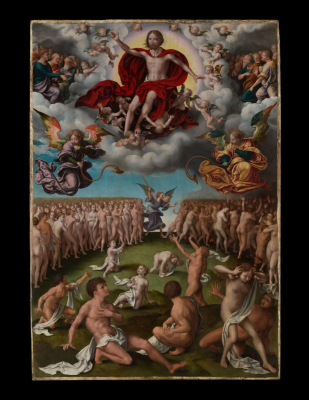
The Last Judgement, by Joos van Cleve painted. 1525-30, Oil on panel © Metropolitan Museum, New York
Source: Christian Art,
Gospel of 5 January 2026
John 1:43-51
At that time: Jesus decided to go to Galilee. He found Philip and said to him, 'Follow me.' Now Philip was from Bethsaida, the city of Andrew and Peter. Philip found Nathanael and said to him, 'We have found him of whom Moses in the Law and also the prophets wrote: Jesus of Nazareth, the son of Joseph.' Nathanael said to him, 'Can anything good come out of Nazareth?' Philip said to him, 'Come and see.' Jesus saw Nathanael coming towards him and said of him, 'Behold, an Israelite indeed, in whom there is no deceit!' Nathanael said to him, 'How do you know me?' Jesus answered him, 'Before Philip called you, when you were under the fig tree, I saw you.' Nathanael answered him, 'Rabbi, you are the Son of God! You are the King of Israel!' Jesus answered him, 'Because I said to you, "I saw you under the fig tree", do you believe? You will see greater things than these.' And he said to him, 'Truly, truly, I say to you, you will see heaven opened, and the angels of God ascending and descending on the Son of Man.'
Reflection on the Painting
In our Gospel reading, at first, Nathanael is doubtful about Jesus. He asks, "Can anything good come from Nazareth?" His judgement is quick and not very generous. But it does not last. By the end of the Gospel, Nathanael's view has completely changed. After meeting Jesus, he comes to believe and says, "You are the Son of God; you are the King of Israel." Nathanael needed time and personal encounter to see who Jesus really was and to discover the goodness that lay beneath the surface.
Jesus, however, does not need time. Even after Nathanael's dismissive comment, Jesus speaks well of him and recognises his honesty straight away. The Gospel reminds us that while we often struggle to see the good in others, the Lord sees it immediately. That is both comforting and challenging. It is comforting because God notices the goodness in us that others may overlook; but it is also challenging, as like Jesus, we asked to always see the good in others.
We should be careful not to jump to conclusions about others, and even more careful not to be quick in our judgements, because Scripture reminds us again and again that ultimate judgement belongs to God alone. This truth is powerfully expressed in The Last Judgement by Joos Van Cleve, circa 1525. We see Christ sitting enthroned at the centre, calm and authoritative, raised above the turmoil of the world, reminding us that judgement is not chaotic or impulsive, but judgement is just and divine. Around him, angels sound trumpets as the dead rise from their graves, while souls are separated, not according to appearances, reputation, or first impressions, but according to truth known fully only to God.
LINKS
Gospel in Art: https://christian.art/
Today's Reflection: https://christian.art/daily-gospel-reading/john-1-43-51-2025/
 Facebook
 Twitter
 LinkedIn
 Print
Print Email
Email















 Facebook
 Twitter
 YouTube
 LinkedIn
 Pinterest