


Ian Linden: Insecurity of National Security
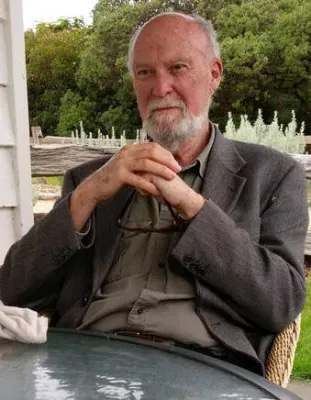
Dr Ian Linden
A concept of National Security that denies action to combat climate change, demands drastic cuts in international aid, and rejects all but narrow national interest, marked the first months of Donald Trump second Presidency. The publication of the 'National Security Strategy of the United States of America', November 2025, formalised this as US foreign policy.
For many Europeans, it is a shocking and sobering document. We are now entering a new epoch. This is not Presidential patter Air Force One or his off-the-cuff, shock-jock social media posts late at night. It's a broadly coherent and detailed account of a radical change in US foreign policy, and its motivations,.
For a European reader, the presentation of contemporary Europe, or rather the European Union and Putin's war in Ukraine, stand out. "The Trump Administration finds itself at odds with European officials who hold unrealistic expectations for the war perched in unstable minority governments, many of which trample on basic principles of democracy to suppress opposition. A large European majority wants peace, yet that desire is not translated into policy, in large measure because of those governments' subversion of democratic processes."
In a time when truth, justice, love and peace are in short supply, international bodies discredited for political motives and international law eroded, the Church's voice is one of the few able to speak truth to power. The response of the Pope has been swift: "I think the role of Europe is very important. Seeking a peace agreement without including Europe in the talks is not realistic. The war is in Europe. I think in the guarantees of security that are also being sought today and in the future, Europe must be part of them", he told the digital news service Politico" last week after meeting the Ukrainian President Volodymyr Zelenskyy. And he rejected attempts "to break apart what I think needs to be a very important alliance today and in the future". An American Pope can say this to some effect. A European Pope could not.
Parts of the Security Strategy indicate what psychologists have called 'projection': unconsciously attributing your own unacceptable feelings, thoughts, or traits to others, to avoid acknowledging them, and finding your hidden self in others. It is associated with borderline personality disorder and paranoid personalities. If the Trump administration looked in the mirror, they would see their own "subversion of democracy", their own "unstable government", "suppression of opposition" and "unrealistic expectations for the war".
Moreover, the accusations thrown at the European Union, and anything larger than a nation-state, might best suit a description of enmity. " The larger issues facing Europe include activities of the European Union and other transnational bodies that undermine political liberty and sovereignty, migration policies that are transforming the continent and creating strife, censorship of free speech and suppression of political opposition, cratering birthrates, and loss of national identities and self-confidence".
Not unlike Putin's aims, a US policy goal is now "cultivating resistance to Europe's current trajectory within European nations". This is all supposedly in a good cause. A key refrain of the Vance-Trump duo, reflected in the document's conclusion about Europe, is that we face the "stark prospect of civilizational erasure".
Pope Leo has a nuanced stance on European culture, obviously supportive of its Judaeo-Christian heritage and the values it brings, but not looking backwards. "To ensure that the voice of the Church, not least through her social doctrine, continues to be heard," he told the European Parliament last week, "is not about the restoration of a past epoch, but of guaranteeing that key resources for future cooperation and integration are not lost".
The contrasting coarseness of parts of the US text is a feature of the shift in attitude it represents. Certain words are telling. Trump, searching for a word to describe the big picture in Europe, has used "decaying". The document speaks of "cratering" birthrates. And the "erasure" of European civilisation? Those who compiled it had to find words for the White supremacist fear, the Great Replacement Theory, in which black and brown immigrants, particularly Muslims, replace Whites.
Why did the administration choose the clunky "civilisational erasure"? Could it be an unconscious recall of Erasure, a synth-pop duo whose music, according to The Washington Post, "combines synth-pop, disco, cabaret, light opera, and a bit of English choirboy sound"? No, too much diversity. Though, the titles of two Erasure hit singles from the late 1980s, Ship of Fools and A Little Respect, have an uncanny resonance.
The most important give-away occurs at the end of this apocalyptic forecasting. "Should present trends continue, the continent will be unrecognizable in 20 years or less. As such, it is far from obvious whether certain European countries will have economies and militaries strong enough to remain reliable allies. Many of these nations are currently doubling down on their present path. We want Europe to remain European, to regain its civilizational self-confidence, and to abandon its failed focus on regulatory suffocation". To that end, the document has as policy : "Building up the healthy nations of Central, Eastern, and Southern Europe through commercial ties, weapons sales, political collaboration, and cultural and educational exchanges". According to a leaked, more detailed, internal version of the Strategy document - denied by the White House - read 'we will attempt to subvert member states and focus on Poland, Austria, Hungary and Italy "with the goal of pulling them away" from EU membership.
Every florid phrase tells a story. Europe's "failed focus on regulatory suffocation" presumably refers to the - mostly normal - legislation of EU social democracies applying EU regulations and directives unpopular with investors: data protection, control of AI, consumer rights and protection of customers, control of mobile roaming charges, environmental concerns such as waste shipments and prevention of pollution.
For the US Government, 'suffocation' would describe most interventions that bridle what Popes have called "savage", "unbridled" capitalism. As Pope Francis observed in Evangelii Gaudium (2013): "How can it be that it is not a news item when an elderly homeless person dies of exposure, but it is news when the stock market loses 2 points?".
So OK, you might say, but why shouldn't Trump's USA espouse one ideology and social democrats in Europe another? Well, because the document's little throw-away line concluding the litany of EU's sins is not really about ideology. That is the packaging. It's about money, how much money Trump, Vance, their appointees and the Silicon Valley barons allegedly can make in the EU - which has tried not to give them a completely free rein.
The overall impression from Trump's attempts at brokering a ceasefire and possibly a peace agreement in Ukraine is that he is leaning towards becoming an ally of Putin. They seem to share an understanding of what is wrong with the EU. The question is whether this dramatic change is motivated by a grand geopolitical strategy to draw Russia away from what the US government sees as its number one enemy, China. Or whether, as is alleged by some observers, it comes from the promise for Trump of lucrative deals in Russia from Putin's FSB war chest. You pays your money and you takes your pick. Or your legal fees. But neither bodes well for peace and goodwill in Europe.
Professor Ian Linden is Visiting Professor at St Mary's University, Strawberry Hill, London. A past director of the Catholic Institute for International Relations, he was awarded a CMG for his work for human rights in 2000. He has also been an adviser on Europe and Justice and Peace issues to the Department of International Affairs of the Catholic Bishops Conference of England and Wales. Ian chairs a new charity for After-school schooling in Beirut for Syrian refugees and Lebanese kids in danger of dropping out partnering with CARITAS Lebanon and work on board of Las Casas Institute in Oxford with Richard Finn OP. His latest book was Global Catholicism published by Hurst in 2009.
LINK
Read Professor Ian Linden's latest blogs: www.ianlinden.com/latest-blogs/
 Facebook
 Twitter
 LinkedIn
 Print
Print Email
Email











 Facebook
 Twitter
 YouTube
 LinkedIn
 Pinterest