

The Tablet Literary Festival - A rich and fascinating exploration of the Catholic imagination
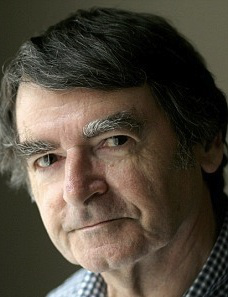
David Lodge
Authors, professors and lovers of literature converged upon Birmingham's splendid Central Library last weekend at The Tablet's first literary festival.
David Lodge, the celebrated novelist and Emeritus Professor of English at the University of Birmingham, delivered the opening lecture on Friday 19th June.
Exploring whether there was still such a thing as a Catholic imagination, Professor Lodge - himself, no longer a practising member of the Church - mentioned notable converts, like Gerard Manley Hopkins, Muriel Spark and Evelyn Waugh, whose conversion experience served to release creative energies in them.
Conversely, cradle Catholics like James Joyce, who distanced themselves from the faith, still produced work saturated in Catholicism, he argued.
Joyce's blasphemous, irreverent humour was a direct heir of the medieval carnival tradition, said Professor Lodge, while Cardinal Newman (another convert) was 'one of the great masters of English prose.'
The Professor then devoted attention to Graham Greene and identified a crucial French influence on the English author, stemming back to Baudelaire and the Decadents, and including Huysmans, Maritain and Péguy. Conversion and the symbiotic relationship between saint and sinner were key to this influence. Greene quotes Charles Péguy, in French, as a preface to The Heart of the Matter:
"The sinner is at the very heart of Christianity. Nobody is so competent as the sinner in matters of Christianity. Nobody, except perhaps the saint."
Professor Lodge explained that, existentially, one could argue that self-aware, soul-risking sinners were more authentic Christians than those merely going through the motions. The protagonists of Greene's middle-period novels were morally deeply flawed but well aware of the consequences of their actions.
Greene's writing also had strong affinities with that of François Mauriac, said Professor Lodge. Both Mauriac's The Knot of Vipers and Greene's The End of the Affair are narrated in the first person, have complex time shifts and feature mystical substitution.
Referring to a 1997 article in The Times by Piers Paul Read, 'The Decline and Fall of the Catholic Novel', Professor Lodge cited Read's identification of moral relativism and an erosion of traditional Catholic metaphysics as key elements in this supposed decline.
Pondering Read's charge, he added certain other factors to consider in the question of decline. How did a monolithic Church become a pluralistic one? The answer, Vatican II and other secularising movements; modern Biblical scholarship; Humanæ Vitæ ('seriously indefensible' in his view), and finally, interfaith dialogue - commendable but undermining the claims of the purported one true faith.
On Saturday 20th June, Roy Foster, Carroll Professor of History at the University of Oxford, delivered a fascinating and richly illustrated lecture entitled 'Hagiography and the Irish Revolution' - this amounted to an exploration, particularly through diaries, of the unholy alliance of reactionary politics and reactionary Catholicism in the wake of the Easter Uprising, the Civil War and the coming into being of the Free State.
Foster's recent book, Vivid Faces: The Revolutionary Generation in Ireland 1890-1923, recounts the lives of 'Young Ireland': those linked together by youth, radicalism, subversive activities, enthusiasm and love.
As Foster's narrative makes clear, the Ireland that eventually emerged bore little relation to the brave new world they had conjured up in student societies, agit-prop theatre groups, vegetarian restaurants, feminist collectives, volunteer militias, Irish-language summer schools, and radical newspaper offices.
Looking back from old age, Bulmer Hobson, a Belfast Quaker who was one of the most charismatic members of the revolutionary generation, reflected: "The phoenix of our youth has fluttered to earth such a miserable old hen I have no heart for it.' But he also wondered: 'How many people nowadays get so much fun as we did?"
Professor Foster noted how the execution of the leaders of 1916, transformed them into martyrs. And for some, a certain 'ultra' strain was certainly present. Padraig Pearse was, himself, a fervent and mystic Catholic who identified with Christ's suffering. Professor Foster dubbed Pearse's school, St Enda's, a Catholic 'Madrasa'. Joseph Mary Plunkett was another mystical adept.
Following the bloody complexities of the Civil War, it was only possible to write about the leaders of the revolution with extreme reverence. Eamon de Valera, "the ascetic Robespierre to Michael Collins's Danton", ensured that he controlled evidence and screened out inconsistencies in his past.
Whereas Thomas MacDonagh, one of the executed signatories of the Proclamation of the Irish Republic in 1916, had boasted he was a pagan, a post-mortem Catholic speech from the dock was invented. And so it went: the language of mystical Catholicism - of heroic witnessing and blood sacrifice - interfused with that of national purism.
The socialist James Connelly's call for a priest before his execution, and the high profile conversions of Sir Roger Casement and Constance 'The Red Countess' Markiewicz, certainly helped the prevailing narrative.
The British Government winked at the circulation of Casement's Black Diaries, a record of his homosexual cruising, in order to blacken the name of the heroic anti-slavery campaigner and to ensure his death sentence was not commuted. Casement was thus deemed to have suffered a double martyrdom: firstly, his heroic death; and secondly, the 'murder' of his reputation. When his body was finally repatriated to Glasnevin Cemetery in 1965, a rumour ran that his mortal remains were undecayed.
Professor Foster treated his audience to fascinating biographical details of the revolutionary generation, not least to several remarkable women, whose philosophies and styles of life were at odds with the pious and corrupt stranglehold imposed on Ireland after 1923.
Professor Eamon Duffy, Emeritus Professor of the History of Christianity at the University of Cambridge, identified a similarly repressive Hiberno-Catholic theme in his lecture on 'The Catholic Imagination of Seamus Heaney'.
'[The biretta] put the wind up me and my generation,' wrote Heaney of his youth, spent entirely 'in the womb of Catholicism'.
No wonder then that the 'visual, tactile and verbal minutiae of pre-Conciliar Catholicism' feature in his writing.
At the same time, Professor Duffy noted, Catholicism in the North of Ireland was 'more than a store-house of images; it was also the badge of a disenfranchised people.'
On going up to Queen's University Belfast, Catholic chastity came up against the literature of D H Lawrence but the young Heaney was, he said, not sophisticated enough for anything other than double-think.
In his translation of Sweeney Astray, "Heaney was able to ventriloquize long-held concerns regarding the stern and controversial demands of Christianity," said Professor Duffy. He too was able to roost in the trees of instinct like mad King Sweeney.
Heaney made three pilgrimages to Lough Derg (St Patrick's Purgatory) as an undergraduate. In Canto Nine of Station Island, he intones a solemn act of renunciation of sectarianism: 'I hate everything that made me biddable and unforthcoming', while in Canto Twelve, the figure of James Joyce advises:
'Let go, don't be so earnest.
Let others wear the sackcloth and the ashes.
That subject people stuff is a cod's game,
infantile, like your peasant's pilgrimage.
You lose more of yourself than you redeem
doing the decent thing.'
Nevertheless, as Heaney told Dennis O'Driscoll, he was 'still susceptible to the numinous'. Though he could no longer make the act of faith, the language of faith remained alive for him.
And, for Professor Duffy, Heaney's fidelity to the life-enhancing quality of art, however bleak, remained a form of faith: an affirmation and its own beatitude.
He ended by quoting from 'Postscript' from The Spirit Level, an epiphany Professor Duffy described as the double sensation of a here-and-nowness, of something immense and far away:
The surface of a slate-grey lake is lit
By the earthed lightning of a flock of swans,
Their feathers roughed and ruffling, white on white,
Their fully grown headstrong-looking heads
Tucked or cresting or busy underwater.
Useless to think you'll park and capture it
More thoroughly. You are neither here nor there,
A hurry through which known and strange things pass
As big soft buffetings come at the car sideways
And catch the heart off guard and blow it open.
Earlier in the afternoon, in a panel discussion entitled 'Writing the sacred: scripture as inspiration', the poet Michael Symmons Roberts said that, historically, the Bible was "the non-negotiable heartland for any poet writing in English." I n the course of the Twentieth Century, however, there had been a "thinning out" and the frame of reference had become much narrower. For many now, the primary sense of grace was simply a fluidity of motion, he remarked. But from this loss came the opportunity to forge new metaphors.
Paula Gooder, a theologian, said, "The poetic expands the boundaries of our imagination. The Bible performs this poetic broadening, too."
The American novelist Carlene Bauer, said: "Scripture remains a repository of certain troubling truths that still confront us."
In the ensuing conversation with the audience, a concern was aired on how the Biblical riches present within Milton, Donne, Herbert et al could be taught. Perhaps the poetry of the Bible could be reached through the poetry of poetry? The churches, it was claimed, had been terrible custodians of the Bible. They had never understood the poetry of the Bible, with the honourable exception of the King James, duly heedful of the 'greatest felicitousness to the ear.' Poetry is slippery. The Church resists slipperiness.
Ms Bauer praised Luke's Gospel for being felicitously phrased and for these words: 'Mary kept all these things, and pondered them in her heart.'
Unfortunately, the staging of parallel sessions meant that I missed out on Michèle Roberts, David Almond and other fine and interesting writers. Other commitments also meant that I missed writers' workshops with Roberts and Almond and a Mark Lawson-chaired panel discussion of Catholic imagery in contemporary film.
While parallel sessions are hazardous, the event was organised so people could dip in and out without having to commit to the whole festival.
Andrew O'Hagan had to desist at the last moment and I heard no mention of Brian Moore which was a surprise. I wonder whether the organisers had thought of Terry Eagleton, Joseph O'Connor, Pat McCabe and Sara Maitland. They would all have provided great value. Finally, the biggest omission for me was theatre.
But the fare was rich, fascinating and delightful and I hope the first of many such delights. Congratulations to Cathy Galvin, director of Word Factory, and to The Tablet as it continues to celebrate its 175th anniversary.
Dr Philip Crispin is a Lecturer in Drama at the University of Hull
 Facebook
 Twitter
 LinkedIn
 Print
Print Email
Email







 Facebook
 Twitter
 YouTube
 LinkedIn
 Pinterest