

Tribute to Pratap, Lord Chitnis
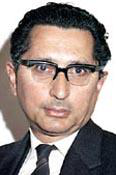
Lord Chitnis
Last week a Catholic politician died. He’d been diagnosed with terminal cancer. He was ready to die. He hadn’t been involved in British politics since the late ‘80’s but had lived quietly in rural France, growing his olives and going to daily Mass. You are unlikely to know his name - he’s on the internet as a “forgotten Liberal hero”- but from the 1960’s to the 80’s he played an important role in domestic politics and overseas in both Africa and Latin America. He was Pratap, Lord Chitnis, and I know about him because he was my uncle.
Born in 1936, he came of Indian and French stock. The French side brought the Catholicism. He was educated at Winterfold and by the Jesuits at Stonyhurst. He thought he might have a vocation but was persuaded by a wise Father Provincial that he needed to see something of life first. After university at Birmingham and Kansas he joined the National Coal Board, but that lasted less than a year and he then followed the family’s political tradition and found a job in the Liberal Party.
In 1959 this was not a good career move. Led by Jo Grimond, the party had six MPs and a mere 5.9% of the vote. Chitnis was the first party organiser to realise the importance of grass roots campaigning. These ideas were vindicated in 1962 at the Orpington by-election where he acted as agent. The Liberals secured a massive swing from the Conservatives and the shock victory is widely seen as the start of the Liberal revival. Chitnis had spent the night before the vote in Fleet Street buying up copies of The Daily Mail, which predicted a Liberal victory. These were given to commuters the following morning fuelling the notion that the Liberals could win.
He rose to be General Secretary of the party, but didn’t get on with the new leader, Jeremy Thorpe - later tried for conspiracy to murder. This did not mean that Chitnis could always spot a bad egg. Like many Liberals he was taken in by Mugabe, himself Jesuit educated, in the transition to democracy in Zimbabwe. He once swopped beds with the future premier when the latter feared assassination.
He married Anne Brand in 1964, but their only son, Simon, died of brain cancer as a child. It was partly to give him something to do in his grief that the then Labour Home Secretary asked him to act as a negotiator between the factions in Northern Ireland. His efforts, often dangerous - he ended up on an IRA death list and had a secretary wounded by a letter bomb - contributed to the Sunningdale conference; the first serious attempt to bring the Troubles to an end.
As Secretary and then Chief Executive of the Joseph Rowntree Social Services Trust he launched the first scheme for providing paid assistance to parliamentarians. His research assistants, many of whom went on to build impressive political careers, were known as “chocolate soldiers”. The Wilson government incorporated the scheme into the Commons in 1974. He bought up an old office building and gave many new pressure groups their first step on the ladder by providing a desk and a phone. Groups that owed their future to this included Friends of the Earth, The Low Pay Unit and the Tory Reform Group. Overseas the Trust courted controversy by providing funds for humanitarian care to freedom movements in Mozambique and the front line states.
Given a life peerage as a cross bencher with no party affiliation in 1977, he annoyed the establishment by being the first “lifer” to refuse to have a coat-of-arms. It was in the Lords that he made a significant contribution to foreign affairs and human rights. He was the only international observer to condemn the Rhodesian elections of 1978 and this was significant in leading the US to denounce the Muzorewa puppet government, leading to the final downfall of the white regime. It is a tragedy that Zimbabwe did not fulfil its early promise.
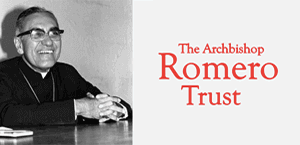
In Latin America he worked with the Catholic Institute for International Relations (CIIR) and the Parliamentary Human Rights Group in both Nicaragua and El Salvador, observing elections, lobbying for peace and human rights. Some of those he worked with were murdered, including Archbishop Oscar Romero. He found in Latin America an echo of recusancy when he described the Jesuit priest, editing the last free newspaper, emerging from his hiding place “like Campion”. His work made a significant contribution to the end of the war and alerted the world to what was going on in these remote countries.
His retirement from public life in 1987 and his move to France took many by surprise. In part it was a reaction to his distaste at the damage done by Thatcherism, in part his commitment to Europe. Many felt that he would have done better to use his seat in the Lords to challenge the prevailing political orthodoxies.
He was devoted to the social encyclicals, presenting me with the first one I read, Laborem Exelcens when I was in the sixth form at Stonyhurst. He was a firm Catholic Peer, always turning out for the unofficial Catholic “whip” issued by the late Duke of Norfolk when issues of conscience were at stake. “By their fruits you shall know them” says the Gospel of Matthew, there were definitely fruits, but there was also strong service, inspired by Christian values.
First published in Catholic Times
 Facebook
 Twitter
 LinkedIn
 Print
Print Email
Email








 Facebook
 Twitter
 YouTube
 LinkedIn
 Pinterest