


Why Catholics must join trade unions
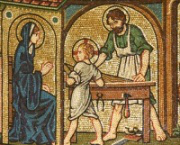
The National Justice and Peace Network annual conference last year focused on justice in the workplace.
The theme proved prescient, given that recent developments since have seen growing pressure on those working in justice and peace in the church.
Most recently this has seen the furore in Shrewsbury diocese where long time J&P worker Joan Sharples along with others working in youth and marriage and family life ministries have been told they are in line for redundancy. Other J&P workers could follow, with just 11 others employed by the dioceses, only two of these positions being full time.
The lesson that comes out of the Shrewsbury and other incidents is the importance of following the Church’s own social teaching and making sure that as Catholics we are all members of trade unions.
The Catholic Church’s social teachings are very clear on the importance of justice in the work place.
Going back to Pope Leo XIII’s encyclical Rerum Novarum - “Of New Things” (1891), the Church recognised the inequality of the lone worker with just his or her labour to sell versus the overwhelming power of the employer or owner of the means of production.
In order to even out this inequality the existence of trade unions was vindicated.
More recently Pope John Paul II in his encyclical Laborem Excercens - “On Human Work” (1981), asserted that the interests of labour must always take precedent over those of capital.
The Compendium of Social Doctrine of the Church states that unions are “a positive influence for social order and solidarity, and are therefore an indispensable element of social life.”
The Church in this respect very much read the signs of the times, namely that trade unions are as important now as at any time in the past.
The reality has been that trade union membership in Britain has come down substantially since the 1960s and 70s, almost halving from 13 million to 6.5 million (28 per cent of the working population). This has come about partly through the reshaping of the economy. Traditional areas of work like manufacturing have been devastated due to a combination of neo-liberal government policies and the process of globalisation.
While trade union membership has declined over the years, the pressure on worker’s job security, pay and conditions has continued to grow. Flexible work practices have come in with the globalised market. Pay has been squeezed, so the 1970s dream of a 25-hour week for all, with more leisure time for study and family never became a reality.
Instead, workers have ended up working longer hours for less pay, with families often paying the price. Pensions are now under threat with the retirement age going up. It has been a structural adjustment in capitalism to ensure that ever-greater profits continue to flow to employers or owners. The weakening of trade union collective power has been a significant part of this process.
The bosses its seems never waste a good crisis. Note how the general economic doom and gloom has been used to create a narrative on austerity. This in turn has been used to justify privatizing public services and an attack on the trade unions.
It is noticeable that in the case of the Shrewsbury diocese redundancies that the economic climate is being used to justify the cuts. In Joan Sharples case we are talking about an annual salary of £20,000 – there are others working for the diocese earning a lot more that don’t seem to be being considered.
Former Labour MP John Battle stresses the importance of solidarity between workers on an international scale, something most clearly seen in unions. He believes the sense of international solidarity between workers needs to be built up. “The trade unions have an important role to develop solidarity. It means regaining a sense of the importance of community, trade unions are vital to this,” said Mr Battle. “The Church has the capacity to be global and local at the same time. There must be solidarity globally and locally”
He is right. The injustice of the relationship of an individual worker alone facing the employer has been set out in social teaching going as far back as Rerum Novarum. The inequality remains the same and representation is as vital now as ever. This applies as much to those working for the Church as any other institution. The J&P fraternity should not need telling about the struggle but solidarity demands that all Catholics should be members of trade unions.
 Facebook
 Twitter
 LinkedIn
 Print
Print Email
Email

















 Facebook
 Twitter
 YouTube
 LinkedIn
 Pinterest