


Homily: Fr Paul O'Reilly SJ at World AIDS Day Mass
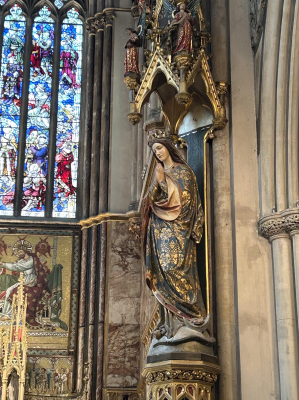
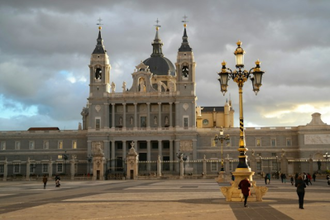
Farm Street Church. Image ICN/JS
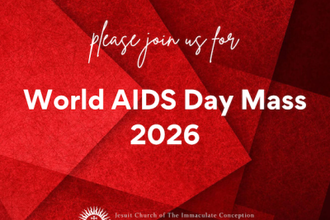
A Mass to mark the mark the global impact of HIV & AIDS - RETHINK - REBUILD - RISE !
Father Paul O'Reilly SJ, GP at The Cardinal Hume Centre gave the following homily on Saturday at the World AIDS Day Mass at Farm Street Church.
Matthew 8: 5 - 13 "I will come and heal him."
We come to celebrate - and I use that word deliberately - World AIDS Day.
I have a personal history with this disease. It was first identified in 1981, my first year in medical school. Its cause was first identified in 1983, when I was doing a degree in immunology - then a little known, little respected and little studied branch of medical pathology. And it was first called HIV in 1986, the year I qualified as a doctor. And wherever I have worked in the last 40 years, I have looked after many people who have suffered from it and many who have died from it.
And that is why I am really glad that there are so many young people here today. Because you will not remember the dreadful times with this disease. You know this as a serious disease with potentially serious consequences, but which is now eminently treatable with effective antiretroviral medication which enables people living with it to live long and to prosper. It was not always so. So, please if you will allow a little history from an old man, come with me into what I believe is the worst, most miserable place I have ever been.
It was twenty years ago in the AIDS ward at the public hospital in the capital city of a country far away from here, I won't say where, a ward specially set aside for the care of people who were dying slowly and miserably of AIDS in those terrible days many years ago when there was no effective treatment for the disease.
When I visited there, more than twenty years ago, the place was dreadful: filthy, infested with rats and running with dirty water down the walls. There was an open sewer running past the windows.
The stench was dreadful. There were few medicines, no clean water, hardly any food, hardly any trained nurses or doctors. While I was there, I heard one of the patients ask a nurse for an antibiotic for his chest infection. He was told, "We're not wasting that on someone like you. You're going to die anyway." That is the very worst thing I have ever heard anyone say to another human being.
Those patients were the most deprived people I have ever known. They lay two to a bed, both men and women, without sheets, often without clothes, without dignity, without self-respect, without hope. They knew that they were close to dying in pain: the pain of ulcers where the skin had broken down over their bones, the pain of the dreadful hacking cough of the tuberculosis eating out their lungs. But worst of all, the pain of dying alone, almost always abandoned by their family and one-time friends.
I learned from them that when you have been deprived of everything, what you miss the most is human companionship.
If there was any joy at all in their lives, it came from a little old nun who used to visit with a little food, a little clothing; some soap, some towels. She herself admitted that most often she could do very little to help. But she said that at least she tried. She told me that she hoped that, at the very least, no-one would die without feeling they had been touched, even if only once and briefly, with the Love of Christ. It was to that hope that she was devoting the last few declining years of her life.
She shone in that place like a tiny beacon of light in the darkness.
That was 20 years ago. And that little nun never lived to see the triumph of her Spirit. But I am sure that part of her reward is to look upon it now. That place of cruelty and suffering, where she ministered her little lonely witness of compassion, no longer exists. In its place there now stands amodern hospital wing staffed by caring compassionate and competent doctors and nurses, doing the same job but now providing care as good as any in the world. The disease she attempted to palliate with nothing more than a good heart and her own loving hands can now be well controlled and those who have it well cared for. In that place long-term survival living with the condition is the same as in this country.
That is not just a technical triumph of medicine. Rather it is a triumph of Spirit filled human compassion. Progress in medical technology has been matched by progress in humanity. We have learned to care for people who were previously despised. We cannot and should not forget the evils of the past, but at least we have learned from them the compassion of the future.
Nevertheless, even as we celebrate our progress, it is still one of the most wicked scandals of our world that nearly ten million people with HIV, nearly a quarter of the 40million people now living with it, STILL do not have access to life saving treatment. And that includes half of all the children with the disease. Their suffering is not, as was once thought, due to the implacable march of an inevitable, untreatable disease; it is due to a lack of Will to make the treatment need available to them. We have come far, but we still have far to go.
So this is a moment for celebration, but also of resolve. Both AIDS and the more recent experience of COVID has taught us that nature has not lost its capacity to surprise. Despite our technological progress, there are still many thieves in the night. We cannot know then humanity will once again have a common enemy. Let us be ready on that day, to be like that little nun, to light a candle in the dark and touch all those who need it with the love of God. And when our call comes, to be able to say with Our Lord, "I will come and heal him."
And to begin that resolve, let us each for a moment reflect on the many people we will meet in the course of the coming week, all the people we will touch. And let us pray that we may touch each and every one of them with the Touch of Christ our King.
 Facebook
 Twitter
 LinkedIn
 Print
 Email








 Facebook
 Twitter
 YouTube
 LinkedIn
 Pinterest