

A hard watch, a hopeful calling: The People's Emergency Briefing
Last month, a group of us gathered in the parish meeting room to watch The People's Emergency Briefing. If you haven't heard of it yet, it is a fifty-minute broadcast that pulls no punches. Part of a wider UK public information campaign, it brings together ten leading scientists to give a stark, expert-led assessment of our current climate and nature crisis.
The goal of these grassroots screenings is simple: to help everyday people understand the real risks to our health, food, and security, and push the UK Government to put independent scientists on prime-time TV so the whole country wakes up to the urgency of the moment.
Now, sitting through fifty minutes of hard scientific truth about ecological breakdown sounds like a recipe for gloom. Yet, as Christians-and particularly within our Passionist tradition-we have a unique lens through which to view this. We know that all of nature follows a sacred pattern of life, death, and resurrection. It is the Paschal Mystery, the ultimate rhythm through which God steps right into the mess of suffering and brings forth new life.
So, how does the story of Christ's Passion help us make sense of a perilously warming world?
In Passionist spirituality, we talk a lot about keeping alive the "Memory of the Passion". This means remembering that the crucifixion isn't just a historical event locked in the past; it happens today wherever creation is hurting.
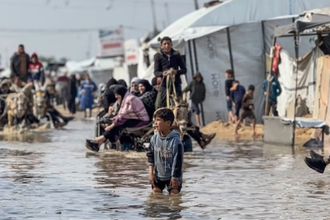
Pope Francis captured this beautifully in Laudato Si', reminding us that the earth herself is among the most abandoned and mistreated of our poor. Watching that emergency briefing-seeing the data on rising temperatures, extreme weather, and failing ecosystems-felt like walking a modern-day Way of the Cross. It forced us to look directly at the wounds inflicted on our planet and on the world's poorest communities, who always pay the highest price for climate disruption.
Facing reality means standing at the foot of that cross. It asks us to drop the denial, own up to our overconsumption, and truly listen to both the cry of the earth and the cry of the poor.
The Franciscan writer Richard Rohr said that all great spirituality is ultimately about letting go. Think about the transition from Good Friday to Holy Saturday. It is the death of old ways of living and a step into the unknown.
Climate breakdown is telling us that a certain era is ending-an era built on endless extraction and the false idea that we are masters of the universe rather than its caretakers. The emergency briefing makes it clear that some of our habits, economic assumptions, and everyday comforts have to "die" if life is going to flourish.
In many ways, we are living in a global Holy Saturday right now. We are caught in that tense, uncomfortable gap between knowing the warnings and waiting for real global action. It is a space of grief and uncertainty, where the old world is passing away, and the new one hasn't quite arrived yet.
Here is the most surprising thing about our parish screening: when the lights came back on, people didn't feel defeated. Most said they felt energised.
Why? Because as Christians, we never let tragedy have the final word. Our hope isn't built on naive optimism. Optimism relies on sunny forecasts and good odds-things the science doesn't always give us. Christian hope, on the other hand, trusts that God can bring vibrant new life out of apparent ruin. Resurrection isn't an escape hatch out of this physical world; it is the start of its renewal.
That kind of hope saves us from paralysis. Instead, it invites us into metanoia-what Pope Francis calls an "ecological conversion". Whether we are changing how we live at home, speaking up for environmental justice, or supporting vulnerable neighbours, we are actively joining in God's work of making all things new.
The Paschal Mystery doesn't end at an empty tomb; it explodes outward at Pentecost, sending the Spirit to empower everyday believers to be bold witnesses. Keeping the Memory of the Passion alive today means refusing to look away from damaged ecosystems and displaced families.
Science has given us the wake-up call, and our faith gives us the courage to answer it. We know there is a cross to carry in this crisis-a dying to old habits and easy comforts-but we also know who holds the future. Let's take the hard truths we've learned, roll up our sleeves, and become the resurrection people this hurting world so desperately needs.
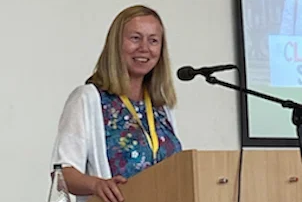
Paschal Somers is a member of St Patrick's Parish, Coventry and the Coordinator of The Community of the Passion.
Read more about the People's Emergency Briefing: www.nebriefing.org/the-film
 Facebook
 Twitter
 LinkedIn
 Print
 Email








 Facebook
 Twitter
 YouTube
 LinkedIn
 Pinterest