

Holy Land: Christian village faces fourth threatened olive harvest
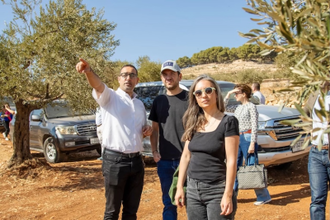
Human rights campaigners on visit to Taybeh before such visits were banned
Fr Bashar Fawadleh, Parish Priest of the Latin Patriarchate in Taybeh, the last fully Christian village in the West Bank, writes:
As the olive harvest begins, the same fears are returning to homes across Taybeh. What is happening on the ground suggests that this season may be little different from the previous three, when many families faced repeated difficulties in reaching their land safely and harvesting their olives.
Since early this morning, Sunday, October 4, 2026, settlers have been moving through agricultural land east of the town, entering olive groves belonging to Taybeh residents and picking the fruit. The area remains under a declared military closure, according to the order previously announced as a measure intended to protect residents and curb attacks.
This is the painful contradiction facing our community: landowners are afraid to reach their own olive groves, or are unable to do so safely, while others are able to enter the same land, move through it and harvest its fruit.
For Taybeh, olives are far more than an agricultural crop. According to local farmers, community representatives and the local church, the town has more than 16,000 dunums planted with olive trees. Its production once met not only the needs of local families, but also provided olive oil that was sold beyond Palestine.
Here, the olive tree represents a family economy, an inherited tradition and a daily relationship with the land passed down through generations.
Today, families who own hundreds of olive trees may find themselves forced to buy olive oil for their homes because they cannot safely reach their trees and harvest the fruit. As a parish priest, I see what this means not only in the fields, but in the homes and lives of the families entrusted to our care. They are losing not only their oil, but an entire year's harvest, seasonal income and the supply of olive oil they would normally keep for their homes, at a time when the cost of living continues to rise.
But the danger goes beyond the loss of a harvest. When families repeatedly cannot safely reach, cultivate or harvest their own land, their relationship with that land is placed under growing strain. Over time, what is lost is not only agricultural production, but part of the practical ability of families to remain on their land and sustain their lives there.
Taybeh is not asking for special treatment. Its people are asking for something far more basic: to reach their own land, harvest their own olives safely, and return home with the fruit of trees planted by their parents and grandparents.
Before another harvest is lost, there is an urgent need to guarantee Taybeh's farmers access to their land, provide effective protection throughout the harvest season, and prevent attacks, interference or the seizure of their crops.
It should not become the reality of Taybeh, a town that has long depended on its olive harvest and once sent its oil beyond Palestine, that its people own thousands of dunums of olive groves yet have to buy olive oil for their homes.
Protecting the olive harvest in Taybeh is not simply about protecting a crop. It is about protecting the land, livelihoods, dignity and the right of people to remain on their land.
For a community like Taybeh, protecting the harvest also means protecting continuity: ensuring that the next generation can inherit not only the trees, but the right and the ability to care for them.
 Facebook
 Twitter
 LinkedIn
 Print
Print Email
Email














 Facebook
 Twitter
 YouTube
 LinkedIn
 Pinterest