

Bishop Hayes at RTE Mass: we are called to be alert to anti-life global warming
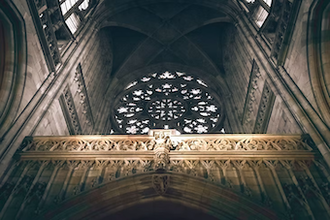
Cathedral of Saints Patrick and Felim
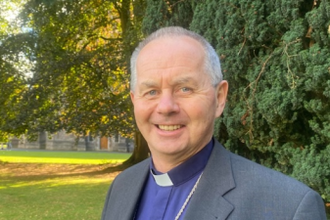
Bishop Martin Hayes Bishop of Kilmore, delivered the following homily during the 11am RTÉ One televised Mass broadcast live from the Cathedral of Saints Patrick and Felim, Co Cavan, in the Diocese of Kilmore.
We live in a world where we see, only too clearly, that some people are doing wrong.
Most often, we don't know how to respond? Do we challenge them? Are we entitled or right to challenge them? In our Gospel Jesus puts that dilemma before the disciples and before us. And He offers the following three-part strategy to resolving the dilemma:
Chat it out with the person whom you believe is doing wrong. If it fails, bring others along to offer an objective view and, if that fails, involve the community and draw upon their sense of what is right and wrong.
What is evident in this three-part method is that we are all interconnected; we are in relationship with ourselves and with others or rather we are not islands. Our actions have an impact on others. What are the wrongs that we see affecting our connections?
In fact, we are not only connected with ourselves and others, but we are also connected with the Earth and with God, our Creator. During this Season of Creation, we celebrate our interconnectedness in the spirit of Laudato Si' on 'Care for our Common Home' written by Pope Francis in 2015. The fundamental interconnection we have with God is confirmed by Jesus with his references, in our Gospel, to the links between earth and heaven, between us and God. Jesus is calling on us to keep our connections with ourselves, with each other, with God and with the Earth. Indeed, He asserts that if we meet in his name, He is there with us, which we celebrate in this Mass in thanksgiving for creation and for our efforts to protect it.
Yet, there are wrongs becoming all too evident, that are affecting all our connections with ourselves, others, the Earth and God!
Pope Leo, in his message for the 11th World Day of Prayer for Creation of 1 September, last Tuesday, urged that our desires; to care for the Earth, to be at peace with others, to acknowledge and to praise of God, can only come "from hearts shaped by the Gospel and sustained by God's grace" (1). Pope Leo is inviting us to see ourselves, as part of an interconnected whole created by God that is a beautiful delicately balanced global ecosystem that we are part of, and which we have received as a gift. And last year, Pope Leo reaffirmed the message of Pope Francis to 'Care for our Common Home' in stating that "The challenges identified in Laudato Si' are in fact even more relevant today than they were ten years ago" (2).
In our first reading today, we hear of the sentry, Ezekiel, a prophet called to convey God's word to the chosen people. In fact, today, we are all called to be sentries for God, for God's creation, indeed, for life itself. We are becoming all too familiar with a certain disregard for life, with the signs of the pressure on our planet Earth, the forest fires, the flooding as well as the scarcity of water, the changing climate due to the ways in which we are polluting the Earth, the warming up the atmosphere due to our overreliance on the burning of fossil fuels as our sources of energy.
That is our calling now, to be alert to the wrong of global warming caused by human activity as being among the wrongs that are anti-life and increasingly evident in our world, all of which are 'accelerating the disruption to the harmonious balance of creation' (3) according to Pope Leo. While we must always be alert to our individual sins, we are being called to an awareness of our structural sin that is increasingly obvious in the ways, "The earth, our home, is beginning to look more and more like an immense pile of filth" (4) as stated by Pope Francis. We are called to advocate, to protest, to challenge the structures, our governments, our leaders in how we are caring for creation and for life.
Throughout, we must remain hopeful, grateful for our gathering today in this Season of Creation 2026, and increasingly responsive and alert to our responsibilities to care for our Common Home. The prophet Ezekiel of our first road provides us with the scriptural theme for our Season of Creation 2026 urging us to respect, in particular, the gift of water in accord with the phrase, "everything will live where the river goes" (Ez. 47:9,12). How can we ensure that our rivers continue to flow and give life? Perhaps we can form 'river communities' (5) of parishes connected by our rivers, either up-stream or down-stream. Such links can engender a responsibility for healing and the restoration of nature and of harmony between peoples.
Here in Cavan-Leitrim-Fermanagh, we could develop the notion of 'river communities' indeed, 'lake communities' in this our 'Lake District of Ireland'!
Our Responsorial psalm (Ps. 94) invites us to listen to God's voice today drawing upon the image of how the water was brought forth from the rock in the desert. We grasp a sense of God as the source of life, the rock who wants to save us, the Creator who yields fertility and life, our Father who reaches out through Jesus, to include us in the family of God, and which we celebrate in the waters of Baptism.
Saint Paul in our second reading to the Romans, in proclaiming love of our neighbour, is also calling us to recognise our human dignity, the interconnectedness of people, of our being 'neighbour', and of our connection to the Earth, indeed, with all the different life forms and ultimately our relationship with God, our Creator. We are called to be protectors of all of life, human, from the moment of conception, animal, bird, and insect life. Pope Francis teaches, "Living our vocation to be protectors of God's handiwork is essential to a life of virtue; it is not an optional or a secondary aspect of our Christian experience" (6). It can continue to happen in our gardens, our church grounds and in our parishes.
We give thanks for all that has been achieved in caring for creation, for our 'Return to Nature' project in our church grounds in our parishes throughout Ireland, those being celebrated in Kilmore Diocese taking in parts of Counties Cavan, Leitrim, Fermanagh, Sligo and Meath. We celebrate all that has been achieved with the help of Trócaire in alerting us to the impact of climate change causing poverty, the Irish Heritage Council in nurturing our Havens for Nature, the ecumenical endeavours of Eco-Congregation Ireland, our Laudato Si' Working Group and Laudato Si' Animators throughout the country.
Finally, in accord with our 2026 Season of Creation theme, we continue to hope and advocate for 'Living Water' into the future. And when we see wrong actions that are detrimental to creation, to life, let us chat it out between ourselves, seek the advice of wise others and work with our communities who value life in all its sacredness, diversity and beauty.
Our prayer today is that the living water of God, our Creator, continues to flow to ensure life in its abundance, diversity and beauty to give glory to the same Good Lord, our Creator of all of life.
Notes
(1) Message of His Holiness, Pope Leo XIV for the 11th World Day of Prayer for the Care of Creation 2026, 1st September 2026.
(2) Address of the Holy Father Leo XIV to the participants in the 'Raising Hope' Conference ion the 10th Anniversary of the Encyclical Laudato Si', Mariapolis Center (Castel Gandolfo) Wednesday, 1st October 2025.
(3) Op cit.
(4) Encyclical Letter of His Holiness, Pope Francis entitled Laudato Si' on Care for our Common Home, 2015, para 21.
(5) Dr Gail Heffner, Calvin University, Michigan speaking at the Inter-Church Conference entitled 'Let Justice Flow Like Rivers' at the Canal Court Hotel, Newry, on 17 January 2026.
(6) Op. cit. para 217.
 Facebook
 Twitter
 LinkedIn
 Print
Print Email
Email






 Facebook
 Twitter
 YouTube
 LinkedIn
 Pinterest