


Ireland: The Fr Patrick Peyton Centre
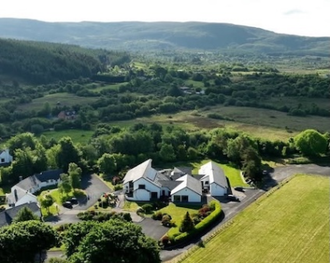
The Fr Patrick Peyton Centre
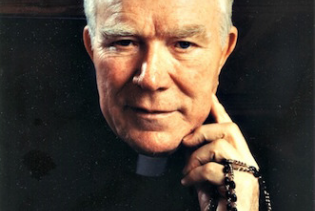
During a visit to Co Mayo, I enjoyed the experience of staying in the guest accommodation at the Fr Patrick Peyton Centre at Attymass, at the foot of the Ox Mountains and a few miles south of Ballina. I have written extensively here in the past about this very remarkable priest - (see Related Stories below).
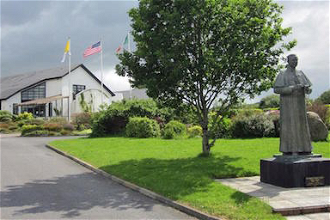
The Fr Patrick Peyton Centre is a distinctive heritage, spiritual and community centre - a place where history, devotion, and local identity converge. Dedicated to the life and legacy of Fr Patrick Peyton, the Attymass-born priest internationally known as the 'Rosary Priest', the centre offers visitors a thoughtful blend of well-curated exhibits, reflective spaces, educational programming, and community engagement. Its rural location in Attymass, nestled among the rolling landscapes of north Mayo, adds to its contemplative character, making it both a destination and an experience.
A Centre Rooted in Legacy and Mission
At its core, the Centre is a heritage and visitor centre dedicated to preserving and interpreting the life of Fr Peyton, whose global ministry championed family prayer, peace and unity. Unlike a conventional museum, the centre functions as a hybrid cultural institution: part historical exhibition, part spiritual retreat, part community hub. This multi-faceted identity reflects Fr Peyton's own international influence, which spanned media, religion, and social advocacy.
During my stay, it became clear to me that the Centre's mission is anchored in three pillars: Heritage preservation: chronicling Fr Peyton's journey from his humble Mayo upbringing to his worldwide 'Family Rosary Crusade.' Spiritual reflection: offering visitors a peaceful environment to contemplate themes of family, faith, and resilience - and Community engagement: providing programmes and events that connect local residents, pilgrims, and tourists.
This combination makes the centre unique among Irish cultural institutions: it is neither solely a religious site nor solely a historical museum, but a living tribute to a figure whose work touched millions across continents.
Exhibits and Experiences
The Centre's main exhibition space is designed to immerse visitors in Fr Peyton's story. Through multimedia displays, archival photographs, personal artefacts, and documentary footage, the exhibition traces his early life in Attymass, his emigration to the United States, his illness as a young man, and his rise as a global advocate for family prayer. His famous motto - "The family that prays together stays together" - appears throughout the Centre, contextualised within the social and cultural movements of the 20th century.
Key features include:
- Interactive galleries: blending historical narrative with modern presentation techniques.
- Archival collections: showcasing letters, photographs, and memorabilia from Fr. Peyton's worldwide missions.
- Audiovisual theatre: presenting documentary films about his life and the global reach of his message.
- Reflection chapel: a quiet space for personal prayer or contemplation.
- Outdoor gardens: landscaped areas that complement the Centre's peaceful atmosphere.
The Centre also hosts temporary exhibitions and themed events, often focusing on Irish heritage, spirituality, or local history. These rotating programmes ensure that repeat visitors always find something new to explore.
Educational and Community Resources
Beyond its exhibitions, the Fr Patrick Peyton Centre serves as a community and educational resource. It welcomes school groups, parish organisations, and heritage societies regularly to engage with tailored programmes that explore themes such as Irish emigration, media history, religious life, and the role of family in social development.
Educational offerings include:
Curriculum-linked school tours: designed for primary and secondary students.
Workshops and talks: covering topics from local history to global missionary work.
Community events: including seasonal celebrations, cultural gatherings, and heritage commemorations.
The Centre's café and gift shop further support its role as a community meeting point, offering locally sourced food, crafts, and literature related to Fr. Peyton's legacy. During my stay I enjoyed the home-made soup and fruit scones, both of which reflect the warm welcome that characterises the Centre.
A Landscape that Shapes the Experience
Location is central to the identity of the Fr. Patrick Peyton Centre. Attymass is a rural parish situated south of Ballina and close to Foxford, surrounded by the rugged beauty of north Mayo - a landscape of small farms, thick hedgerows, hills, bogland, Ballymore Lake with the Ox Mountains in the background, and narrow winding country roads that I remember so well having been born and raised a few miles away closer to Ballina.
Attymass is a walkers' paradise. Its trails offer scenic walking and hiking routes featuring key paths like the Attymass Loop Walk, the Ballymore Lough Loop, and local heritage trails. The adjoining parish of Bonniconlon offers a package of five trails. Then there is Foxford Way which is a defined long-distance loop that passes through the Ox Mountains. The Ox Mountain Trails are a wider set of routes across the mountains. These two overlap in some places. These trails provide panoramic views of the rugged countryside as far away as the Nephin mountains, Lough Conn and the Atlantic Ocean at Enniscrone in County Sligo and Killala in North Mayo.
In 2017, Attymass won first place in the Pride of Place Awards in the category for villages with a population of less than 300 people. The setting for the Centre is not incidental: it mirrors the environment that shaped Fr. Peyton's early life and provides visitors with a sense of connection to his origins.
The Centre's location in Attymass offers several advantages:
It provides a tranquil environment ideal for reflection and learning.
As this video - www.northmayo.ie/the-father-peyton-centre/ - shows, it anchors the Centre within the local community, reinforcing its cultural authenticity.
Visitors can also use the Centre as a base for exploring north Mayo, including Ballina, Foxford, Bonniconlon - home of the historically-important O'Dowda Clan in the 17th and 18th centuries, the River Moy famous for salmon fishing, the Ox Mountains, Belleek Wood, the Jackie Clarke Collection, the Michael Davitt Museum, Foxford Woollen Mill, and, further north, the remarkable Céide Fields (neolithic field system). During my stay, the well-known Bonniconlon Agricultural Show took place celebrating its 75th anniversary.
For many visitors, the journey to Attymass is part of the experience - a chance to step away from urban life and immerse themselves in the quiet rhythms of rural North Mayo.
A Place of Story, Spirit, and Community
The Fr Patrick Peyton Centre is more than a memorial to a notable priest; it is a living institution that continues Fr. Peyton's mission of fostering connection, reflection, and community. Whether one visits to learn about his global influence, to enjoy a peaceful afternoon in a rural heritage setting, to participate in a community event, or, like me, a place to stay whilst re-connecting with friends in Mayo, the Centre offers a meaningful and memorable experience.
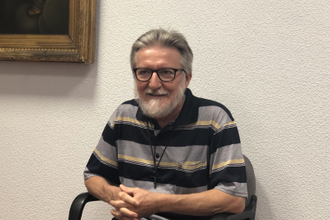
On a personal level, I was very pleased to see copies of my books - 'The Legacy of Irish Missionaries Lives On' and 'The Theology of Integral Human Development' - on sale in the Centre. It was a pleasure to chat to the recently appointed Spiritual Director, Fr Valerian Castelino, from India who also doubles up as Parochial Administrator for the Parish of Attymass. His appointment reminded me of what I call 'reverse mission', that is, missionaries from overseas coming to minister in Ireland which is a reversal of Irish missionaries, like Fr Peyton, going overseas for many decades in the past to spread the word of God in foreign lands. The Retreat Coordinator at the Centre is Fina Golden.
(Matt Moran is an author and writer living in Co. Cork. His writings cover faith, missionary development work in the Global South, and social affairs).
 Facebook
 Twitter
 LinkedIn
 Print
Print Email
Email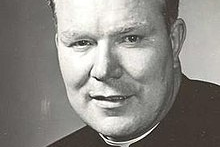





 Facebook
 Twitter
 YouTube
 LinkedIn
 Pinterest