

Sudan: a genocide unfolds
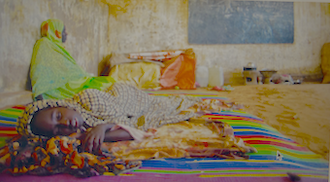
Image: © Jerome Tubiana
A genocide is unfolding in Sudan, while diplomats and officials offer words of condemnation but no real action. This was the message from British politicians of all parties in both Houses of Parliament this week.
In October 2025, an estimated 60,000 civilians were slaughtered in the Darfur city of El Fasher. Now, the same warring militias are closing in on El Obeid in North Kordofan, with ethnic and religious minorities, including Sudan's long-persecuted Christians, at risk.
In a phone call with the Darfur Diaspora Association on Wednesday, a doctor in El Obeid described the constant bombardment of the city with drone attacks: "Roads are closed, preventing the delivery of food and essential supplies. We fear famine may strike the population, similar to what happened in El Fasher.
"There is a major crisis at the hospitals, particularly at the Children's Hospital and the Kidney Dialysis Center, due to critical shortages. Every day, people are being killed by drones. Children and elderly people are dying on a daily basis, and livestock are targeted."
This week, in testimony to a parliamentary select committee, Nathaniel Raymond, a US human rights investigator at Yale University, said that officials from the Foreign, Commonwealth and Development Office (FCDO) admitted there had been "significant private pressure" from Britain's close trade partner, the United Arab Emirates (UAE), which stopped UK officials from acting on crucial information on the conflict. The International Development Committee is now demanding an explanation from the government, and MPs have called for an inquiry into why officials downplayed intelligence pointing to an imminent massacre in El Fasher.
In debates on Wednesday and Thursday, MPs and Lords repeatedly pressed the government on the allegations. Their concern comes as the same militias responsible for the mass killing in El Fasher are now bombing El Obeid.
In both Houses of Parliament, FCDO ministers responded by strongly condemning the violence, telling members the government was sending £146 million in aid. "We demand that the Rapid Support Forces end the siege of El Obeid."
However, Anneliese Dodds who chairs the All Party Group on Sudan, expressed frustration at condemnations without sanctions or the implementation of international law. She said that ministers' disapproval had done nothing to stop the massacre of 60,000 civilians in El Fasher. Echoing Dodds, Ian Duncan Smith told MPs, "All the talk is worthless." Graham Atkins MP stated that the FCDO's "softly, softly" approach had failed.
Liberal Democrat Monica Harding quoted New York Times reports that Sheik Mansour, owner of Manchester City, plays a crucial role in supplying weapons to the Rapid Support Forces militia in Sudan. Harding questioned by no pressure has been put on the Football Association about the Emirati's involvement.
In the Lords, David Alton yet again pressed the government on its failure to fulfil its obligations under the 1948 Genocide Convention which requires nations to "prevent, protect and punish." Successive administrations have claimed that only a competent court can determine if genocide is occurring. Yet, several other countries' legislators assume the role of recognising when genocide has taken place. Lord Alton's Genocide Determination Bill would empower the High Court to investigate circumstances and make a determination. The bill reaches its second reading on July 17th.
As Lord Alton told ministers recently, "Successive Governments were lamely repeating the Foreign Office mantra that "only a court" can decide whether grievous criminality constitutes genocide while disingenuously blocking every attempt to empower our own UK courts to do so."
The United Nations Security Council will discuss Sudan on Friday, June 26th. This week, the UN Commissioner for Human Rights reported on the widespread use of sexual violence and ethnically motived attacks.
The UN Secretary General's envoy, Pekka Haavisto, will report on his pursuit of a humanitarian truce, consulting the Quad group of Egypt, Saudi Arabia, the UA and the USA. Credible research by human rights groups and academics has established that all Quad members, with the exception of America, are providing support for one militia or other, prolonging the proxy war. Sudan specialists question the usefulness of such consultations without the threat of enforcing international law with sanctions against those prolonging the proxy war. This week, US Secretary of State Rubio has been in the region, trying to persuade Gulf countries and Egypt to stop supplying weapons to the militias.
Meanwhile, the Quintet group (the UN, the African Union, the European Union, the Arab League and the East African IGAD) is considering the political track necessary to transition to civilian leadership.
British-Sudanese Diaspora have more immediate concerns as time runs out for civilians in El Obeid. Human rights groups continue to stress the importance of extending the UN arms embargo from Darfur to cover all of Sudan. They also advocate for a no-fly zone, and sanctions on those neighbouring countries perpetuating the violence. However Russian and Chinese representatives on the Security Council will continue to block any such actions.
Rebecca Tinsley is the founder of the human rights group Waging Peace
LINK
Waging Peace: https://wagingpeace.info/
 Facebook
 Twitter
 LinkedIn
 Print
Print Email
Email














 Facebook
 Twitter
 YouTube
 LinkedIn
 Pinterest