


Walking in the winter of life
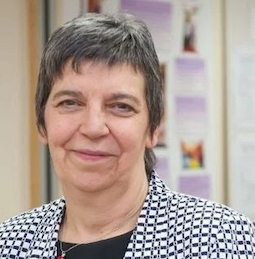
Dr Karen Groves MBE
Dr Karen Groves MBE founded Queenscourt Hospice in Southport, Merseyside, over thirty years ago. It provides palliative care for people in Southport, Formby and West Lancashire.
Dr Groves gave a presentation about her work at St Thomas More church in Manor House, North London, on Friday 19 June.
She began by clarifying what palliative care is. It is not the same as end of life care, and the majority of people who attend a specialist palliative care unit will improve and go home or elsewhere to live the rest of their lives. It is true that palliative care is designed for people with a terminal illness and aims to relieve symptoms, reduce pain and improve quality of life while a person is living the last phase of their life. Good medical and nursing care, occupational therapy, physiotherapy and other forms of care can help patients live more easily with their health condition.
There are ten beds at the hospice in Southport, for the 235,000 people living in Southport, Formby and West Lancashire. The hospice provides palliative care not only at Queenscourt but in people's homes, in hospitals and in the 117 care homes in the area. The average inpatient stay in Queenscourt is nine days. 90% of people's final days are spent at home; 90% of their symptoms will present at home; and 90% of care is provided by family and friends at home. So providing education, advice and professional support for professionals and carers is a key part of the hospice's work.
Staff have to be expert at assessing and managing symptoms holistically if palliative care is to work. Physical symptoms such as pain are usually relatively straightforward to relieve in the vast majority of people, as long as pain management follows a skilled, thorough, assessment and ongoing monitoring. A few people require more expertise than others and in hospice and palliative care there is always something else to try to alleviate symptoms. There are also psychological symptoms such as fear, anxiety and depression; social symptoms such as loss of particular roles, whether professional or domestic, and people can be helped to develop new interests and take up new activities; and spiritual symptoms including questions about the meaning of life, whether God exists and who God is. All staff need to attend to all four kinds of symptoms all the time.
Dr Groves stressed the importance of talking about death, and using words such as death, dying and dead rather than the many euphemisms that we often use to avoid them. It helps people who are dying, and their carers, to be clear about what is happening to them so as to be able to prepare. In recent decades, the loss of understanding of religious concepts and language in society, have reduced people's ability to talk openly about death. Professionals can be afraid of giving offence or even of disciplinary action if they use the wrong words. But all palliative care and end of life policy documents suggest that the role of the health professional includes spiritual assessment and care. Spirituality and religion are not the same thing for everyone - spirituality is about meaning, what people find gives hope and inspiration; about creativity; and about relationships with their own selves, other people and nature, and whatever a person's understanding of their higher power is - which for many, but not all, of us is our understanding of God.
Queenscourt needs £7 million a year to provide the services that it currently provides. In the beginning, as with all the pioneering hospices, Queenscourt was wholly reliant on charitable donations. Now it is 24% funded by the NHS. But, like 75% of UK hospices, it is struggling to match fundraising donations to increasing outgoings and, along with 60% of UK hospices, is having to make cuts in services this year, services that are still badly needed. Excellent training is also essential if palliative care is to be effective, but is not cheap.
Dr Groves did not comment on current public policy debates, but I am troubled at our national sense of priorities. Given the marvellous effects of palliative care that I have seen in family members and friends as they approached death, I wonder why it has to rely so heavily on charity. Much is said about the increase in spending on weaponry. The Prime Minister has said that, if the Assisted Dying Bill is passed, money will be made available to fund medically assisted suicide. As a way of funding health care (or anything else) restoring the higher levels of taxation on the wealthy that were part of the political consensus when I was growing up is treated as political blasphemy. But with palliative care there is so much that could be done to give more of us an easier and more dignified life towards the end of our lives. Why do we not invest more in it?
For more information, see: www.queenscourt.org.uk/.
 Facebook
 Twitter
 LinkedIn
 Print
Print Email
Email









 Facebook
 Twitter
 YouTube
 LinkedIn
 Pinterest