


Blessed Dominic Barberi and Dilexi te: How a Victorian Passionist missionary anticipated a modern call to radical solidarity
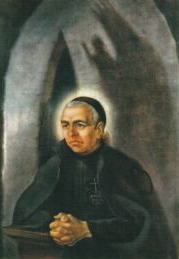
Bl Dominic Barberi
Whilst co-leading a series of Lenten sessions on Pope Leo's apostolic exhortation 'Dilexi Te', Passionist Development Worker Paschal Somers couldn't help but notice the parallels between the papal document and what motivated the first Passionist missionary to these shores...
In the industrial heartlands of Victorian England, an Italian Passionist priest walked muddy roads, endured ridicule, and ministered to communities dismissed by polite society.
Nearly two centuries later, Pope Leo XIV's apostolic exhortation Dilexi te ("I Have Loved You") would call Christians to rediscover Christ in those who possess "but little power."
Though separated by time, culture, and circumstance, the mission of Blessed Dominic Barberi and the vision articulated in Dilexi te reveal a striking theological harmony. Both are rooted in a conviction that God's love is most powerfully encountered not through privilege or influence, but through vulnerability, suffering, and solidarity with the marginalised.
A Mission Born from a Burning Heart
At the heart of Dilexi te lies a simple but challenging truth: authentic Christian faith cannot be separated from love for the poor. Drawing upon the spirituality of the Sacred Heart, the document insists that belief must flow from a heart set ablaze by Christ's love for humanity. This same fire animated Blessed Dominic Barberi.
Born in Italy and formed within the Passionist tradition, Dominic was driven by an intense desire to bring the Gospel to England, a nation where Catholics remained a small and often mistrusted minority. His decision to leave his homeland and embrace the hardships of nineteenth-century missionary life was not motivated by ambition or ecclesiastical advancement. It was a response to what he understood as Christ's personal call of love. For Dominic, mission was not so much a strategy as an act of love for Christ.
Serving a People with "Little Power"
The title Dilexi te comes from Christ's words to the Church in Revelation 3:8-9: "I have loved you." The text specifically addresses a community described as possessing "but little power"-a phrase that resonates deeply with the social realities Dominic encountered upon arriving in England in 1841.
English Catholics at the time occupied a fragile social position. Decades of legal discrimination had left many communities impoverished, isolated, and viewed with suspicion. In the rapidly expanding industrial towns of the Midlands, Irish labourers, factory workers, and railway navvies often faced both economic hardship and social contempt. It was among them that Dominic chose to stand.
Rather than seeking influence among the powerful, he devoted himself to those who had little voice and few resources. His mission unfolded among ordinary working families who lived on the margins of Victorian society. In many ways, these communities embodied the very audience addressed by Dilexi te: people with little power yet deeply loved by God.
Confronting Hostility with Patience
One of the most remarkable parallels between Dominic's ministry and the message of Dilexi te is their shared emphasis on overcoming division through patient charity. Leo's exhortation challenges Christians to reject cultures of fear and exclusion. It calls believers to dismantle barriers through solidarity rather than confrontation. Dominic lived this principle long before it was articulated in modern ecclesial language.
His foreign accent, unusual appearance, and Catholic identity often made him the target of ridicule. As he travelled between towns and villages, crowds mocked him. Children threw stones. Anti-Catholic hostility was a routine part of his missionary life. Yet he responded not with resentment but with extraordinary gentleness.
Accounts from his contemporaries describe a man whose warmth and humility gradually softened opposition. Rather than seeking victory over his critics, he sought their friendship. His patience transformed hostility into respect and, in many cases, admiration. His life became a living demonstration that charity need never compromise conviction.
The Cross and the Wounded World
To understand Dominic Barberi fully, one must understand the Passionist charism that shaped him. Founded by St. Paul of the Cross, the Passionist tradition centres on the conviction that Christ's Passion is the greatest revelation of divine love. The Passionist emblem itself-a cross emerging from a heart-expresses a profound theological insight: authentic love always bears the wounds of sacrifice. This vision finds a powerful echo in Dilexi te.
The exhortation insists that Christians encounter Christ most deeply when they encounter those who suffer. The wounded, the excluded, and the forgotten are not merely recipients of charity; they are places of divine revelation. In their struggles, believers are invited to recognise the continuing presence of the Crucified Lord.
For Passionists, this insight is captured in the concept of Memoria Passionis-the living memory of Christ's Passion. The suffering of humanity is never separate from the suffering of Christ. To remember the Cross authentically is to recognise Christ crucified in today's wounded world.
Both Dominic's ministry and Dilexi te challenge Christians to move beyond abstract devotion and a disincarnate faith. The call is not simply to contemplate Christ's wounds but to enter the wounds of the world. One might say, to keep Christ company in Gethsemane.
Among the Factory Workers of Industrial England
The Industrial Revolution transformed England's landscape, creating immense wealth for some while condemning many workers to poverty, insecurity, and harsh living conditions. Dominic entered this environment not as a distant observer but as a companion.
He embraced a lifestyle of evangelical poverty, living simply among the people he served. He walked long distances through difficult conditions, accepted personal discomfort, and devoted himself to communities often neglected by wider society.
His mission included establishing schools, supporting families, and creating places of worship accessible to working-class Catholics. More importantly, he affirmed their dignity. At a time when economic systems often treated labourers as disposable, Dominic insisted that every person possessed an immeasurable worth grounded in God's love.
This conviction lies at the heart of Dilexi te. The document warns against social structures that favour the strong while neglecting the vulnerable. It calls Christians to recognise that encounters with the poor are not interruptions to spiritual life but privileged moments of encounter with Christ Himself.
Weakness as a Revelation of God
Perhaps the deepest theological connection between Dominic Barberi and Dilexi te is their shared understanding of weakness. Modern culture often associates power with success, influence, and visibility. The Christian tradition, however, sees something different in the Cross.
For both the Passionist charism and Leo's exhortation, God's love is revealed most clearly in apparent weakness. Christ saves the world not through domination but through self-giving love.
Dominic embodied this paradox. He rejected prestige, embraced simplicity, and accepted vulnerability as the foundation of his mission. Ironically, it was this humility that attracted some of the most significant converts of the nineteenth century, including St. John Henry Newman.
Newman encountered in Dominic not an institutional strategist, but a man transparently shaped by the love of Christ. The missionary's poverty and authenticity proved more persuasive than any argument.
A Legacy for the Church Today
The story of Blessed Dominic Barberi offers more than historical inspiration. It provides a living commentary on the themes of Dilexi te. Both challenge Christians to rediscover a faith rooted in encounter rather than abstraction, solidarity rather than status, and love rather than power. Both insist that the Church's credibility depends not on its influence but on its willingness to stand alongside those whom society overlooks.
In an age still marked by exclusion, inequality, and social fragmentation, Dominic's witness remains surprisingly contemporary. His life demonstrates that the path to renewal begins where Christ Himself chose to dwell among those with little power yet infinitely loved.
The message of Dilexi te is therefore not new. It is the same Gospel that Dominic Barberi carried through the streets of England almost two centuries ago -a Gospel proclaiming that God's heart is revealed most clearly in the Crucified Christ and in all those who continue to bear His wounds in the world today.
LINKS
Dilexi te: www.cbcew.org.uk/apostolic-exhortation-dilexi-te/
Passionists Curia: www.passiochristi.org/?lang=en
 Facebook
 Twitter
 LinkedIn
 Print
Print Email
Email
















 Facebook
 Twitter
 YouTube
 LinkedIn
 Pinterest