


Bishop Doran: 'Once there is a living body, even one as small as an embryo, there must be a soul'
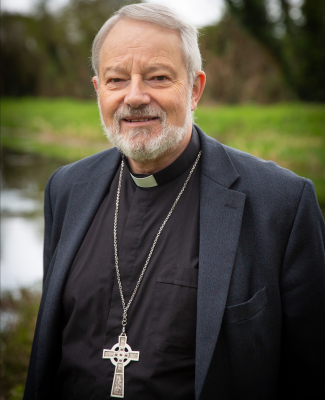
Bishop Kevin Doran CCO archive
Bishop Kevin Doran gave this homily during Mass at Newman University Church, Archdiocese of Dublin, ahead of the 'March for Life' organised by the Pro Life Campaign.
When Jesus told the Roman Governor of Judea that he had come to bear witness to the truth, Pilate's response was: "Truth, what is that?" The heart of the truth that Jesus preached was the mystery of God's love for humanity. This is the truth that "sets us free" (Jn. 8).
Saint John was so moved as a teenager by his own experience of that love in the person of Jesus that it became the dominant theme in his self-understanding and in all his writing. "Think of the love that God has lavished upon us, by letting us be called God's children, and that is what we are" (1 Jn. 3).
Just over forty years years ago, Pope John Paul II wrote: "The Gospel of God's love for humanity, the Gospel of the dignity of the person and the Gospel of life, are a single and indivisible Gospel" (Evangelium Vitae 2). Referring specifically to abortion, he went on to say: "We need now more than ever to have the courage to look the truth in the eye and to call things by their proper name". This idea of calling things by their proper name is repeated frequently by Pope Francis himself, and also in a recent document on the dignity of the human person, published by the Dicastery for the Doctrine of the Faith in 2024 (cf. Dignitas Infinita).
So what exactly is the truth about the human embryo and the child in the womb?
Some would say that it depends on your starting point. Science starts with our experience of the material world. Philosophy applies reason to what is discovered in scientific research, but it pushes the search for truth beyond the limits of the physical world into the realm of metaphysics. The starting point of faith is the revealed Word of God which, for us Christians, comes to its completeness in the person and teaching of Jesus. But there is no conflict between the truth of science and the truth of faith.
In the course of my life-time, the biological sciences have made enormous progress. We know so much more about genes and chromosomes and DNA, and what actually happens in fertilisation. We know for a fact that the genetic identity of a new human individual is already established once fertilisation has occurred. What happens after that is an amazing process of growth and development. Alongside that, thanks to advances in information technology, most of this detail is readily available to us online, in a way that we would not have dreamed of even ten years ago. Anybody who would deny the essential continuity between the embryo and the baby who is born at the end of nine months is flying in the face of truth.
Long before the dawn of Christianity, Greek philosophers like Aristotle, Socrates and Plato devoted considerable energy to understanding how living things were capable of growth and movement. They came to the conclusion that, in every living thing there must be a first principle of life which explained and governed all its action. Human action includes complex reasoning and the formation of concepts, which are beyond the limits of the material world. This led many of these philosophers to conclude that the first principle of life in human beings must be a spiritual soul. Putting it simply, once there is a living body, even one as small as an embryo, there must be a soul which explains and directs all its growth and development and its action throughout the cycle of life. It was a short step from there to the dawning awareness that this soul, being spiritual, could not be destroyed by any of the things that cause death in the material world.
It is difficult to know whether Thomas Aquinas should be described as a philosopher or a theologian. He draws on the work of Aristotle and Plato, but also on Scripture and the Fathers of the Church. In his understanding, everything in the universe is not only created by God but finds its purpose and meaning in an order established by God. This is consistent with what we read earlier in the Book of Genesis. Each element of creation serves what comes next. In many ways the Creation narrative provides a foundation for what environmentalists tell us all the time. There is an intelligent plan, and we mess with nature at our peril.
The account of creation in Genesis concludes with the creation of man and woman in the image of God. This is another way of saying that the human person, while having roots in the material world is ultimately created for a spiritual destiny. In the homily he gave at the Mass to inaugurate his papacy in 2005, Pope Benedict put it beautifully, when he said: "We are not some casual and meaningless product of evolution. Each of us is the result of a thought of God." Remember again the words of Saint John: "Think of the love that God has lavished upon us, by letting us be called God's children, and that is what we are".
So where does that leave us in relation to abortion, (or what some people prefer to call "the termination of pregnancy")? The truth of the matter is that abortion:
- not only kills babies;
- it also wounds women in the depth of their being (and judging by the way the present law is framed, society has no interest in even asking them what led them to make this choice);
- it leaves communities denuded of the joyful laughter of children, and the creative energy of youth. (Abortion wiped out the equivalent of 1,000 primary school classes in the past five years):
- it does untold moral and spiritual damage to all who promote it or who participate in it, precisely because it flies in the face of truth.
This week saw the introduction of yet another bill in the Oireachtas, to further extend the availability of abortion. This raises the question as to why a small number of public representatives are so determined to ignore the truth, or to deny it entirely. Does our society have a deathwish? Thank God for the small but significant increase in the number of public representatives who insist on speaking the truth on this question.
On the night before he died Jesus said to his disciples: "I will ask the Father, and he will give you another Advocate, to be with you forever. (He) will teach you everything and remind you of all that I have said to you". The challenge for each one of us, in response to that Spirit, is to know the Gospel of life in all its dimensions, and to confidently bear witness to it, both in our private lives and in the public space. The aim is not to pull people down and certainly not to further diminish women and men who have already been hurt by abortion.
On the contrary, notwithstanding the obstacles placed in our path, we need to find new ways of offering life-affirming support to women who are in crisis during pregnancy or after the birth of a child.
Just last Thursday, Pope Leo XIV said: "the Church is called to reach all peoples, not by imposing itself, but by bearing witness to the truth in charity". I think, if you have been watching him and listening to him over the past year, you will know what that looks like. He speaks the truth clearly and without compromise, but he refuses to allow himself to be drawn into the negativity that is so often part of what passes for debate in our modern world. I think we can learn something, not just from what he says, but how he says it.
 Facebook
 Twitter
 LinkedIn
 Print
Print Email
Email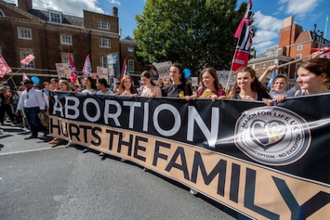







 Facebook
 Twitter
 YouTube
 LinkedIn
 Pinterest