


Sunday Reflection with Canon Robin Gibbons: 26 April 2026
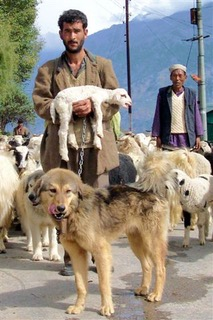
Wiki Image
Fourth Sunday after Easter
Many of us are radically detached from the countryside and the real rhythms of time and season, a lot of this is our own fault, urbanisation and what follows from it creates a life where we are run by electric light that allows day to be extended in to the darkness of night, and where clocks regulate our comings and goings, risings and settings! That is part of the uneasy covenant we make with the vagaries of human outreach and development, and it is not all positive as we are now constantly finding out. The balance we once had with nature is out of kilter, the damage our human need to expand has caused, is coming home to roost (excuse the avian metaphor) as we face the reality of environmental destruction of habitat and the threat of climate change, already upon us.
So this Sunday's gospel where Jesus expresses his care of us as that of a 'good shepherd' has some problems for our interpretation. Scripture has a number of good quotes that touches on the ancient reality of the shepherd and the sheep, but the issue before us is that whilst we can easily understand and translate some aspects into the general vocation we have as Christians - of care for others such as, guiding, guarding, being responsible for others; certain aspects pass us by because we are not as familiar with the reality of shepherding that Jesus shares..
As a priest, where this metaphor is often used for our work with others (after all we are engaged in 'pastoral' work as shepherds of 'souls'!) I now find myself challenged by what I once accepted as the given approach to being a 'pastor' (the Latin word for shepherd). This is all to the good, it keeps me on my toes, tells me that my journey of faith and into faith is far from ended, but it is also a realisation that the old vocation of being a true shepherd isn't compete until we learn several hard facts.
A key factor of ancient shepherding was the immense amount of time a shepherd spent with the sheep, being there at the lambing, birthing them into new life, all through the seasons to make sure they we kept free from illness, clipping their fleece to prevent 'fly blown ( or blowfly strike ) worming them, dipping them, learning their individual characteristics and often living amongst them for weeks or months in all kinds of weathers, and being often alone, except for the ever faithful sheep dog-and of course being their at their ending. Such familiarity between animal and human would inevitably means close recognition by sight and sound and smell, to recognise the shepherd's voice would have been ingrained, and the shepherd would know the different cries alerting him to need, pain, distress or simply communication, so being a true shepherd exposes us to the intimacy of having to know all aspects of peoples lives-to become familiar with life in the raw!
That is what Jesus tells us he is doing, and asks us to take part in doing this duty of care for and with others. This is quite daunting, because it demands sacrifice of self and a letting go of our perceived priorities and selfishness. Just as the good shepherd has to be on the alert at all times, tuned into the needs of the sheep, anticipating issues, doing what has to be done then and there, not putting things off like a hireling shepherd. Its tough, and shepherds are also odd too, they speak with a voice rooted in nature, personality and empathy, but not necessarily in tune with others, nor are they 'yes' people. Their oddity is building up the virtue of patience, a hard learnt, well tested and tried gift, honed by failure and challenge as well as success. Can we be like this patient -shepherd Christ? Well, yes we can!
I have been reflecting on how my own vocation as a priest has been a journey into gradually understanding and accepting the difference and oddity of others, but that what matters above all is love, a love that is unequivocally open. We are helpless as babies, needing others to hold, handle, feed, wash, and tend to all our needs, where the basics of sound, smell and presence matter. That is exactly the same with each one of us when we are sick, and when we are dying.
That is also the basic oddness of a shepherd, learning to find the essential, not get side tracked by power, fine clothes, money, status, but becoming the the one, who in the words of Pope Francis, 'smells the sheep'. Here is a favourite quote of mine, it not only applies to priests but to all of us as Christians, sharing in the shepherding priesthood of Christ:
'"The priest who seldom goes out of himself … misses out on the best of our people, on what can stir the depths of his priestly heart. … This is precisely the reason why some priests grow dissatisfied, lose heart and become in a sense collectors of antiquities or novelties - instead of being shepherds living with 'the smell of the sheep.' This is what I am asking you - be shepherds with the smell of sheep."
(Pope Francis' address to the world's priests at the Chrism Mass on Holy Thursday March 28)
But lastly, have patience, a basic virtue I badly need, but so essential in the shepherd's task. Our second reading from I Peter, is for me at any rate, a hymn to how I may obtain that grace and practice of patience. I won't comment on it except to recommend that we use it as a reflection on how we too become the 'odd ones' out, true shepherds of Christ's people: 'But if you are patient when you suffer for doing what is good, this is a grace before God. For to this you have been called, because Christ also suffered* for you, leaving you an example that you should follow in his footsteps".(I Pt 2: 20b,21) Amen to that!
Lectio
For patience:
1 Peter 2:20b-25
Beloved:
If you are patient when you suffer for doing what is good,
this is a grace before God.
For to this you have been called,
because Christ also suffered for you,
leaving you an example that you should follow in his footsteps.
He committed no sin, and no deceit was found in his mouth.
When he was insulted, he returned no insult;
when he suffered, he did not threaten;
instead, he handed himself over to the one who judges justly.
He himself bore our sins in his body upon the cross,
so that, free from sin, we might live for righteousness.
By his wounds you have been healed.
For you had gone astray like sheep,
but you have now returned to the shepherd and guardian of your souls.
On being a shepherd
From Terry Pratchett's Granny Aching in Tiffany Aching Books
…Granny Aching's light, weaving slowly across the downs on freezing, sparkly nights or in storms like a raging war, saving lambs from the creeping frost or rams from the precipice. She froze and struggled and tramped through the night for idiot sheep that never said thank you and would probably be just as stupid tomorrow, and get into the same trouble again. And she did it because not doing it was unthinkable.'
The essence of being a shepherd from 'The Little Prince"
"Goodbye," he said.
"Goodbye," said the fox. "And now here is my secret, a very simple secret: It is only with the heart that one can see rightly; what is essential is invisible to the eye."
"What is essential is invisible to the eye," the little prince repeated, so that he would be sure to remember.
"It is the time you have wasted for your rose that makes your rose so important."
"It is the time I have wasted for my rose--" said the little prince, so that he would be sure to remember.
"Men have forgotten this truth," said the fox. "But you must not forget it. You become responsible, forever, for what you have tamed. You are responsible for your rose . . ."
"I am responsible for my rose," the little prince repeated, so that he would be sure to remember.
Chapter 21, The Little Prince
by Antoine de Saint-Exupéry
 Facebook
 Twitter
 LinkedIn
 Print
Print Email
Email












 Facebook
 Twitter
 YouTube
 LinkedIn
 Pinterest