

Book: The Church, the Far Right and the Claim to Christianity
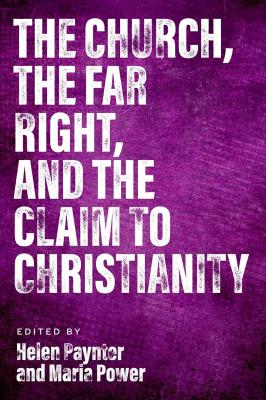
This important and helpful book is a response to the rise of the Far Right in Europe, including Britain, and particularly to the growth of specifically Christian justifications for Far Right activity. It is the result of conversations between a number of academics about a 2020 publication, The Claim to Christianity, by Hannah Strømmen and Ulrich Schmiedel.
Both books concentrate heavily on the Far Right's use of Muslims and Islam (rather than ethnicity or other targets of Far Right concern) as the focus of their anger and disapproval. Many church-going Christians are among those who see Muslims as a growing threat to British or European identity. Strømmen and Schmiedel take issue with those who say that those who use Christian beliefs to defend Far Right activity are only posing as Christians and are to be distinguished from 'real' Christians who reject Far Right views. They suggest that the Christian Churches have to take responsibility for the fact that some of our theology and practices have long been connected with prejudice against the 'other', and particularly against Jewish and Muslim people.
The contributors to The Church, the Far Right and the Claim to Christianity take differing views on Strømmen and Schmiedel's work. Scandinavian Lutheran and Church of England contributors speak about the role that can be played by Established Churches in countering racism, anti-Muslim sentiment and community tensions. Co-editor Helen Paynter, in her conclusion to the book, recommends her own Baptist tradition as offering a model of mutual respect, democratic participation and avoiding seeking power for Church institutions. Some contributors favour conversation with those drawn to Far Right positions, others see value in non-violent confrontation. Some stress the value of people from different faith communities getting to know each other, others emphasise the importance of economic class as providing common ground and the need for the Churches to work practically to address the poverty and injustice which can act as recruiting agents for the Far Right in low-income white communities.
Examples of practical action are given and a call is made for better education in scripture and theology for church members and particularly church ministers to equip them to counter the arguments of the Far Right. Several contributors point out that shouting at people and demonising them achieves nothing. They suggest that one contribution the Churches could make is helping people to learn to listen to each other, evaluate arguments, weigh evidence and disagree with greater respect, as there will always be disagreements. But the Church cannot remain neutral in the face of violence and oppression - these must be countered, but without mirroring them. In her conclusion, Helen Paynter says: "We cannot challenge the authoritarian tendencies in ideologies we deprecate by ourselves employing heavy-handed 'top-down' measures that belittle, de-platform or intimidate."
I would have valued Catholic contributions to this excellent work. Not only does Catholic Social Thought have much to offer, but the Catholic Church is in some ways a model of internationalism and a rebuke to any form of Christian Nationalism. My own parish in London is a microcosm of humanity, with people from every continent treating each other as brothers and sisters. But I recommend this book to anyone hoping to make a Christian contribution to challenging the use of Christian language by the Far Right.
The Church, the Far Right and the Claim to Christianity, edited by Helen Paynter and Maria Power, is published by SCM Press, ISBN 978-0-334-06549-4, £25.00, published 2024.
 Facebook
 Twitter
 LinkedIn
 Print
Print Email
Email









 Facebook
 Twitter
 YouTube
 LinkedIn
 Pinterest