

Holy See Statement on International Day to Combat Islamophobia
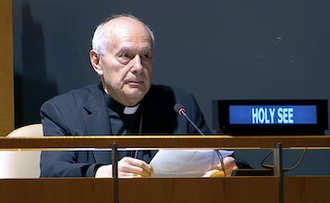
Archbishop Gabriele Caccia
Yesterday in New York, HE Archbishop Gabriele Caccia, Permanent Observer of the Holy See to the United Nations, delivered a statement at the Event in Commemoration of the International Day to Combat Islamophobia, organized by the United Nations Alliance of Civilizations and the Permanent Observer Mission of the Organization of Islamic Cooperation to the United Nations.
The Permanent Observer stressed that rising intolerance, discrimination, and hostility against Muslims, Christians, and followers of other traditional religions stems from a failure to recognize and defend the fundamental right to freedom of religion or belief, a cornerstone of any just society.
Archbishop Caccia spoke of the urgent need to uphold freedom of religion or belief amid persistent Islamophobia, and emphasized the growing role of online discrimination, calling for stronger educational initiatives. Recalling Pope Leo XIV's words that genuine dialogue is "a way of life," he urged authentic interreligious dialogue, ensuring that no religion is exploited or instrumentalized.
The full text of the statement follows:
Statement by H.E Archbishop Gabriele Caccia,
Permanent Observer of the Holy See to the United Nations,
at the High-Level Event in Commemoration of the International Day to Combat Islamophobia
New York, 16 March 2026
Madam President,
The Delegation of the Holy See welcomes the convening of today's High-level event marking the International Day to Combat Islamophobia and wishes to thank the United Nations Alliance of Civilizations and the Permanent Observer Mission of the Organization of Islamic Cooperation to the United Nations for organizing it.
The growing instances of intolerance, discrimination and hostility targeting Muslims, Jews, Christians and followers of other traditional religions stem from a failure to recognize and defend the right to freedom of religion or belief. This right is not optional, but a cornerstone of any just society. As Pope Leo XIV said, "when this freedom is denied, the human person is deprived of the capacity to respond freely to the call of truth. What follows is a slow disintegration of the ethical and spiritual bonds that sustain communities; trust gives way to fear, suspicion replaces dialogue and oppression breeds violence."[1]
The persistence of Islamophobia in the world is a clear reminder of how urgently religious freedom must be upheld. Discrimination and violence against Muslims not only harm individuals, but also damages the spiritual, moral, and social fabric of societies at large, weakening the bonds of trust and solidarity that humanity particularly needs in the current international context.
Furthermore, today discrimination against religious groups is amplified online, where hostile narratives can spread rapidly and shape public perceptions. This situation requires stronger educational initiatives, particularly in the area of digital literacy, to help users develop critical thinking skills and grow in freedom of spirit.[2]
Madam President,
As Pope Leo stressed, "dialogue is not a tactic or a tool, but a way of life - a journey of the heart that transforms everyone involved, the one who listens and the one who speaks."[3] This requires authentic interreligious dialogue, enabling differences to become a source of enrichment rather than division and ensuring that no religion is exploited or instrumentalized.
I thank you.
[1] Pope Leo XIV, Address to a Delegation of "Aid to the Church in Need", 10 October 2025.
[2] Cf. Pope Leo XIV, Message for the 60th World Day of Social Communications, 24 January 2026.
[3] Pope Leo XIV, Address Celebrating the Sixtieth Anniversary of Nostra Aetate "Walking Together in Hope", 28 October 2025.
 Facebook
 Twitter
 LinkedIn
 Print
Print Email
Email






 Facebook
 Twitter
 YouTube
 LinkedIn
 Pinterest