

A Journey into Hope: Examining Nostra Aetate
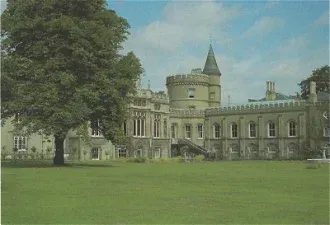
St Mary's University
Last October marked the sixtieth anniversary of the publication of Nostra Aetate, the Second Vatican Council's Declaration on the Relation of the Church to Non-Christian Religions. St Mary's University London and Westminster Interfaith have been celebrating this anniversary, and activities concluded on Monday evening, 9 March, with an event at the university.
Nostra Aetate is the shortest of the documents of Vatican II - a mere 1716 words in the new translation produced last year by Fr Michael Barnes SJ and published by Westminster Interfaith. But it was revolutionary in giving official endorsement to a change of attitude towards other faiths, leaving behind antagonism and seeking all that is good and true in other traditions.
It sought particularly to abandon the negativity towards the Jewish faith and the Jewish people which had helped give rise to antisemitism. Noting historic 'quarrels and enmities' between Christians and Muslims, it called for all 'to work sincerely for mutual understanding, and together to preserve as well as to promote social justice and peace and liberty for the benefit of all human beings.'
Professor Peter Tyler, of St Mary's University, opened the evening by introducing the speakers and reminding the attendees of the importance of the ground rules for inter-religious dialogue as set out in another Second Vatican II document, Ecclesiam Suam (1964).
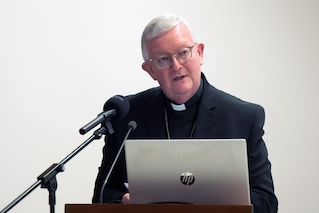
Archbishop Emeritus of Southwark Kevin McDonald, who worked for years at the Pontifical Council for Christian Unity and then in building interfaith relations in England, then spoke about the background to the document. He said that the Church's teaching on other religions grows out of the Church's understanding of itself. At Vatican II, there were a significant number of bishops from countries with non-Christian majorities. Pope St Paul VI's 1964 encyclical Ecclesiam Suam, which dealt with the nature of the Church, spoke of other religions in a more inclusive way than ever before. The Council's 1964 Dogmatic Constitution on the Church, Lumen Gentium, also expressed an open and positive attitude to the world outside the Church.
Cardinal Michael Fitzgerald, MAfr, President Emeritus of the Pontifical Council for Interreligious Dialogue, described the process through which Nostra Aetate came into being. Pope St John XXIII entrusted to German Jesuit Cardinal Bea of the Pontifical Gregorian University the responsibility of drafting a document on the Church's relationship to other religions. The Pope had made clear at the beginning of the Council that it should avoid the language of condemnation and use the language of mercy. Cardinal Bea consulted Jewish colleagues and Catholic scholars of other faiths to ensure the use of sensitive language. The brevity of the document disappointed some, but helped avoid the use of wording which might have caused offence.
Nostra Aetate has given rise to lots of interreligious dialogue and to regular greetings from the Catholic Church to members of other faiths at times of great significance to them, such as Passover, Ramadan or Eid-ul-Fitr. Cardinal Fitzgerald said that this is an acknowledgement of the Other. But he noted that reports on the fruits of interreligious dialogue often lie unread, and each new process starts at the beginning. It is important to build on what has already been done.
The event concluded with Archbishop Richard Moth presenting St Mary's Medals to Archbishop McDonald and Cardinal Fitzgerald. ( See: www.indcatholicnews.com/news/54541 )
More information, and Michael Barnes' new translation of Nostra Aetate, are available at https://rcdow.org.uk/news/a-journey-into-hope-celebrating-60-years-of-nostra-aetate/.
 Facebook
 Twitter
 LinkedIn
 Print
Print Email
Email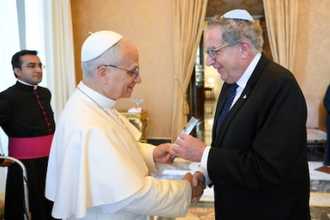






 Facebook
 Twitter
 YouTube
 LinkedIn
 Pinterest