


The British Museum has not 'erased' Palestine from displays
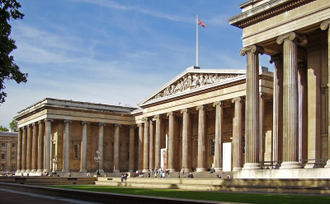
British Museum, Wiki Image
There have been some heated comments online over the last two days, after the Telegraph and several other publications reported that the British Museum had removed the name 'Palestine' from their Middle East displays and notices. A petition appealing for the name to be reinstated has already attracted over 14,000 signatures.
In a statement today, a British Museum spokesperson said: "It has been reported that the British Museum has removed the term Palestine from displays.
"It is simply not true. We continue to use Palestine across a series of galleries, both contemporary and historic."
The statement added: 'Some labels and maps in the Middle East galleries have been amended to show ancient cultural regions, and use terms such as "Canaan" which is more relevant for the southern Levant in the later second millennium BC. We use the UN terminology on maps that show modern boundaries, for example Gaza, West Bank, Israel, Jordan and refer to 'Palestinian' as a cultural or ethnographic identifier where appropriate.
'To be clear the decisions around the amendments mentioned above were made independently and not in response to the letter sent by the UKLFI.'
Two days ago on X, historian Dr William Dalrymple, expressed his concern at the initial reports saying: "Ridiculous of the British Museum to remove the word 'Palestine' from its displays, when it has a greater antiquity than the word 'British'. The first reference to Palestine is on the Egyptian monument of Medinet Habu in 1186 BCE. The first reference to Britain is the 4th century BC when it appears in the work of the Greek traveler Pytheas of Massalia."
Afte a chat with Nick Cullinan, new director of the British Museum yesterday, Dr Dalrymple said: "I'm very relieved to say that the story put by the Daily Telegraph about the BM cancelling the name Palestine is a complete misrepresentation of the facts:
"To reassure you we are not removing mention of Palestine from our labels," Nick told me. "Indeed, we have a display on at the moment about Palestine and Gaza."
He said: "I know this is something our curators have thought long and hard about - as you can imagine. We amended two panels in our ancient Levant gallery last year during a regular gallery refresh, when some wording was amended to reflect historical terms.
"To be honest, the even more frustrating and concerning thing is that I knew nothing about this until yesterday and has only been explained to me this morning. I hadn't even seen that [UK Lawyers for Israel] letter despite asking for it until this morning. I'm disgusted by the whole thing."
Dalrymple commented: "The question remains why the Daily Telegraph would put out such a mischief-making story without first fact checking it with the Director's office."
LINKS
British Museum removes 'Palestine' from ancient Middle East displays:
www.telegraph.co.uk/news/2026/02/14/british-museum-removes-palestine-references-from-ancient-mi/
British Museum removes the word 'Palestine' from displays following pressure by pro-Israel lawyers
www.middleeastmonitor.com/20260215-british-museum-removes-the-word-palestine-from-displays-following-pressure-by-pro-israel-lawyers/
See Middle East Eye's discussion with Marchella Ward and Prof Dan Hicks: www.youtube.com/watch?v=4WvQz8sHDpI
Petition: www.change.org/p/erasing-a-word-erases-a-people-reinstate-palestine-in-the-british-museum
 Facebook
 Twitter
 LinkedIn
 Print
Print Email
Email





 Facebook
 Twitter
 YouTube
 LinkedIn
 Pinterest