

Simon Bryden Brook RIP
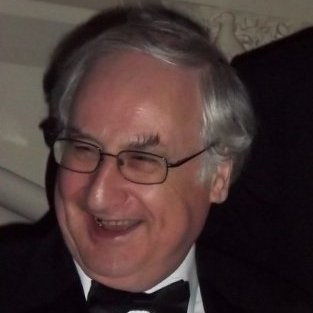
Simon Bryden-Brook (1941-2026)
Simon Bryden-Brook, a regular correspondent to 'The Tablet', lived and died a Catholic, and it was his faith, considered by some Catholics as too liberal and/or unorthodox, that shaped his life. After becoming a Catholic at 18, he spent his life campaigning for change in the Church in accordance with the vision of the Second Vatican Council.
For 40 years he was active in parish work as a church musician, publishing 'A Simple English Plainsong' in 1968, a form of English plainsong which was used for a time at St James' Spanish Place in London. He was also active in leadership roles in Catholic renewal pressure groups nationally and internationally, whilst considering himself a member of the 'loyal opposition' in the Church rather than a 'dissident'.
He spent the first 28 years after school in education, either at university or teaching in boys' boarding schools and 10 years teaching English as a Foreign Language to adults, latterly at the Inlingua School of Languages which he co-founded with his business partner Diana Marshall in Canterbury in 1976.
In 1982, he decided to try his vocation as a Benedictine monk at St Augustine's Abbey, Ramsgate, which, although not ultimately pursued, led to a long association with Douai Abbey at Berkshire where he became an oblate. In 1988 he made a major career change and trained as as an English butler with the renowned Ivor Spencer and subsequently spent three years working for a Cambridge-educated investor in Washington DC. After this employer moved to London, Simon submitted a short CV to the managing agent of the Belgravia block of flats to which his former employer had moved and thus secured the post of resident caretaker, a position in which he remained for over 30 years until his death.
Born Michael Niel Brook in Huddersfield in 1941 to impecunious middle-class parents, his father Alan, a member of the armed forces and his mother Cynthia, a shorthand typist, he lived with his parents, brother David and sister Louise in Germany 1945-50, where his father was involved in the de-Nazification programme. Two straitened years followed when the family returned to Huddersfield and his father became a civil servant in London while his mother worked at evening classes towards obtaining a teacher's certificate. It was her ambition for her children which led to Simon's obtaining a local authority scholarship for an assisted place at Charterhouse, which he attended 1955-9. His house-master was the strict Kenneth Clare, who had what Simon considered to be Victorian ideals of sexuality, and to whom he later credited (by way of reaction) his own radical positions on human sexuality leading him to champion causers such as gay rights, the ordination of women and the abolition of clerical celibacy Catholic clergy.
He spent two years at Exeter University reading French, German and Music, followed by two years at Birmingham University reading Theology, and then a further two years at teacher training college in Birmingham. Much later in 2009, whilst in Washington DC, he was awarded, after five years of study, a Doctor of Ministry degree by the Global Ministries University.
After the publication of Paul VI's encyclical 'Humane Vitae' in 1968, Simon was closely involved in the foundation in 1969 of the 'Catholic Renewal Movement' and was to be one of its first chairpersons, following Clifford Longley, then religious affairs correspondent of 'The Times'. This organisation, often viewed with great suspicion by the Catholic bishops of England, supported those priests and teachers who were sanctioned for dissenting from official teaching on birth control. The organisation later broadened its concerns to other areas of Catholic life and teaching in need of renewal. In later years,. The CRM became 'Catholics for a Changing Church', for whom the election of 2013 of Pope Francis was a vindication of its position'. Simon developed the publishing arm of CCC from 1992, until eventually it produced over 50 different progressive booklets by writers such as James Alison, Paul Collins, Eamon Duffy, Nicholas Lash, Elizabeth Price, Frank Regan, Jack Spong, John Wijngaards, Rowan Williams and many others. In 1988, Canterbury Press Norwich published a collection of some 50 liturgies created over the 30 years of its existence by lay members of CCC under Simon's editorship 'Take, Bless and Share'. Later he published other small circulation booklets and acted as editor of 'Renew', the quarterly magazine for CCC, which he and Valerie Stroud radically re-designed.
In 1992 he became a delegate for 'Catholics for Changing Church' at the newly formed 'European Network Church on the Move' and served on the secretariat there for over 20 years attending and twice organising its annual conference at various locations in Europe until 2014. He also became involved with the 'International Federation for a Renewed Catholic Ministry' which had grown out of some married Catholic priests groups and served as a member of its executive and latterly president for some 10 years.
Simon spent much of his life accumulating friends to whom he remained loyal and from he evoked loyalty. Some were former students: Tony Larkin remained a close friend, an employee at the School of Languages in Canterbury, and close companion, others were progressive Catholics like himself. Joining the Oxford and Cambridge Club in 2014 also gave Simon a new lease of life in his later years.
Simon was a radical Catholic, a distinct 'one-off' character who, once met, would leave an indelible impression. He will be greatly missed.
His Requiem Mass will take place on Wednesday, 4th March at Douai Abbey.
By Paul Dean, adapted from Simon's own words, 2026.
Elizabeth J Gordon comments:
Simon (Niel) Brook was my much loved cousin since early childhood. My family lived in the USA but we visited our British relatives often.Niel was always so much fun to be with. I think the last time I saw him was my last visit to England a few years ago. We enjoyed our time together, of course! I loved being around him. God bless him.
 Facebook
 Twitter
 LinkedIn
 Print
Print Email
Email








 Facebook
 Twitter
 YouTube
 LinkedIn
 Pinterest