


Ash Wednesday, Repentance and a Disarming Peace
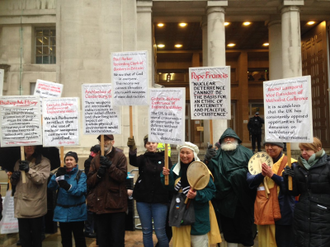
Ash Wednesday confronts the Church with an unambiguous anthropological truth: "You are dust, and to dust you shall return." The liturgy dismantles fantasies of permanence and control, situating human life within its proper limits before God.
It is from this starting point that Pope Leo's 2026 World Day Peace message, "Peace be with you all: Towards an 'unarmed and disarming' peace," must be read. The message is not a technical policy proposal but a theological reorientation. It directly challenges the reigning security logic of our age, especially the moral legitimacy granted to nuclear "deterrence". The claim that peace can be preserved through the credible threat of mass annihilation stands in stark tension with Christian ethics and with the Gospel's revelation of salvation.
The Ash Wednesday readings sharpen this tension. Joel's command to "rend your hearts, not your garments" (Joel 2:13) exposes religious gestures that leave unjust structures untouched. Psalm 51 gives voice to repentance stripped of self-justification, naming sin as a rupture in right relationship with God and neighbour. Paul's urgent declaration- "now is the acceptable time" (2 Cor 6:2)-eliminates the comfort of moral delay, while Jesus' teaching in Matthew 6 dismantles piety performed for legitimacy rather than truth. Together, these texts resist abstraction, evasion, and postponement.
Seen through this lens, nuclear weapons are not merely a phoney strategy for true peace and security, they are a theological scandal. They embody a moral logic that normalizes preparation for indiscriminate mass destruction while blessing it in the language of "necessity and stability". Their vast financial cost constitutes an economic injustice, siphoning resources from life-giving needs. Their environmental consequences implicate them in ecological sin. Most deeply, they deform moral imagination by training societies to accept possible annihilation as a condition of peace.
Biblical repentance, however, is never confined to private conscience. Joel's summons is addressed to a people. Psalm 51's plea for a clean heart does not license God's blessing of violent systems. Paul's insistence on immediacy leaves no room for deferral in the face of structural sin. Christian conversion necessarily carries social, political, and economic consequences.
At the centre of this critique stands Christ himself. Jesus offers no peace rooted in domination or violence. The peace he embodies is revealed in the Way of the Cross: a nonviolence that refuses retaliation and exposes the lie that violence secures life. In accepting suffering rather than inflicting it, Jesus disarms the logic of Empire. The resurrection vindicates not the architects of death, but the one who entrusted himself entirely to God.
A "disarming peace," then, is neither passive nor naïve. It demands a reconfiguration of Christian imagination: prayer that leads to nonviolent resistance, fasting that exposes structural sin, and almsgiving that redistributes resources away from the production of nuclear weapons.
Ash Wednesday marks our bodies with ashes to interrupt illusions of invulnerability. Empires pass. Weapons corrode. What endures is the mercy of God and the call to conversion. Now is the time!
 Facebook
 Twitter
 LinkedIn
 Print
Print Email
Email















 Facebook
 Twitter
 YouTube
 LinkedIn
 Pinterest