


Quakers bring reparations conversation into Parliament amid growing debate
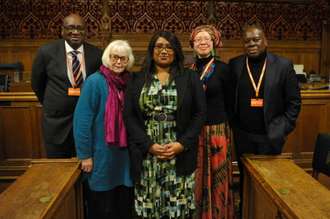
Approaches to Reparations Event Speakers. Image: Michael Preston for Quakers in Britain
As debates about Britain's history, race, and responsibility continue to surface, Quakers in Britain co-hosted a discussion in Parliament exploring what reparations might mean in practice.
The event, 'Approaches to Reparations: Faith-Based, Community, and Grassroots Perspectives,' was co-hosted yesterday by the All-Party Parliamentary Group (APPG) on Afrikaan Reparations and chaired by Bell Ribeiro-Addy MP.
It brought together faith leaders, community organisers, and racial justice advocates for an open conversation about accountability, repair, and justice in a British context.
Interest in reparations for African chattel enslavement has grown in recent years, particularly since the Black Lives Matter protests of 2020, yet the UK continues to struggle with how, or whether, to respond.
Recent pushback faced by the new Archbishop of Canterbury for defending the Church of England's programme for repairing the harms of African chattel enslavement underlined how contested these conversations remain.
Panellist Richard Reddie, director of justice and inclusion at Churches Together in Britain and Ireland, said: "There is a great deal of literature in the Bible that makes the case for reparations."
Kojo Kyerewaa, national organiser for Black Lives Matter UK, said: "We need to relate reparations to the daily lives of people, and make the links between that which they already know about what is unjust and reparations as a liberatory pathway. That way we can begin to reshape the world towards justice, and we deserve nothing less'
Quakers in Britain agreed in 2022 to consider making practical reparations for the transatlantic trade in enslaved people, colonialism, and economic exploitation.
"We need to name our part in the history," said Marghuerita Remi-Judah, co-clerk of the Quakers in Britain Trustees' Reparations Working Group. The Quaker testimony is one of peace…enslavement was violence, antithetical to peace."
The decision followed years of research, listening, and discernment, and reflects a wider commitment to anti-racism, truth-telling, and action rooted in faith.
The panel, which also included Reverend Wale Hudson-Roberts, head of racial justice for the Baptist Union, explored how reparations work has developed from grassroots and local initiatives.
Panellists discussed the role of education and community leadership, and how institutions respond to difficult questions and resistance.
LINK
Quakers in Britain: www.quaker.org.uk
 Facebook
 Twitter
 LinkedIn
 Print
Print Email
Email













 Facebook
 Twitter
 YouTube
 LinkedIn
 Pinterest