

South Africa reflection: Not a drop to drink
Source: Jesuit Institute, South Africa
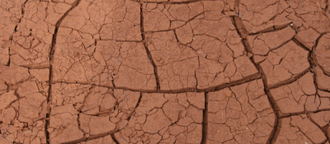
There is nothing new in the assertion that South Africa is facing a severe water crisis. Some parts of the country are semi-arid. Other parts have failing, ageing infrastructure and growing populations, so that the supply cannot keep up with the demand.
Our legacy of mining and manufacturing continues to poison vast quantities of surface and underground water. Our rivers are polluted with sewage and agricultural runoff. "Water mafia" have moved into (or created?) spaces where municipal supplies are inadequate. They deliver water by tanker, making vast profits at the expense of people desperate for water.
This is not a way to treat a precious resource on which all life depends. Already in 2015, in his encyclical on care for our common home, Laudato Si', Pope Francis denounced the injustice of privatising water supplies and distribution, which unfairly disadvantages the poorest people in any society. Many cannot even afford a single (plastic) bottle of water each day for their hydration needs.
We rejoice that Johannesburg Water will soon complete the new reservoir, tower and pumps in Brixton. However, this week, colleagues at the Jesuit Institute have complained that they have no water in their homes. A colleague from Melville received notification over the weekend that they would be without water for eight days. On Monday, there were demonstrations in Atteridgeville, and a major access road, the R55, was blocked by protestors. Colleagues in Thembisa and Kyalami are having their water throttled and can't be sure that they will have water when they come home in the evening. Our colleague from Atteridgeville said that he would rather have electricity outages than water cuts.
But this should not be a choice we have to face. Electricity and drinkable water are basic human rights. Like all resources, which are gifts from God, if we care for them properly, there should be enough to go round. As it is, about 60% of the water available in our water-scarce country is used for food production. About 40% of purified municipal water is wasted through leaking pipes and poorly maintained infrastructure, is stolen, or not billed. These amounts are written off as "non-revenue" water, meaning that a municipality does not receive payment for this water, which it has bought indirectly from the Department of Water and Sanitation. The DWS.gov.za website shows just how much water is wasted around the country. And yet we continue with our wasteful habits, believing that we can never run out of water.
It comes as no consolation to know that this is a growing worldwide phenomenon. In January, the United Nations University published a frightening report, "Global water bankruptcy: Living beyond our hydrological means in the post-crisis era." The report shows that some water systems can no longer bounce back after droughts or pollution. Lakes around the world are shrinking. River courses have altered, and wetlands are degraded. Groundwater and aquifers are depleted, causing land to subside or become salinated. Something we don't often think about in South Africa is the retreat of glaciers and the melting of the polar ice caps, as global temperatures rise. As less and less water is available, this threatens food production and people's livelihoods. The quality of fresh water and ocean water worldwide is degrading as more and more water is polluted beyond redemption. This reduces the overall supply of usable water. The report can be downloaded from https://unu.edu/inweh/collection/global-water-bankruptcy
We can no longer presume that there will always be sufficient water. Let us be careful stewards of every drop that God gives us.
Follow The Jesuit Institute on Twitter @JesuitInstitute
18 February 9h30-16h00
Ash Wednesday Reflection Day with Fr Francis Koshoffa SJ
No cost. Donations welcome Please bring your own lunch
15 Molesey Avenue, Auckland Park, Johannesburg
RSVP - retreats@jesuitinstitute.org.za
 Facebook
 Twitter
 LinkedIn
 Print
Print Email
Email







 Facebook
 Twitter
 YouTube
 LinkedIn
 Pinterest