

Bishop Nicholas Hudson "Hope needs to be magnified"
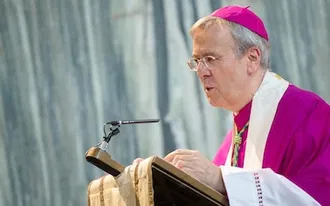
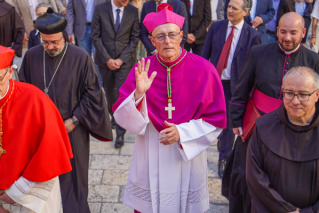
Bishop Nicholas Hudson - Image CBCEW
In his homily on the Feast of the Holy Family, the Bishop of Plymouth, Bishop Nicholas Hudson reflected on how "very fitting" it was that this feast day had opened and now closed the Jubilee Year of Hope in the diocese because the Holy Family was "nothing if not a family of hope, a hope-filled family."
Drawing upon Pope Benedict's reflections on the Infancy Narratives, Bishop Hudson shared that when the twelve-year-old Jesus stayed behind in Jerusalem, the Holy Family had been travelling with the whole clan, who according to Pope Benedict, "were travelling as a synod of God's People to go and worship God in his holy temple."
"Synodality means travelling together - being together on the same road, literally," Bishop Hudson explained.
"I find this to have profound resonances for the synodal journey we've been making much more recently as the People of God in England and Wales, and especially in this Diocese of Plymouth," Bishop Hudson continued. "It makes me think we should call on the Holy Family much more fervently to pray for us, to guide us, to journey with us as we explore different ways to harness the strengths we've experienced in synodality to our discernment of what kind of diocese the Holy Spirit yearns for us to be."
Looking Ahead to 2033
The diocese now steps out of this Jubilee Year of Hope "into a still deeper hope and anticipation of an even greater Jubilee - the great Jubilee of our Redemption in 2033," a time when we will celebrate "2000 years since the Last Supper, the suffering, dying and rising of the Lord Jesus, His Ascension into heaven, and the sending of the Holy Spirit at Pentecost," Bishop Hudson said.
"This Pilgrimage of Hope continues well on into the next decade," the bishop continued. "We shall be celebrating one further anniversary in 2033 - that's the Great Commission: Jesus' instruction, as attested to by St Matthew, that we go out into the world and baptise all nations."
Magnifying Hope in Preparation for 2033
Quoting Pope Francis' words in opening the Holy Year, the bishop reminded Catholics that "Hope does not disappoint, because God's love has been poured into our hearts through the Holy Spirit that he has given to us."
Bishop Hudson continued: "The hope we have experienced in this last year needs now not just to endure but to increase, to be magnified, as we prepare for 2033."
Pope Leo's Message for the World Day of Peace
The bishop also highlighted Pope Leo's message for the World Day of Peace (1st January): "Towards an unarmed and disarming peace," calling it "a powerful read."
He recommended that people find time to read this message, explaining: "that the goodness people saw in Jesus was surely 'disarming' in itself; and that we should learn from that, both as individuals and as nations, to believe in the disarming power of trust."
Bishop Nicholas noted that as Pope Leo closes the Holy Door in St Peter's, Rome, and closes the Holy Year which Pope Francis opened, "we're at one with him in marvelling at all that has happened, all that been achieved this year in the Church - not least in his becoming Pope!" He added that "as Leo's first words as Pope were of peace on earth, so he opens this New Year with a deep appeal to trust between the nations - in order that peace might prevail on earth."
Learning from Mary
Reflecting on Pope Paul VI's teaching that Nazareth can be like a school, Bishop Hudson invited the diocese to learn from Mary who continued to hope: "When they place in her arms the body of her crucified Son still she hopes. She it is who gathers the Apostles to the Upper Room together in a synod of bewilderment, fear, disbelief and prayer."
The bishop concluded by inviting Catholics to pray for the diocese at the close of this Holy Year, "that we walk ever more closely with her and her Son; that we remain Pilgrims of Hope, with a hope in our hearts that deepens, so as to communicate a faith that radiates out of us as individuals and as a community and gradually calls others into relationship with Him."
Fully homily
FEAST OF THE HOLY FAMILY: CLOSE OF THE JUBILEE YEAR OF HOPE - 28TH DECEMBER 2025
1. We opened and close this Jubilee Year of Hope on the Feast of the Holy Family.
And there seems something very fitting in that.
For the Holy Family were nothing if not a family of hope, a hope-filled family.
When Mary is told she's to be the mother of the Saviour, she's at first shocked but then moves to trust.
From "How can this be?" she moves just a few sentences later to say, "Let it be done to me according to thy will."
Then, a few days later, we find her sharing the news joyfully with the wider family, as she goes down into the hill country near Jerusalem to be with her cousin Elizabeth; where she sings God praises, saying, "The Almighty works marvels for me."
2. Don't you think St Joseph must have been a wonderful person - to be chosen by God, out of all the men in Israel, to look after Mary and her child?
His patience is tested, time and again, as the Gospels recount, to change his plans.
First having decided to divorce Mary, he's then asked to take her as his wife even though she is with child; to take Mary and the child to Bethlehem, then to Egypt, then back from Egypt into Galilee.
All of which he accedes to with consummate faith.
3. Theirs must have been such a wonderful family.
Pope St Paul VI used to say we should think of the Holy Family living in Nazareth like a school for all of us to learn from.
I think of this whenever I read in the Scriptures of a moment that wasn't so easy for the three of them.
It shows that even the Holy Family could struggle at times.
I mean the occasion when the 12-year-old Jesus chooses to stay back in Jerusalem.
4. I saw this captured in a beautiful Medieval painting where the just pre-adolescent Jesus stands between His parents with arms folded - literally (have you ever seen Jesus with his arms folded?) and frowning.
It was clearly the moment, towards the end of the story, when Mary asks him, "Son, why have you hurt us so? Behold, your father and I have been searching for you in great distress."
And the firmness of His response shows that He's growing up, even nearly asserting Himself, when He replies, arms folded - in the picture, at least - "Why were you looking for me? Did you not know that I must be in my Father's house?"
5. And they didn't understand.
But still He went down with them to Nazareth and was submissive to them.
The reason they lost Him was that they'd gone in a caravan - the whole clan going up together to Jerusalem - to worship in the Temple, the Father's house.
It was Pope Benedict, in his wonderful reflections on the Infancy Narratives, who pointed out that what they were on was a 'synod', in fact.
Because Synodality means travelling together - being together on the same road, literally.
He says they were traveling as a synod of God's People to go and worship God in his holy temple.
6. I find this to have profound resonances for the synodal journey we've been making much more recently as the People of God in England and Wales, and especially in this Diocese of Plymouth.
It makes we think we should call on the Holy Family much more fervently to pray for us, to guide us, to journey with us as we explore different ways to harness the strengths we've experienced in synodality to our discernment of what kind of Diocese the Holy Spirit yearns for us to be.
7. We step out of this Jubilee Year of Hope into a still deeper hope and anticipation of an even greater Jubilee.
I mean the great Jubilee of our Redemption for which we now prepare - in 2033.
Then we shall be celebrating so many things: 2000 years since the Last Supper; since the suffering, dying and rising of the Lord Jesus, His Ascension into heaven, and the sending of the Holy Spirit at Pentecost.
8. Our pilgrimage continues.
This Pilgrimage of Hope continues well on into the next decade.
And we need to remember we shall be celebrating one further anniversary in 2033 - that's the Great Commission: Jesus' instruction, as attested to by St Matthew, that we go out into the world and baptise all nations.
Jesus hopes in us.
His hope should feed our hope - that, with the help of the Spirit, we will draw others into relationship with Him.
9. In opening this Holy Year, Pope Francis urged upon us a hope that endures.
Quoting St Paul, he chose to say, "Hope does not disappoint."
"Hope does not disappoint, because God's love has been poured into our hearts through the Holy Spirit that he has given to us."
The hope we have experienced in their last year needs now not just to endure but to increase, to be magnified, as we prepare for 2033.
10. "In you, O Lord, we hope" were the words I chose for my motto: "In te Domine speramus".
Not my words but the words of the psalmist; and we need to hold these before us as we step out into a New Year and a new phase in the life of the Church, in the life of this Diocese.
11. Hope is very close to trust.
They're like twin sisters.
So it is that this phrase is often translated, "In you, O Lord, we trust".
It's no coincidence, therefore, that Pope Leo has chosen to open the New year with a letter all about trust.
As Pope Leo closes the Holy Door in St Peter's Rome, closes the Holy Year which Pope Francis opened, surely we're at one with him in marvelling at all that has happened, all that been achieved this year in the Church - not least in his becoming Pope!
As Leo's first words as Pope were of peace on earth, so he opens this New Year with a deep appeal to trust between the nations - in order that peace might prevail on earth.
12. I would commend to you his message for the World Day of Peace in three days' time.
It's a powerful read.
Its title speaks volumes: Towards an unarmed and disarming peace, it's called.
Towards an unarmed and disarming peace.
At its heart is the conviction that the goodness people saw in Jesus was surely 'disarming' in itself; and that we should learn from that, both as individuals and as nations, to believe in the disarming power of trust.
13. The story of Our Lord's life shows us that goodness, even when crucified, shouldn't prevent us still from hoping.
Pope Paul said Nazareth can be like a school to us.
We need to learn from our teacher Mary who continued to hope even when people thought hope to have been vanquished.
When they place in her arms the body of her crucified Son still she hopes.
She it is who gathers the Apostles to the Upper Room together in a synod of bewilderment, fear, disbelief and prayer - to teach them to believe, "Did He not say that on the third day He would rise again?"
14. All her adult life, she'd pondered in her heart all the things He did and said.
Even when she was confused to hear Him say, at 12, "Do you not understand that I must be in my Father's house?" - still, Luke tells us, she pondered it all.
She pondered and prayed; and doubtless drew from her reflection to find renewed hope in her heart - and to give her own Son hope too.
We should ask her, with Joseph, to pray deeply for us, for our Diocese, at the close of this Holy Year, that we walk ever more closely with her and her Son; that we remain Pilgrims of Hope, with a hope in our hearts that deepens, so as to communicate a faith that radiates out of us as individuals and as a community and gradually calls others into relationship with Him.
 Facebook
 Twitter
 LinkedIn
 Print
Print Email
Email













 Facebook
 Twitter
 YouTube
 LinkedIn
 Pinterest