


Ian Linden: Persecution of Christians - the case of Nigeria
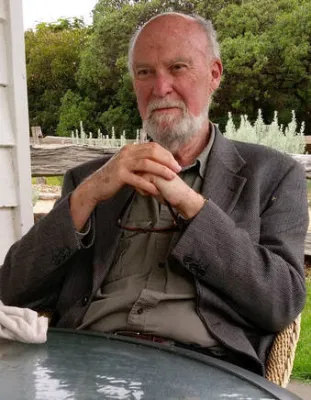
Dr Ian Linden
Most democracies sign up to promoting religious freedom abroad. Trump wants to go in guns-blazing. Others feel uncomfortable raising the question of Christian persecution. Why should Christians get privileged attention amongst the many victims of human rights violations and discrimination? Are they disproportionately victims of violence?
In Nigeria the question is particularly contentious. Its population is c.237 million, 46% Muslim, mainly but far from exclusively in the North, and 46% Christian, ditto in the South, 250 ethnic groups, four main ones, Hausa, Yoruba, Fulani and Igbo. Secession from the Federation and the Biafran war (July 1967 to January 1970) resulted from post-Independence ethnic conflict. Nigerians emerged from military rule in 1999. Democracy entrenched Shari'a law in the 12 Northern states.
If the prevalence of abductions, attacks, sexual violence, and killing of Nigerian Christians, plus bombing churches, is the yardstick, President Mohammad Buhari's government, 2015-2023, showed a lack of capacity to arrest descent into near-anarchy in much of the country. Nor, in the Muslim-majority Northern states, was commitment to common citizenship and Christians' civil rights advanced by denial in public institutions of employment opportunities or promotion, lack of religious education for Christian children in public schools, lack of places for worship in public institutions, and refusal by state authorities to allocate land for building a church or rebuilding churches after jihadists destroyed them.
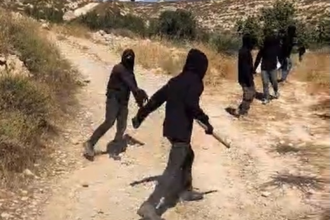
The geography of persecution is complex. In 1980, I travelled south from Chad along a short part of NE Nigeria's, Borno state's, long and porous border with Cameroon. You could drive an armoured division across it let alone infiltrate guerrilla forces with weaponry. Originating in 2009, Borno state, a jihadist group Boko Haram demonstrated the metastasis and splits of groups recruiting young men seeking to earn a living with a gun. Led by a handful of Muslim leaders who could recite, and misinterpret, the occasional sura from the Qur'an, it got a few paragraphs in our Press, then blanket coverage when in April 2014 they abducted 276 girls from a Government school in Chibok, Borno.
By 2015 Boko Haram controlled all but one - unsafe - road into Maiduguri, the closest major town in NE Nigeria to the border, with a million inhabitants. The current auxiliary bishop of Maiduguri Diocese, John Bakeni, had to care for stranded a Nigerian air-force officer and accommodate him on his mission compound , such was the disarray of the Nigerian armed forces. In 2016, a substantial part of Boko Haram broke away to form ISWAP, Islamic State West African Province, a pro-ISIS group operating across a wide area of the Chad basin into Cameroon, Niger as well as Nigeria.
Based on twenty years of research experience and stringent analysis, the US non-profit ACLED (the Armed Conflict Location & Event Data Project) report that violence in Nigeria "in which Christians have been specifically targeted in relation to their religious identity accounts for only 5% of reported civilian targeting events". This seems low. It represents, of course, a small percentage of the political violence in which Christians are killed. From 2009-2025, they calculate, some 53,000, Christians and Muslims, were killed - at an increased rate in the early 2020s. Attacks on churches rose from 15 per annum in 2019 to a peak of 65 in 2022, and on mosques from 7 to 15. This might give some indication of the balance between Muslims and Christians targeted in this period (not disaggregated by ACLED).
Islamic extremist criminality discriminates largely on the basis of 'those not with us are against us so should be eliminated'. Clashes with sometimes heavy casualties in Benue and Plateau states are predominantly over land, between migrating Fulani cattle herders (Muslims) and agriculturalists of several ethnic identities (mostly Christian). Criminal gangs use violence to achieve their goals in the North-West and elsewhere. ACLED's figures are probably the best approximations available.
President Trump designated Nigeria a Country of Particular Concern for Religious Freedom in December 2020. President Biden's Secretary of State, Antony Blinken, removed it in November 2021. Enter stage Right, on 11 September 2025, Republican Senator Ted Cruz of Texas introducing to Congress a Nigerian Religious Freedom Accountability Act: to hold accountable Nigerian officials who 'ignore or facilitate Islamist jihadist violence and the imposition of blasphemy laws'. "Nigerian Christians are being targeted and executed for their faith by Islamist terrorist groups, and are being forced to submit to sharia law", Cruz warned.
On 21 October, Matthew Kukah, Bishop of Sokoto, NW Nigeria, a prominent national figure, delivered a lecture in the Vatican on the release of 'Religious Freedom in the World 2025', a doorstop-sized report from Aid to the Church in Need (ACN). Sokoto is the spiritual centre of Islam in the Northern States. The current Sultan of Sokoto, Alhaji Abubakar III, provided accommodation for visitors to Bishop Kukah's inauguration and ordination. A Muslim friend gave him a PRADO jeep for pastoral work in his vast diocese. The bishop travels freely wearing his episcopal gear. Not the picture painted in Trump's Washington, though Bishop Kukah underlined how Nigerian civilians experienced intolerable violence which he attributed to the failure of the late President Buhari to curb terrorism and banditry.
He once told me how a Muslim neighbour of a close - Catholic - relative in Kaduna, north of the capital Abuja, warned her that a mob was on the rampage and she should leave. He temporarily housed her furniture and belongings. The mob came and went. Before she returned home, a Christian mob retaliated by attacking her Muslim neighbour's house stealing the contents. "What would you call the perpetrators", he asked". I floundered. "Criminals", he answered.
Bishop Kukah's Vatican speech surprised Nigerian Christians because he opposed designating Nigeria, again, as a Country of Particular Concern. It would "harm inter-religious ties and relations with government". His reference was to the government of Bola Tinubu, educated in Chicago, many years in America, exiled under military rule after returning, a reforming Governor of Lagos state 1999-2007, and elected President in March 2023. 'Remi' Tinubu, his distinguished wife, an ordained pastor in a Pentecostal megachurch, represented Lagos in the Nigerian Senate. President Tinubu immediately purged 51 Army Generals, 49 Air Force officers, and 17 Naval commanders, and appointed several Christians to important Federal positions. Bishop Kukah believed he was "willing to listen" and offered real hope for dialogue and national harmony.
Enter next, in early November, President Trump wading in ordering the military to prepare for action in Nigeria, "that now disgraced country". Trump also ordered Nigeria re-designated a Country of Particular Concern for failure to insure religious freedom. Britain had been funding protective, coordinated Government action for some time. On 26 November, following two widely publicized abductions of schoolchildren, 315 from a Catholic boarding school, the other, 25 girls from their hostels after the withdrawal of military protection just before the attack.* Tinubu declared a State of Emergency, promising to appoint 20,000 additional police and military and control forests where terrorists and bandits hid. The Minister of Defense resigned last week.
So what has Bishop Kukah, and Nigeria, to teach us about Christian persecution? Be wary of emotional misinformation. Try to get the facts straight. Don't inadvertently sponsor political manipulation. Be ready to become unpopular.
Professor Ian Linden is Visiting Professor at St Mary's University, Strawberry Hill, London. A past director of the Catholic Institute for International Relations, he was awarded a CMG for his work for human rights in 2000. He has also been an adviser on Europe and Justice and Peace issues to the Department of International Affairs of the Catholic Bishops Conference of England and Wales. Ian chairs a new charity for After-school schooling in Beirut for Syrian refugees and Lebanese kids in danger of dropping out partnering with CARITAS Lebanon and work on board of Las Casas Institute in Oxford with Richard Finn OP. His latest book was Global Catholicism published by Hurst in 2009.
LINKS
Read Professor Ian Linden's latest blogs: www.ianlinden.com/latest-blogs/
Religious Freedom in the World: https://acnuk.org/religious-freedom-in-the-world-report-2025
 Facebook
 Twitter
 LinkedIn
 Print
Print Email
Email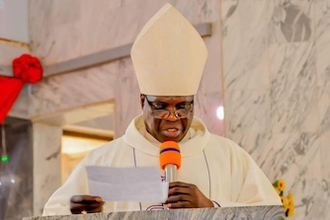





 Facebook
 Twitter
 YouTube
 LinkedIn
 Pinterest