

Lebanon: Pope brings message of peace to meetings with church and interfaith leaders
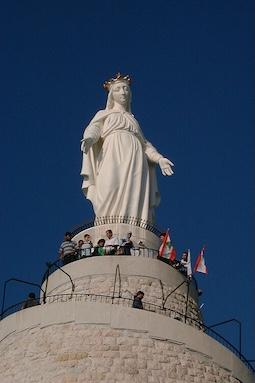
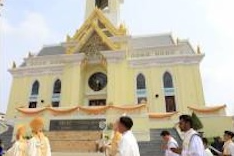
Shrine of Our Lady of Lebanon, Harissa - Wiki Image
Source: Vatican Media
After his visit to the Shrine of St Charbel Makhlouf, Pope Leo on Monday, Pope Leo met with bishops, priests, consecrated men and women, and pastoral workers at the Shrine of Our Lady of Lebanon in Harissa. From here he went on to Martyr's Square in Beirut for a gathering with Christian and interreligious leaders.
In his meeting with bishops, priests, consecrated persons and pastoral workers, the Pope underlined the relevance of the visit's motto, 'Blessed are the peacemakers', by recalling the words of Saint John Paul II when he said that the Church in Lebanon carries the responsibility of sustaining hope.
He noted that the testimonies he had just heard, from four different people, demonstrate that these expectations continue to be met in concrete ways.
The Pope then turned to what he called the roots of Lebanon's Christian witness, reflected in the silent prayer of Saint Charbel and in the significance of the Harissa Shrine as a point of unity for the Lebanese people.
He emphasised that perseverance in difficult conditions often originates in prayer - "the invisible bridge which unites hearts" - and in remaining near to Christ, even amid the "sound of weapons" and daily hardships.
Pope Leo also highlighted the anchor featured in the journey's logo. Quoting the late Pope Francis, he explained that faith, like an anchor in heaven, offers direction and stability. To build peace, he said, it is necessary to remain fixed on that horizon, choosing love and generosity over the fear of loss.
The testimonies shared by pastoral workers shaped much of the Pope's reflection. He pointed to the example of the village of Debbabiyé, described by Father Youhanna - one of the people who gave their testimony - where Christians and Muslims, Lebanese citizens and refugees continue to live together despite bombardments and scarcity.
The image of a Syrian coin placed among Lebanese ones in the parish alms box, he said, illustrates how each person has the capacity to contribute and receive in charity. Looking back at Pope Benedict XVI's 2012 visit to Lebanon, Pope Leo XIV reaffirmed that the Christian response to crisis is to prioritise forgiveness over revenge, unity over division, and service over domination.
Pope Leo noted, however, that many continue to face injustice and exploitation, particularly those who feel they have no alternatives. He underscored the importance of offering young people genuine opportunities, including within Church structures, so that they may find "concrete and viable prospects for growth".
The Pope then turned to the testimony of Loren, an immigrant working to support those forced to leave their homes due to conflict or necessity. The story she shared, he said, reflects the heavy consequences of war on civilian lives and challenges communities not to remain indifferent. He reiterated that migrants who arrive at Church doors should never feel rejected, but welcomed.
He also acknowledged Sister Dima, who chose to keep her school open during outbreaks of violence, transforming it into a space for learning, refuge, and community-building.
Education, the Pope said, has long been a priority for the Church in Lebanon and must continue, especially for those in extreme situations. "Our first school," he said, "is the Cross, and our one Teacher is Christ."
The experience of Father Charbel in prison ministry further illustrated the need to recognise the dignity of each person. Even in places marked by suffering and failure, the Pope said, the Church is called to see signs of God's mercy and the possibility of renewal.
Before presenting a Golden Rose to the Shrine, the Pope explained that the gesture symbolises the call to be the "fragrance of Christ" through daily choices rooted in charity and unity. This "fragrance", he added, is something shared and accessible, not reserved for a select few.
Bringing his address to a close, Pope Leo encouraged the Church in Lebanon to continue fostering peace through steadfast faith, inclusive community life, and practical solidarity, explaining that these remain essential foundations for rebuilding trust and hope in the country's future.
Watch the full video of the Meeting with Bishops, Priests, Consecrated Men and Women, and Pastoral Workers: www.youtube.com/watch?v=sO2By9xe4EI
Later in the day, Pope Leo met with Christian and interreligious leaders at Martyr's Square in Beirut.
The Pope began his address by calling Lebanon a "blessed land, exalted by the prophets of the Old Testament, who beheld in its towering cedars emblems of the righteous soul that flourishes beneath heaven's vigilant gaze."
He recalled Pope Benedict XVI's Apostolic Exhortation Ecclesia in Medio Oriente, signed in Beirut in 2012, which proclaimed the Church's desire to dialogue with followers of other religions.
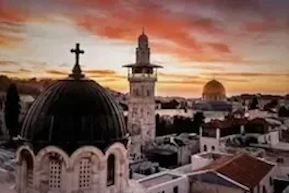
The country's many minarets and church bell towers stand side by side, he noted, and testify to the enduring faith and devotion of Lebanon's people to the one God.
"Here in this beloved land," the Pope said, "may every bell toll, every adhān, every call to prayer blend into a single, soaring hymn-not only to glorify the merciful Creator of heaven and earth, but also to lift a heartfelt prayer for the divine gift of peace."
Pope Leo pointed out that the world has witnessed the Middle East's "arduous journey and the unceasing quest for the precious gift of peace" over the past several years.
Despite the region's complex conflicts, the Lebanese people offer a powerful reminder that mistrust and prejudice do not have the final word and show that peace is possible.
"In the midst of these struggles," he said, "a sense of hopefulness and encouragement can be found when we focus on what unites us: our common humanity and our belief in a God of love and mercy."
Christians, Muslim, Druze, and countless others live together and seek to build a country united by respect and dialogue, he said.
Turning to the role of the Church, Pope Leo said the Second Vatican Council invites all Catholics to show respect rooted in love for people of all faiths.
"Dialogue, inspired by divine love," he said, "should embrace all people of goodwill, reject prejudice, discrimination and persecution, and affirm the equal dignity of every human being."
Interreligious dialogue, added the Pope, grows from the discovery of God's presence beyond any boundary and invites all people to seek God together in reverence and humility.
Pope Leo XIV recalled the countless cedar trees that fill Lebanon and pointed to its many olive trees, calling them "a tireless symbol of reconciliation and peace."
"Its long life and remarkable ability to flourish even in the harshest environments symbolizes endurance and hope, reflecting the steadfast commitment required to nurture peaceful coexistence," he said. "From this tree flows oil that heals-a balm for physical and spiritual wounds-manifesting the boundless compassion of God for all who suffer."
In conclusion, Pope Leo said the presence and faith of Lebanese expats throughout the world represents a vocation to build peace, confront intolerance, overcome violence, and show the path to justice for all.
"May the loving and maternal embrace of the Virgin Mary, Mother of Jesus and Queen of Peace," he prayed, "guide each of you, so that in your homeland, across the Middle East, and throughout the world, the gift of reconciliation and peaceful coexistence may flow forth 'like the streams flowing from Lebanon,' bringing hope and unity to all"
Watch the full video of the Ecumenical and Interreligious Meeting in Beirut: www.youtube.com/watch?v=-GGQSZucBpA
 Facebook
 Twitter
 LinkedIn
 Print
Print Email
Email













 Facebook
 Twitter
 YouTube
 LinkedIn
 Pinterest