


From Glasgow to Greenland: Stella Maris keeps expanding

Deacon David Noval
Since it began in the port of Glasgow just over a hundred years ago, Stella Maris has become a lifeline for seafarers all over the world. Now, it's looking to establish a team of volunteer ship visitors in Greenland.
David Noval, a permanent deacon who last year became the first ever Stella Maris national director in Denmark, plans to spend three weeks in Greenland in May. "There are a lot of Filipinos in Greenland. Most are working in the fish factories and others are working on large vessels," he explained.
Fishing and fish processing are the main industries in Greenland, which is the world's largest island, but only has a population of 56,000. It's no surprise that you find Filipinos working in its fishing industry, as approximately a third of those employed in the world's maritime sector come from the Philippines. The reason most leave their homeland is to earn enough money to support their families.
David said he is also hoping to extend the work of Stella Maris to other Nordic countries. "Last summer I visited the Faroe Islands and I'm going there for a follow-up this spring. I have been asked to go to Sweden and Finland to talk about the work of Stella Maris and discuss establishing ship visiting teams there."
He and volunteers have already begun visiting ships in the Danish ports of Aarhus, Koege, Vordingborg and Nakskov and they plan to cover more ports this year, including Copenhagen and Odense. Denmark is the world's fifth largest maritime nation, with a merchant fleet of 65 million gross tonnes. The country has more than 400 islands and a total coastline of over 7,000 kilometres. Up to 75 percent of all imports to Denmark arrives by sea.
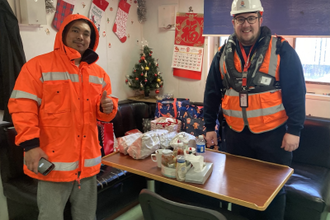
"Agreements have been established with several ports and we have trained a number of ship visitors," he said. "Stella Maris is well known in the maritime industry in Denmark. In Fredericia we have volunteers who are serving hot meals for seafarers on cruise ships from a food truck.
"I am very happy and grateful to have been given this assignment by Stella Maris. It's an amazing mission that I look at with awe. The last time Stella Maris operated in Denmark was in the 1960s and it was led by the priest who baptised me in 1970."
David aims to provide seafarers in Nordic countries with the kind of practical help and pastoral care that Stella Maris offers elsewhere in the world, such as in Kenya. Since before Christmas, Stella Maris has been supporting crew members on the fishing vessel Ra-Horakhty, which was abandoned in Mombasa after its owners stopped providing them with supplies.
Margaret Masibo, Director of Stella Maris Mombasa Kenya, said: "We were informed of the crew's dire situation by the International Transport Workers Federation inspector based here, so went to visit the vessel to assess the situation and see how best we could help. We invited other local seafarer groups to assist in our response. We had a long conversation with the captain of the ship who said he and his crew were distressed, frustrated, hungry and exhausted."
Stella Maris has kept in touch with the crew and provided food donated by Archbishop Martin Kivuva Musonde of Mombasa.
This case illustrates a wider problem of seafarer and fisher abandonment.
Throughout the pandemic, the face-to-face contact of Stella Maris port chaplains with seafarers has been restricted, but social media has helped them to support seafarers in new ways, said Margaret. "Social media has been crucial in our interaction with seafarers. It is through platforms like WhatsApp and Facebook that we are able to communicate with them and get constant updates on their situation, for both local and international seafarers.
"Social media is also a platform that we have used to create awareness about the lives and suffering of seafarers, as is the case of those on Ra-Horakhty. We have also been able to use it to communicate with Stella Maris port chaplains in other countries and, where necessary, refer seafarers to them."
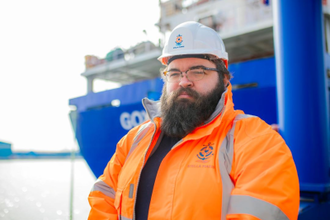
Since its beginnings in Glasgow in 1920, Stella Maris has grown steadily and now has over 200 chaplains and 700 plus volunteer ship visitors supporting seafarers and fishers in ports in more than 50 countries globally. It is the largest ship visiting network and its network of chaplains and volunteers makes more than 70,000 ship visits in a normal year.
Stella Maris International Network Director Fr Bruno Ciceri, who is based in the Vatican, explained that, during the pandemic, Stella Maris supported not only seafarers but also some of their families.
"Because of the pandemic, some seafarers were abruptly made unemployed and without any source of income," he said. "Thanks to the generous support of individuals, charitable organisations and the Stella Maris network of chaplains and volunteers, we were able to distribute a great number of emergency food packages in India and Philippines.
"The pandemic for sure has changed the world and moreover has transformed the maritime industry and these changes are also going to influence our future ministry. It is necessary that Stella Maris in the near future would not rely only on volunteers but should be able to attract people that see the ministry that we carry out as a challenging profession in which they would like to invest their lives."
Stella Maris, (formerly known as Apostleship of the Sea), is a registered UK charity. It relies on voluntary donations, grants and legacies to continue its work.
90% of world trade is transported by ship. However, the life of a seafarer can be dangerous and lonely. They may spend up to a year at a time away from home, separated from their family and loved ones, often working in harsh conditions.
Stella Maris chaplains and ship visitors provide seafarers and fishers with pastoral and practical support, information and a listening ear.
LINK
Stella Maris - www.stellamaris.org.uk
 Facebook
 Twitter
 LinkedIn
 Print
Print Email
Email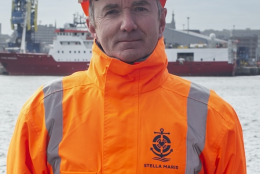








 Facebook
 Twitter
 YouTube
 LinkedIn
 Pinterest