


Vatican hosts conference on adult stem cell research
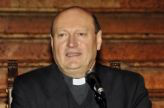
Cardinal Gianfranco Ravasi
An international conference entitled: 'Adult Stem Cells: Science and the Future of Man and Culture' is due to begin today in the Vatican, lasting until 11 November. The event, which has been organised by the US Stem for Life Foundation and by the Pontifical Council for Culture, has the aim of supporting research and increasing public awareness of treatment using adult stem cells. The conference will be attended by 350 scientists, religious figures, politicians, educators and industry representatives.
Primary stem cells are of two kinds: embryonic and adult. When a stem cell divides, each new cell has the potential either to remain a stem cell or to become another type of cell with a more specialised function, such as a muscle cell or brain cell. Sources of adult stem cells have been found in the bone marrow, the blood and the liver. This offers the possibility of a renewable source of replacement cells and tissues to treat many diseases.
At a press conference yesterday, presented by Cardinal Gianfranco Ravasi, president of the Pontifical Council for Culture Dr Robin Smith, president of the Stem for Life Foundation and chief executive of NeoStem, the company which backs the Foundation. explained how the use of adult stem cells avoids "the ethical dilemma posed by the use of embryonic stem cells. Adult stem cell research and therapy allows us to advance scientific knowledge while protecting every stage of existence".
In the world today, 12.7 million people suffer from cancer, 346 million from diabetes and 583 million from autoimmune diseases. New therapy using adult stem cells can give them hope of improvement and cure. Such treatment has been used successfully in cases of multiple sclerosis and leukaemia, and "in the not too distant future we will be able to use adult stem cells to rebuild damaged tissue and repair organs such as the heart", Dr Smith said.
Fr Tomasz Trafny, head of the Pontifical Council for Culture's science department explained that the conference will seek both to publicise the achievements of medical science, and to reflect upon them from the perspective of the human sciences. "We wish to raise some important and sometimes provocative questions", he said, "such as whether the Hippocratic oath should be extended to all the life sciences, because today it is not only doctors but also laboratory scientists who have power to intervene in all phases of human life".
Source: VIS
 Facebook
 Twitter
 LinkedIn
 Print
Print Email
Email

















 Facebook
 Twitter
 YouTube
 LinkedIn
 Pinterest