

CAFOD: 'Rich countries turned their backs on poorest at Doha climate talks'
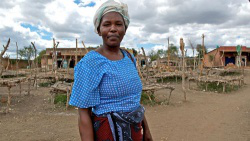
Kenya: E,mily in an empty market
At the close of the UN climate summit in Doha, governments took only the smallest of steps towards a global deal on cutting the emissions causing climate change, while no progress was made on funding to protect the world’s poorest communities that are hit hardest by a changing climate.
CAFOD climate change analyst Dr Sarah Wykes said: “Against the backdrop of the hundreds of thousands of families in the Philippines hit by the destructive force of Typhoon Bopha, rich country governments collectively turned their backs on those who have nowhere to hide from extreme weather.”
In advance of the talks, CAFOD, as a part of the CIDSE and Caritas Internationalis networks representing 180 Catholic development agencies, called for all countries to take responsibility for reducing greenhouse gas emissions through reaching a global agreement by 2015.
Dr Sarah Wykes added: “Developed countries, primarily responsible for the problem, should lead by ensuring the continuation of the Kyoto Protocol. This is the only legally binding agreement on cutting emissions currently in place, even though it only covers around 15 per cent of global emissions.”
At Doha, some governments agreed a second commitment period of the Kyoto Protocol running to 2020, but others did not sign up and those joining set targets too low to prevent dangerous levels of warming.
CAFOD and CIDSE also called for developed countries to clarify what funds they will provide from 2013 onwards to help poorer countries impacted by climate change. Governments will need to increase current levels of financing steadily from 2013 to meet their previously agreed commitment to deliver $100 billion-a-year by 2020.
At Doha, there were welcome announcements on climate finance from the UK and some other EU countries but no collective agreement. This leaves the poorest exposed to the dangers of a changing climate, with no guarantees of future help.
The talks also failed to discuss the importance of tackling the increasing impact of a changing climate on agriculture, particularly on small-scale food producers.
CAFOD Head of Campaigns Clare Lyons said: “One in eight people worldwide go hungry every day. Yet the lack of progress on agriculture at these talks means that small scale farmers who feed most of the world’s population will receive no further support, even though droughts, floods and erratic rain are making it increasingly difficult for them to put food on the table."
For more information on CAFOD’s climate campaign see: www.cafod.org.uk/Campaign/Get-clued-up/Climate-and-environment
 Facebook
 Twitter
 LinkedIn
 Print
Print Email
Email







 Facebook
 Twitter
 YouTube
 LinkedIn
 Pinterest