

Mary Colwell speaks at Diocese of East Anglia Water Day
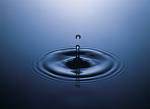
Opening a Diocese of East Anglia day focussing on water organised by the Norwich Justice & Peace group, Mary Colwell gave a reminder of the importance of being thankful for water, so essential for life. She showed an image of small Dartmoor well inscribed 'Lady Well, Drink, and be Thankful', a message which must have been more obvious to travellers before the days of safe piped water. Her presentation, which engaged a gathering of over 60 people from across East Anglia, went on to interweave spiritual, practical and technical threads relating to the significance of this vital gift of God.
There are 719 references to water in the Bible, from God's spirit hovering over the water in Genesis 1 to the invitation to all who are thirsty in the final chapter of the Book of Revelation. The four rivers of Genesis 2 may even reflect folk memories of the last Ice Age. The vision of water transforming the desert features in the Books of Isaiah and Jeremiah and there are numerous references to water and healing in the New Testament. Mary drew particular attention to the story of the Samaritan women at the well in John 4.
Our planet is unique in that water exists in all three states, solid, liquid and vapour. Not until the age of space exploration were astronauts able to wonder at its beauty and provide images of a 'blue planet', 70% of the surface being covered by oceans. The earth and its atmosphere provide an essentially closed system with water cycling between earth, sea and sky.
Less than 0.5% of this water is available as fresh water, with less than 0.1% providing habitat for more than 10% of known animals, 1/3rd of known vertebrate species and 40% of all fish species. 97% is saline and most fresh water exists as ice or deep underground. As humans, we are made up of 50-60% water and in the UK each consume directly on average 150 litres/day, each 'flush' typically amounting to 6 litres. Typical usage has been increasing at a rate of 4% each year since the 1930s. By contrast, across the world 4,500 children die each day from unsafe water and lack of basic sanitation facilities and half of all hospital beds are occupied by people with water related diseases.
Mary provided some stark images to demonstrate the impact of human activity on water: a stretch of the Yangtze river totally covered by plastic debris, the carcass of an albatross which had died with its belly full of plastic waste, a swathe of the Amazon cleared of trees and the once mighty flow of the Colorado reduced to a trickle.
Large dams have been built over the last century, enabling land to be irrigated and electricity to be generated, and now we have 45,000 dams worldwide, 40% of food is grown on irrigated land and 70% of abstracted water is used for irrigation. Projections indicate that half of the world, including Europe, will be water stressed by 2025. Taking serious steps to address waste and mismanagement would alleviate the problem.
We don't set out to degrade creation, we just can't envisage the impact of our activities. Mary suggested that we have retained some of the hunter/gatherer instinct, making use of what is immediately available to ensure survival, portrayed by a cartoon image of a herd killed by being driven over a cliff when one animal was sufficient to provide food while the rest would just decay.
Beef is a particularly water intensive commodity, with soya beans increasingly incorporated into cattle feed. A western diet containing a smaller proportion of meat would be more sustainable, at the same time being mindful that 20% of fish species are in danger of extinction unless serious steps are taken to address pollution.
Mary concluded by drawing attention to a newly discovered deep aquifer in Namibia, the driest country in sub-Saharan Africa, with the potential to supply water for 400 years if used wisely, but not if used for water intensive agriculture. This is another example of a resource to be thankful for.
The day progressed with presentations from Daniel Hale of Progressio explaining the merits of agro-ecology as experienced in Zimbabwe and Robert Cruickshank of CAFOD demonstrating the importance of provision of water, sanitation and hygiene following emergencies such as the Haiti earthquake, before those present considered what steps they could take to ensure more sustainable use of water. For the first time, a programme of activities for children was included in a Diocese of East Anglia J&P event.
 Facebook
 Twitter
 LinkedIn
 Print
Print Email
Email








 Facebook
 Twitter
 YouTube
 LinkedIn
 Pinterest