


NJPN China Conference: Bringing the birds back
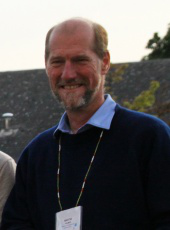
Martin Palmer
All seemed to be well with the world last weekend as more than 30 participants at the National Justice and Peace Conference on China rose early to do Tai Chi on the lawn before Mass and Breakfast. They went through the graceful moves in the sunshine, fully enjoying the breeze, and bringing a smile to passing faces. Yet, simultaneously, in China itself, Beijing was in chaos after its heaviest rainfall in 60 years led to widespread flooding and nearly 40 deaths.
Of course, you might have noticed instances of severe weather increasing around the world, and it's all in line with Climate Change predictions. China's greenhouse gas emissions have soared in the past decade. It became the world's biggest emitter of carbon dioxide in 2006 and is now responsible for a quarter of all human emissions worldwide. However, Chinese scientists pointed out this week that 'developed' nations were responsible for 60% to 80% of the global temperature rise, upper ocean warming and sea-ice reduction until 2005. They argue that wealthy nations need to get on with taking action, alongside China, or global temperature rise could move beyond two degrees by 2100.
The keynote speaker at the conference last Sunday morning was Martin Palmer, Secretary General of the UK-based Alliance of Religions and Conservation (ARC). He told an audience of around 300 Justice and Peace activists from around Britain that, "it's all too easy to criticise China, but its economic powerhouse has been 200 years of our industrial development compressed into 30 years". He reported that now China has awoken to the threat of environmental degradation in ways unimaginable just a few years ago. In addition, the Chinese Communist government is now asking religions to help reinstate a sense of a purpose beyond just self and consumerism and to help protect China's environment, especially its sacred sites.
Martin himself speaks Cantonese and ably bridges the two worlds of the faiths and the environmental movement. He is very positive about the moves China is making towards sustainable development - China now invests more money than the whole of the EU on alternative energy - and embraces their invitation to faith involvement. In 2006 Martin was asked to meet with the Minister for Religion and the Minister for Forests and Development. They said the Chinese government was concerned that with a nation hell bent on growth and consumerism there was a corresponding loss of a sense of community and responsibility. The 'one child policy' has created the most selfish generation China has ever known, and a generation who know nothing about Chinese traditions which value history and give consideration to future generations. Could religions, with their stories going back several thousand years, have something to offer?
Since then, aided by ARC, the Daoists and Buddhists have reviewed their sacred mountains and documented the importance of an active presence at these sites, such as monasteries. When people live at these locations and value them they are less likely to be destroyed. At the same time, ARC, in collaboration with the WorldWide Fund for Nature, is developing a major programme on Traditional Chinese Medicine and especially the illegal importing of Asian big cats' bodies to China for medicinal use. In 2001, Daoism made the use of endangered species in medicine an excommunicable offence. Martin spoke of the 'Three Sticks Movement' which promotes burning only three sticks of incense to reduce pollution caused by burning incense, candles, paper and fireworks on Daoist sites. Many Buddhist temples such as the Lama Temple in Beijing follow the movement. It sends the simple message that three sticks are enough - one for heaven, one for earth and one for yourself - and contrasts with consumerism and greed in temples where people offer hundreds of incense sticks at once. Martin recalled a monk from South China's Guangdong province saying at a conference in 2008 that he noticed one day that birds were returning as a result of their 'Three Sticks Movement'. "The curtain of smoke around temples was removed", he reported, "and we want even more birds to come back".
China has achieved economic prosperity that few would have imagined 20 years ago, but Martin pointed out that faith groups are helping the country to recapture compassion and understanding about how to keep a balance between human needs and the natural world. "But where are Catholics in all this?" he asked; His answer was that, "for all sorts of reasons Catholics are very slow off the mark on the environment". He hoped that the initiative 'Green Pilgrimages' might take off when there is more awareness.
And he gave a fascinating piece of news: the Chinese government has just announced that it will give £110 million towards excavating and building at the DaQin Pagoda near Louguantai. It will create a Christian centre on what is thought to be the site of a Christian Church from the Tang Dynasty of the seventh century. Martin hopes the centre will help the faiths work together "to be rooted back in nature far more than we are".
For more information see: www.justice-and-peace.org.uk
 Facebook
 Twitter
 LinkedIn
 Print
Print Email
Email














 Facebook
 Twitter
 YouTube
 LinkedIn
 Pinterest