


1 February 2009 - Fr Terry Tastard:
I remember reading about a television interview with Mother Teresa of
Calcutta in the United States. The interview bowled along, and then the
interviewer paused the live broadcast for a commercial break: 'We will
continue with this interview in a minute or two, but first, listen to this
message from our sponsors.' As the commercials were shown, the studio
suddenly fell silent. Everybody present suddenly saw the commercials in a
new light. Many of the goods advertised seemed silly, indulgent or
narcissistic. Mother Teresa had been speaking about ministering alongside
the homeless sick and dying. There was a glaring contrast between her world
and the world of must-have, goods being advertised, many of which were in
fact unnecessary. Simply having her in their midst had made the studio crew
see things in a new light.
It must have been the same with Jesus. We think of him, and rightly so, as
the love of God among us. His mercy, compassion and love towards us are a
great reassurance in our lives, with all their tensions, difficulties and
disappointments. Yet at the same time, precisely because he is the love of
God among us, Christ must at times challenge us. If we were to walk through
our world, would we not see it and ourselves in a new light?
In the gospel today, we hear that Jesus impressed his listeners, because he
taught them with authority, (Mark 1.22). This was the authority not of power
but of love. It was the authority not of force but of integrity. The nature
of the man shone through him, and was a sign that here and now God was doing
a wonderful thing. This is the clue to the exorcism which immediately
follows. There is a common sense point here: Jesus must time carefully the
revelation of who he is, the Messiah, the Holy One who has come from God.
This is too important, and too sensitive a matter to be left to the ravings
of a stranger. There is also a deeper point here, for the people noted that
he could overcome even unclean spirits, (1.27). Many such exorcisms would
follow over the next three years, and it is a sign that Jesus comes not only
to preach and to heal, but also to confront. People had a strong sense of
the forces that oppressed them. Sometimes they came from within, in the form
of mental illness, stress, depression. Sometimes the oppression came from
outside, in the form of poverty, communal despair, the lack of any sense of
direction in society.
Sometimes it was the usual flaws of human nature, our
tendency to seek luxury or to care only for our own welfare, even at the
expense of others. Whatever form it took, Christ was there not only to
encourage and to bless, but also to challenge and confront the destructive
forces. He could not be who he was and leave things as they were. From now
on, wherever Jesus was present, those who heard him would see the world
differently, and would know that the love of God was breaking into that
world with all its pains and conflicts. No wonder the unclean spirits
trembled.
Fr Terry Tastard is Parish Priest of Holy Trinity Roman Catholic Church,
Brook Green, London W6.
 Facebook
 Twitter
 LinkedIn
 Print
Print Email
Email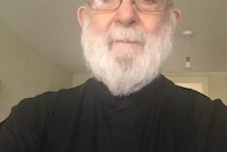
















 Facebook
 Twitter
 YouTube
 LinkedIn
 Pinterest